Working principle of drilling mud agitator
Mud agitators are key components of drilling fluid solids control systems. It is primarily used to maintain uniform mud mixing and prevent solids settling. Their function is to maintain mud stability through mechanical agitation, which is crucial to drilling efficiency and safety.
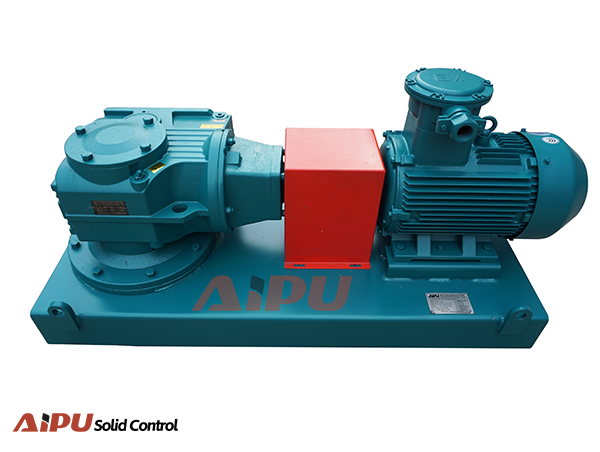
Mud agitator structure
A typical mud agitator consists of a motor, a reduction gear, a mixing shaft, and blades. The motor provides power to drive the agitator shaft after the speed is adjusted by the reduction gear. The agitator blades typically feature a spiral design, generating both radial and axial flow, ensuring completely mixing in all areas of the mud tank.
Some details of agitator working principle
When the agitator is started, the speed is reduced to an appropriate range via a speed reduction mechanism, driving the agitator blades. The blades exert shear and thrust forces for the slurry:
1. Shear forces break up solid particles in the slurry.
2. Axial flow prevents stratification of components with different densities.
3. Radial flow eliminates dead zones at the tank edges.
This complex flow pattern ensures uniform dispersion of additives and maintains the slurry's rheological properties. Furthermore, continuous agitation prevents the sedimentation of weighting materials such as barite, which can create difficult-to-handle hard deposits.
Affecting factors for agitator performance
The stirring effect depends on several parameters:
1. Blade shape and size: Determine fluid dynamics
2.Rotational speed: Affects shear strength and energy consumption
3. Mounting position: Affects flow field coverage
4.Mud properties: Viscosity and density affect stirring resistance
Presently, mud agitators generally use variable frequency control technology, which adjusts the speed according to actual working conditions, ensuring mixing results while optimizing energy consumption. Some high-end models also feature intelligent monitoring systems that provide real-time feedback on mixing status.
Some tips for agitator selection
When selecting an agitator, the following items should be considered:
1. Mud tank capacity and geometry
2. Maximum density and viscosity of drilling mud processed
3. Operating conditions, including ambient temperature
4. Safety requirements, including explosion-proof rating
5. Maintenance availability and spare parts availability
Correctly selecting not only ensures effective mixing, but also extends equipment life and reduces operating costs. As a professional solids control manufacturer we can provide detailed selection calculations and technical support.
If you need mud agitator for your project, please choose AIPU solids control and we'll provide you with dedicated service.
Related Products