Mud Cleaner Working Principle Explanation
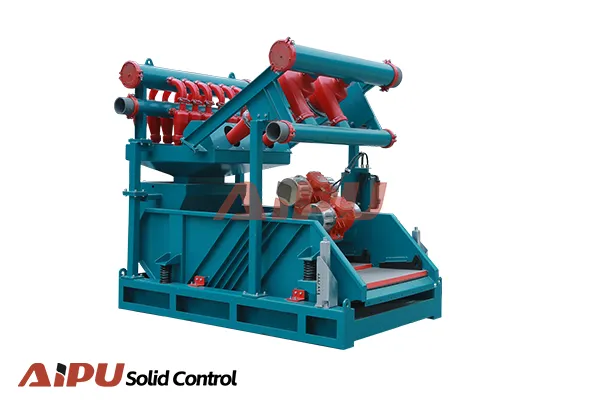
Stage 1: Centrifugal Separation by Hydrocyclones
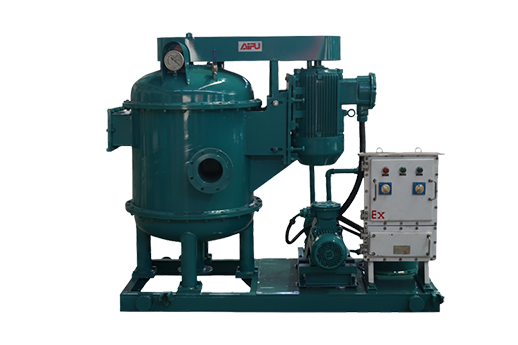
1. Feeding and Pressurization:Weighted mud, pre-treated by shale shakers from the drilling fluid circulating system, is fed to the mud cleaner by a dedicated supply pump. The pump pressurizes the mud to a stable pressure of 0.3 - 0.5 MPa and directs it into a bank of multiple (typically 8-12) small-diameter (4-5 inch) hydrocyclones connected in parallel.
2. High-Speed Vortex and Centrifugal Force Field Formation:
The high-pressure mud enters the upper cylindrical section of each hydrocyclone tangentially, creating an intense rotational motion. Constrained by the conical body, the fluid velocity increases drastically, forming a powerful centrifugal force field. This field is key to the separation, with forces hundreds of times greater than gravity (G-forces).
3. Dual Vortex and Separation:
Under the strong centrifugal force, solid particles in the mixture are separated based on their density and size:
-
Heavy/Large Particles: Subject to greater centrifugal force, they are thrown against the inner wall of the cyclone. Driven by the downward-spiraling outer vortex and gravity, these particles spiral down along the conical wall and are finally discharged from the apex (underflow nozzle). This underflow is a thick slurry containing both barite and harmful cuttings.
-
Light Particles/Liquid: Subject to less centrifugal force, they concentrate near the central axis of the cyclone, forming an upward inner vortex. Finally, this cleaner fluid, consisting mainly of liquid, ultra-fine particles, and some colloids, exits from the vortex finder at the top of the cyclone and returns to the main active mud tank.
Stage 2: Screening Separation by the Fine-Mesh Shaker
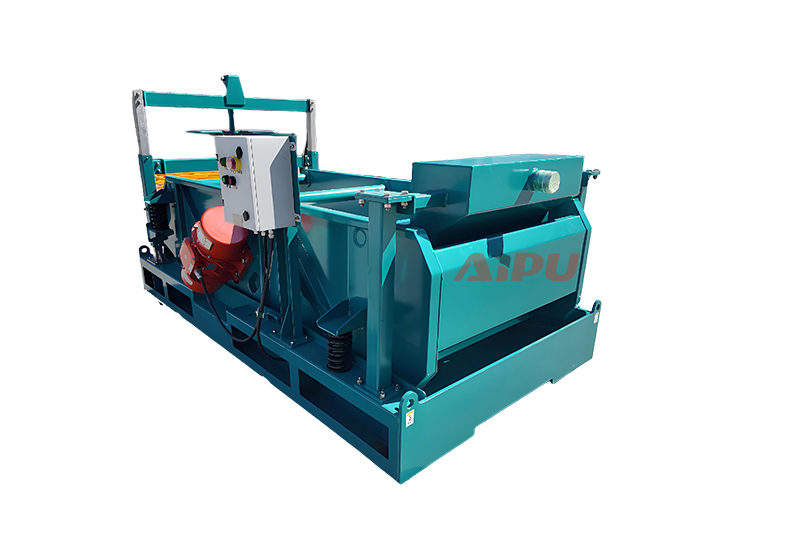
1. Underflow Channeling:The thick slurry discharged from the apex of all hydrocyclones is channeled onto the feed end of a single-layer vibrating shaker fitted with an ultra-fine screen (typically 150-200 mesh, with aperture sizes of 75-100 microns).
2. Vibratory Screening and the "Recover/Discard" Decision:
As the screen bed vibrates at high frequency and low amplitude, the slurry is distributed evenly across the screen. This is a critical "decision point":
-
Liquid Phase and Fine Particles: The liquid phase of the mud and particles smaller than the screen mesh (including the valuable barite particles, typically smaller than 74 microns), pass through the screen under gravity and vibration, are recovered, and returned to the active mud system. This achieves the reuse of weighting material.
-
Harmful Solids: Solid particles larger than the screen mesh (primarily harmful silt-sized drilled cuttings in the 40-100 micron range) are retained on the screen. The vibration of the screen bed conveys these solids forward, where they are finally discharged as waste into the cuttings collection pit.
Summary of Working Principle and Core Value
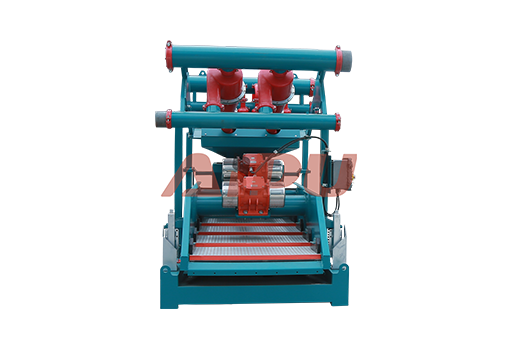
The working process of a mud cleaner can be summarized as: "Centrifugal Pre-classification — Screen Fine-Separation".
-
Centrifugal Pre-classification: The hydrocyclone acts as an efficient "density/size classifier," rapidly dividing the feed into two streams based on centrifugal force: the "overflow" containing most liquid and ultra-fine particles (directly recovered), and the "underflow" containing all heavy particles (barite + cuttings) (sent to the next stage).
-
Screen Fine-Separation: The fine-mesh shaker acts as a precise "size selector," making the final decision on the underflow based on geometric size. It allows barite and liquid to pass through, while only intercepting and discarding the oversized harmful drilled cuttings.
Related Products