Mud Cleaner in the Solids Control System
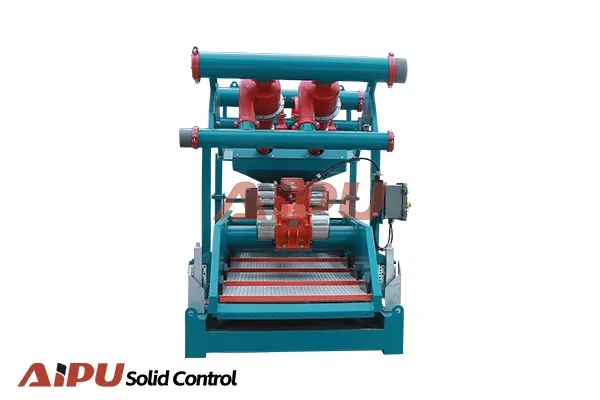
Within the sophisticated and sequential arrangement of a modern drilling rig's solids control system, each piece of equipment has a defined role, targeting a specific range of particle sizes to progressively clean the drilling fluid. The mud cleaner occupies a critical and specialized niche in this hierarchy, acting as the key secondary processing stage for weighted drilling fluids.
1. Position in the Equipment Cascade
The solids control system is a series of defenses, arranged from coarse to fine removal. The mud cleaner's placement is strategic:
-
Primary Stage (Coarse Removal): Shale Shakers remove the largest cuttings (generally > 74 microns) using vibratory screens. All drilling fluid passes through them first.
-
Secondary Stage (Fine Removal for Weighted Mud): This is the domain of the Mud Cleaner. It processes the finer solids that passed through the shaker screens. It is typically fed with fluid from the active tank or, in some configurations, the overflow from a desander.
-
Final Stage (Ultra-Fine Removal): Centrifuges (both decanting and high-speed) polish the fluid by removing colloidal solids (< 5-10 microns) and performing barite recovery.
Crucially, for unweighted muds, the secondary stage uses standalone Desanders and Desilters (hydrocyclones). However, once weighting material (barite) is added, these are bypassed, and the mud cleaner is activated to prevent the loss of this expensive material.
2. Function and Material Flow within the System
The mud cleaner integrates two processes to fulfill its system role:
System Feed: The mud cleaner receives weighted mud from the active system. This fluid contains liquid, chemicals, valuable barite, and undesirable drilled solids of silt size (15-74 microns).
Internal Process (Two-Step Separation):
-
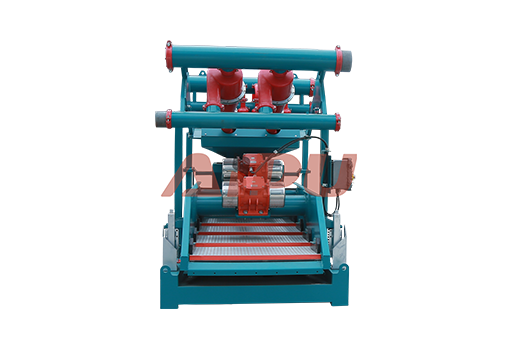
Step 1 - Hydrocyclone Classification: The feed is pumped to a bank of small-diameter (4") cones. Centrifugal force creates an overflow (cleaned mud, returned to active system) and an underflow (a slurry of solids and liquid, discharged to the screen).
-
Step 2 - Fine Screening Decision: The underflow, containing a mix of barite and drilled solids, is routed onto a fine-mesh shaker (150-200 mesh). Here, the system's critical separation occurs:
-
Through Screen (Returns to System): Liquid and particles smaller than the mesh (including most barite) pass through and are conserved.
-
Over Screen (Discarded as Waste): Particles larger than the mesh (primarily abrasive drilled cuttings) are retained and discarded.
-
System Output:
-
Clean, Weighted Mud: Returns to the active system with reduced low-gravity solids (LGS) content.
-
Dry(er), Fine Cuttings: Discharged to waste, having been stripped of most liquid and barite.
3. The Critical "Why": Its Unique System Logic
The mud cleaner exists to solve a specific systemic problem in weighted mud drilling: the conflicting needs of removing fine drilled solids and preserving fine weighting material.
-
The Problem: In a weighted system, equipment like desanders/desilters cannot distinguish between similarly sized barite and drilled cuttings. Using them would discard expensive barite, causing unsustainable economic loss.
-
The Mud Cleaner Solution: It breaks the separation into two physical properties:
-
Mass/Density (in the Cone): Hydrocyclones create a concentrated slurry of all fine, high-mass solids (both barite and drilled cuttings).
-
Size (on the Screen): The fine screen then acts as a "go/no-go" gauge. Barite, finely ground, passes through; most drilled cuttings, slightly larger, are retained.
-
This unique logic makes it the only equipment in the mid-stage that can remove harmful silt while protecting the mud's density.
4. Impact on Overall System Performance
Integrating a properly sized and operated mud cleaner delivers systemic benefits:
-
Maintains Mud Properties: By controlling fine solids, it directly stabilizes rheology (viscosity, gel strength), reducing the need for chemical dilution or treatment.
-
Protects Downstream Equipment: Removing abrasive silt extends the life of pumps, drill string, and the bit.
-
Enhances Drilling Efficiency: Lower solids content leads to higher Rate of Penetration (ROP) and improved hydraulic efficiency.
-
Reduces Total Waste Volume: By recovering liquid and barite from the hydrocyclone underflow, it generates drier waste cuttings, lowering disposal costs and environmental footprint.
-
Economic Optimization: It dramatically reduces barite and liquid make-up costs, providing a direct return on investment.
5. Operational Integration Considerations
For the mud cleaner to function effectively within the larger system, correct integration is vital:
-
Feed Source: It must be fed from a well-agitated point in the active system to ensure a consistent solids load.
-
Feed Pressure: A dedicated, correctly sized pump is required to maintain the 50-75 psi needed for hydrocyclone efficiency.
-
Screen Selection: Screen mesh must be balanced to maximize cuttings removal while minimizing barite loss and screen blinding.
-
Coordinated Bypass: The system piping must allow for easy switching between desander/desilter mode (for unweighted mud) and mud cleaner mode (for weighted mud).
Conclusion: A System-Specific Strategic Asset
The mud cleaner is not a universal component but a strategic, application-specific asset within the solids control system. Its role is clearly defined: to safeguard the integrity and economy of weighted drilling fluid programs. By performing its targeted separation at the nexus of the solids control cascade, it ensures that the system can simultaneously achieve the goals of a clean, stable drilling fluid and cost-effective operation. Its effective use exemplifies the optimized engineering required for efficient modern drilling.
Related Products