Drilling Mud Cleaner: Function and Application in Modern Drilling Operations
1. Core Function: The Dual-Purpose Solution
The drilling mud cleaner serves a singular, critical purpose in weighted drilling fluid systems: to remove fine, abrasive drilled solids while recovering and preserving valuable weighting material (barite) and the liquid phase of the mud.
This dual function addresses the fundamental economic and technical contradiction in weighted mud management:
-
The Need: Eliminate silt-sized cuttings (15-74 microns) that increase viscosity, wear down equipment, and reduce drilling efficiency.
-
The Constraint: Do not discard expensive, micron-sized barite added to increase mud density.
To achieve this, the mud cleaner performs a precise two-stage separation process:
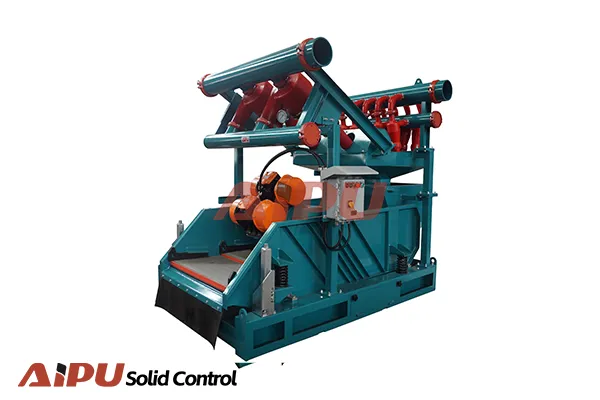
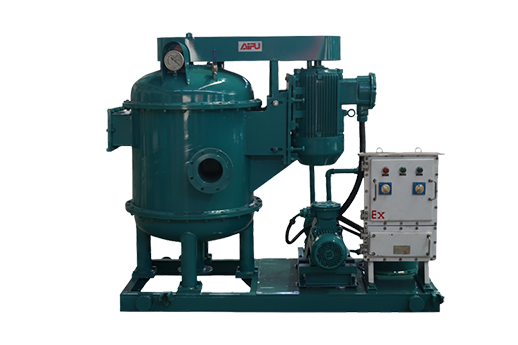
Stage 1: Classification by Mass (Hydrocyclones)
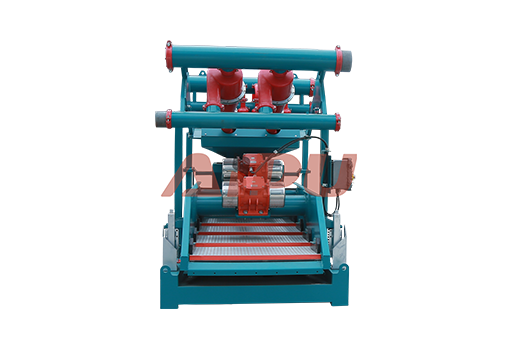
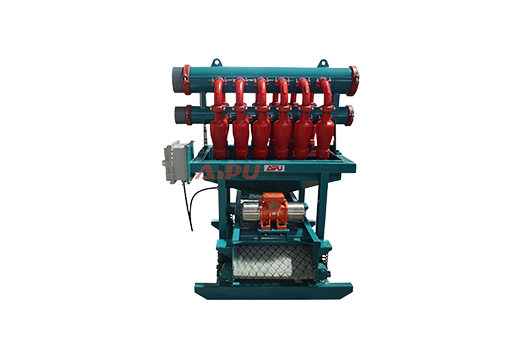
A bank of small-diameter (4-inch) hydrocyclones subjects the weighted mud to intense centrifugal force. This action classifies particles by mass, generating two streams:
-
Overflow: Returns to the active system, containing liquid and ultra-fine particles.
-
Underflow: A dense slurry discharged to the screen, containing both barite and the targeted abrasive drilled solids.
Stage 2: Separation by Size (Fine-Mesh Screen)
The underflow slurry is distributed onto a vibrating screen with very fine mesh (150-200 mesh). Here, separation is based strictly on physical size:
-
Pass-Through: Liquid and particles smaller than the screen mesh (including most barite) are recovered.
-
Reject: Particles larger than the mesh (the undesirable drilled cuttings) are discarded as waste.
In summary, its function is not to create separation in one step, but to enable it through a sequential process of concentration (hydrocyclones) followed by a definitive selection (screen).
2. Primary Applications: When and Where to Use a Mud Cleaner
The mud cleaner is an application-specific tool, deployed under well-defined drilling conditions:
A. Drilling with Weighted Mud (Primary Application)
-
This is its indispensable role. Once mud density is raised with barite (typically above 10.5 ppg or 1.26 SG), standalone desanders and desilters are bypassed. The mud cleaner becomes the principal secondary solids removal device, protecting the economic investment in barite.
B. Encountering Abrasive Sand/Silt Formations
-
When drilling through unconsolidated sand, siltstone, or shale sequences that generate large volumes of fine, abrasive solids, the mud cleaner is activated to protect downhole and surface equipment from accelerated wear.
C. Managing Mud Properties and High ROP
-
High Penetration Rate Drilling: Fast drilling in soft formations produces fine cuttings faster than primary shakers can remove them. The mud cleaner handles this excess load.
-
Rheological Control: When mud viscosity, yield point, or gel strengths rise uncontrollably due to fine solid accumulation, the mud cleaner is used to "fine-cut" the mud and restore properties.
D. Environmental and Economic Waste Reduction
-
By recovering barite and liquid from the hydrocyclone underflow, it significantly reduces the volume and wetness of discarded waste, lowering disposal costs and environmental impact.
3. Application Benefits: The Value Proposition
Deploying a mud cleaner correctly delivers direct, measurable benefits:
Operational Performance Benefits:
-
Increased Rate of Penetration (ROP): Cleaner mud with lower solids content drills faster.
-
Improved Hydraulics: Reduces pump pressure losses, allowing for better hole cleaning and bit hydraulics.
-
Enhanced Wellbore Stability: Reduces the risk of differential sticking, poor filter cake quality, and excessive equivalent circulating density (ECD).
-
Extended Equipment Life: Removes abrasive solids that wear out pump liners, pistons, drill bits, and tubulars.
Economic and Logistical Benefits:
-
Barite Cost Savings: Can recover 90-95% of barite from the processed stream, drastically reducing material costs.
-
Reduced Chemical Consumption: Lower solids load reduces the need for chemical thinners and dispersants.
-
Lower Waste Disposal Costs: Produces drier, more solid waste, reducing transportation and disposal volumes.
-
Improved Mud System Stability: Minimizes the need for large, costly dilution phases to control solids.
4. Application Limitations and Considerations
Understanding when not to use a mud cleaner is equally important:
-
Unweighted Mud Systems: For water-based or low-density muds without barite, standalone desanders and desilters are more efficient and cost-effective.
-
Ultra-Fine Solids Removal: It cannot remove colloidal solids (< 10-15 microns). A centrifuge is required for this final "polishing" stage.
-
Screen Maintenance: The fine screens are prone to blinding and require vigilant monitoring and cleaning, especially with sticky clays.
-
Optimal Feed Requirement: Requires consistent feed density and pressure. Poor feed conditions lead to inefficient separation and barite loss.
5. Strategic Application within the Solids Control Cascade
The mud cleaner's application is defined by its fixed position in the equipment sequence:
-
Shale Shakers: Remove large cuttings.
-
Mud Cleaner (for Weighted Mud): Removes fine silt and sand.
-
Centrifuge: Removes ultra-fines and performs barite mode recovery.
Its activation signifies a shift in drilling phase—from surface/intermediate hole (unweighted mud) to deeper, pressure-sensitive sections (weighted mud). Its operation is a key indicator of a well's progression and the shift towards more precise and costly mud management.
Conclusion: A Function-Driven Application Tool
The drilling mud cleaner is not a universal piece of equipment but a targeted solution for a specific set of challenges posed by weighted drilling fluids. Its core function—enabling selective removal of harmful solids—directly dictates its application in scenarios demanding economic preservation of barite and operational control of fine solids. Successful drilling operations recognize it as a strategic asset, deploying it to transform the costly problem of weighted mud maintenance into a manageable, optimized process, thereby directly contributing to safer, faster, and more economical well delivery. Its value is realized only through correct application, making understanding its function and proper use a critical component of modern drilling fluid engineering.
Related Products