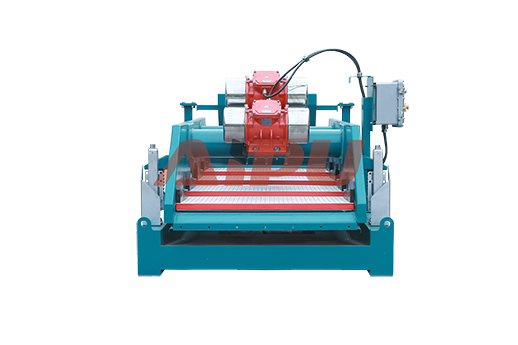
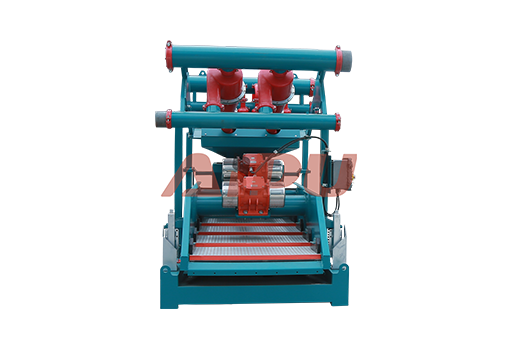
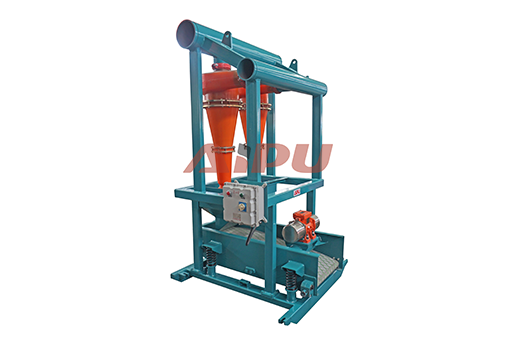
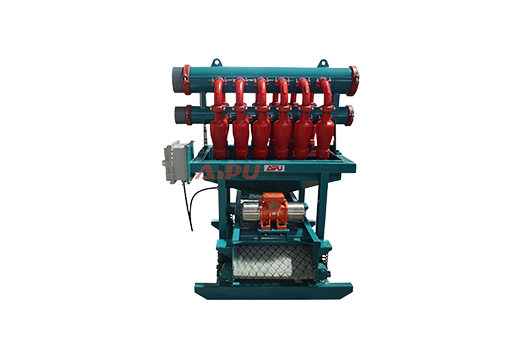
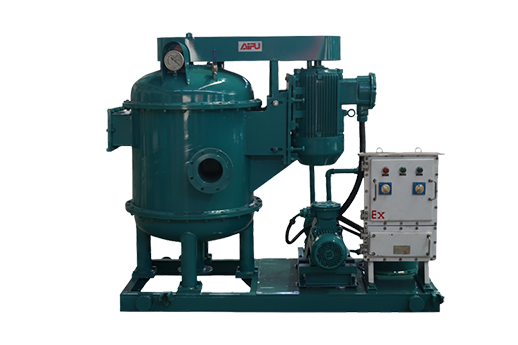
mud cleaner combined desander and desilter
A mud cleaner can indeed be configured to integrate both desander and desilter hydrocyclone stages onto a single vibrating shaker unit. This configuration creates a highly efficient, compact, and two-stage solids control device designed to maximize the removal of fine solids and optimize fluid recovery. Here is a breakdown of its structure, function, and operational logic.
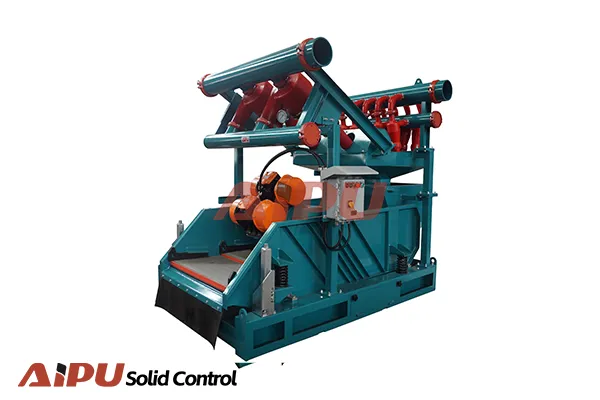
Core Concept: Two-Stage Separation on One Skid
Instead of having separate desander and desilter units with their own shakers, this combined system stacks or arranges both sets of hydrocyclones to discharge their underflows onto a single, shared fine-mesh vibrating screen (the mud cleaner screen).
Typical Structure and Configuration
-
Primary Frame/Skid: A single structural base housing all components.
-
Feed System & Header Tanks:
-
Often includes two separate header boxes or compartments.
-
First Header: Receives mud from the suction tank and feeds the Desander Hydrocyclone Manifold (typically 10-inch or 12-inch cones).
-
Second Header: Receives the cleaned overflow from the desander manifold and feeds it to the Desilter Hydrocyclone Manifold (typically 4-inch or 5-inch cones).
-
-
Hydrocyclone Manifolds:
-
Upper Stage (Desander Manifold): Mounted above the shaker, removes sand-sized solids (44-100 microns).
-
Lower Stage (Desilter Manifold): Mounted directly above or just below the desander manifold, removes silt-sized solids (15-44 microns).
-
-
Common Vibrating Shaker: A single high-frequency shaker with a fine screen (150-200 mesh) positioned beneath both hydrocyclone manifolds.
-
It receives and processes the combined underflow from both the desander and desilter cones.
-
-
Overflow Return System: Separate launders or pipes collect the cleaned fluid from the desander and desilter overflow discharges and route them back to the active mud system.
Workflow and Process Flow
-
Stage 1 - Desanding:
-
Untreated mud from the suction tank is pumped to the Desander Header.
-
Mud is distributed to the large-diameter Desander Cones.
-
Separation: Sand and coarser fines are thrown to the cone wall and ejected as underflow onto the shaker screen.
-
Partially cleaned mud exits as overflow and flows by gravity to the Desilter Header.
-
-
Stage 2 - Desilting:
-
The partially cleaned mud from the desander enters the Desilter Header.
-
It is distributed to the small-diameter Desilter Cones.
-
Separation: Fine silt and abrasive solids are removed and ejected as underflow, also spraying onto the same shaker screen.
-
Fully cleaned mud exits the desilter overflow and returns to the active system.
-
-
Stage 3 - Final Screening & Recovery (Mud Cleaner Function):
-
The combined underflow slurry (wet solids from both stages) hits the fine-mesh vibrating screen.
-
Screen Throughs: Remaining liquid and any valuable weight material (like barite, if present) pass through the screen and are returned to the mud system.
-
Discharge: Dried, fine solids are conveyed off the screen for disposal.
-
Key Advantages of This Combined System
-
Space and Footprint Efficiency: Replaces two separate pieces of equipment (desander with its shaker + desilter with its shaker) with one compact unit. Ideal for offshore platforms or land rigs with limited space.
-
Capital Cost Efficiency: Can be more economical to purchase and install than two independent systems.
-
Simplified Operation: Single feed pump and a single shaker to monitor and maintain.
-
Optimized Performance for Unweighted Muds: This setup is exceptionally efficient for water-based or light clay-based muds, where the goal is maximum removal of solids across a broad size range (sand + silt).
-
Excellent Fluid Recovery: The shared fine screen maximizes liquid recovery from the underflows of both stages, minimizing total fluid loss.
Application Considerations
-
Best For Unweighted Muds: This configuration is standard and highly recommended for unweighted drilling fluids, where the goal is to remove as many drilled solids as possible without concern for losing weight material.
-
Use with Weighted Muds (Barite): Requires careful management. The desilter stage will discard barite along with drilled solids. In weighted mud systems, the desilter bank is often bypassed. In such cases, the unit functions as a mud cleaner in its classic sense: processing only desander underflow to recover barite. Some combined units have valves to easily isolate the desilter stage.
-
Feed Rate Balance: The pump and manifold must be sized to provide adequate pressure and flow to both the desander and desilter banks for optimal performance.
Conclusion
A mud cleaner combining desander and desilter functions is a versatile and efficient workhorse in solids control. It represents an integrated design philosophy that streamlines the removal of a wide spectrum of abrasive solids in a single, space-saving package. For operations using unweighted muds, it provides a complete two-stage cleaning solution. For weighted mud operations, its flexibility allows it to be configured to protect the valuable weight material while still performing critical solids removal. This combination is a testament to the evolving engineering in drilling fluids management, prioritizing efficiency, cost-effectiveness, and performance.
Related Products