Mud Cleaner for Fine Solids Removal: A Targeted Solution
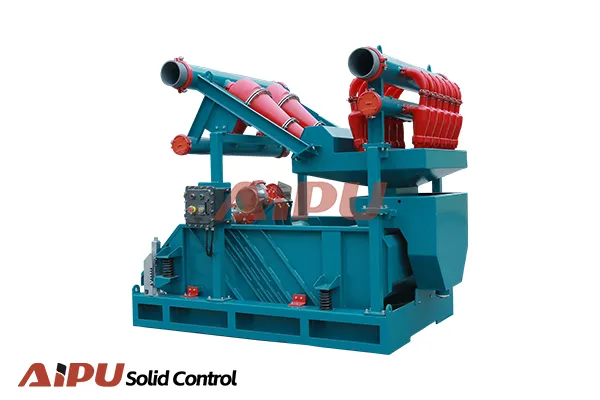
The mud cleaner is a precision instrument in the drilling fluids system, specifically engineered for the targeted removal of fine, abrasive solids. Its design and operational purpose address one of the most challenging aspects of solids control: efficiently separating low-specific-gravity drilled fines from valuable liquid and weight material.
The "Fine Solids" Problem
Fine solids, typically in the 15 to 74 micron range (silt-size), are problematic because:
-
They are too small for shale shakers to remove.
-
They are highly abrasive, accelerating wear on pumps, drill strings, and bits.
-
They dramatically increase mud viscosity and gel strength, reducing hydraulic efficiency and rate of penetration.
-
In weighted muds, they are similar in size to barite, making separation difficult without losing expensive weight material.
How the Mud Cleaner Targets Fine Solids: A Two-Step Process
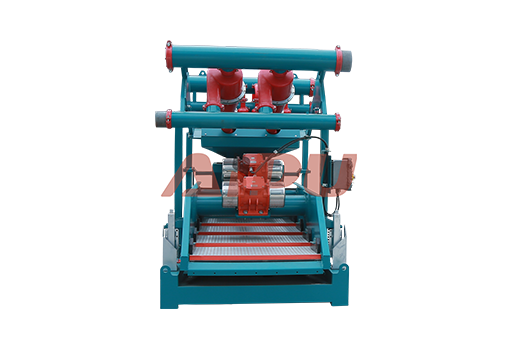
The mud cleaner's effectiveness stems from its hybrid design, combining centrifugal force and fine screening.
Step 1: Hydrocyclone Concentration
-
The feed slurry (often the underflow from a primary desander or directly from the shaker's tank) is pumped into a bank of small-diameter hydrocyclones (4" or 5").
-
These cones generate high centrifugal force, efficiently separating particles based on mass and size. The fine solids are concentrated and ejected as a wet, dense slurry through the apex (underflow).
Step 2: Screen-Based Separation & Recovery
-
This concentrated slurry of fines and liquid is discharged directly onto a high-frequency vibrating screen with a very fine mesh (usually 150 to 200 mesh, or 75-100 microns).
-
Separation Occurs:
-
Liquid and valuable barite particles (which are generally spherical and dense) pass through the screen mesh and are recovered to the active system.
-
Abrasive, plate-like drilled solids (even those smaller than the screen mesh due to their shape) are retained, dried by the screen's vibration, and discharged as waste.
-
Critical Role in Weighted Mud Systems
This is where the mud cleaner is indispensable. In a barite-weighted mud:
-
A standalone desilter would discard both fines and barite, as it cannot distinguish between them.
-
The mud cleaner solves this: the hydrocyclone creates a concentrated mixture, and the fine screen acts as a "barite recovery screen," allowing the heavy barite to fall through while trapping the lighter drilled fines.
Key Performance Factors for Fine Solids Removal
-
Screen Mesh Selection: The choice of screen (e.g., 200 mesh vs. 150 mesh) is a trade-off between solids dryness (finer mesh = drier solids) and fluid recovery capacity (coarser mesh = higher flow rate).
-
Apex Adjustment: The hydrocyclone's bottom aperture must be correctly sized. An overly large apex reduces separation efficiency; an overly small apex causes plugging.
-
Feed Density and Flow Rate: Optimal performance requires a consistent, controlled feed. Fluctuations can overwhelm the screen or reduce cyclone efficiency.
-
Vibration (G-Force): High, linear vibration is crucial for moving sticky fines across the fine screen and achieving a dry discharge.
Advantages for Fine Solids Control
-
Protects Mud Properties: Systematically removes viscosity-building fines.
-
Reduces Abrasion: Removes the most abrasive particle size fraction.
-
Economical Barite Recovery: Preserves expensive weight material in weighted muds, unlike a standalone desilter.
-
Reduces Waste Volume: Produces a drier solids discard, lowering disposal costs and environmental footprint.
-
Extends Equipment Life: Protects downstream centrifuges and other equipment from being overloaded with fines.
Operational Context
The mud cleaner is not a primary separator but a targeted polishing/recovery unit. It is most commonly deployed:
-
After a Desander in weighted mud systems.
-
As a combined desander/desilter unit (with the desilter underflow directed to its screen) in unweighted mud systems.
-
When drilling formations that generate high volumes of fine silts and clays.
Conclusion:
For fine solids removal, the mud cleaner is a specialized, value-driven tool. It fills the critical performance gap between shale shakers (coarse removal) and centrifuges (ultra-fine removal/clay fraction). By employing a two-stage separation process, it uniquely solves the dilemma of removing harmful, abrasive fines while conserving valuable drilling fluid and weight material, making it a cornerstone of efficient and cost-effective drilling fluid management.
Related Products