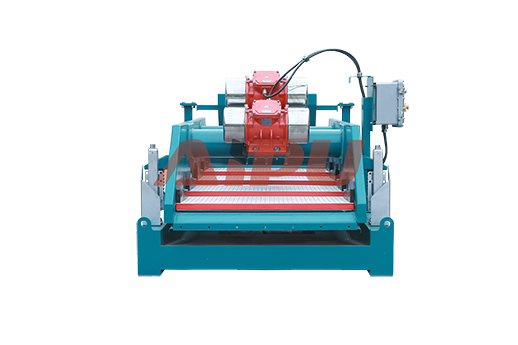
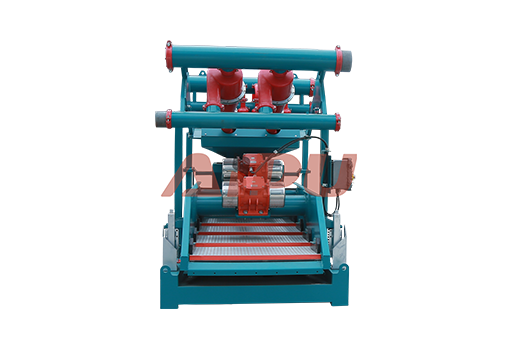
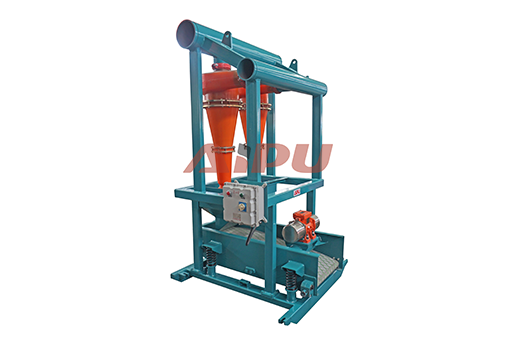
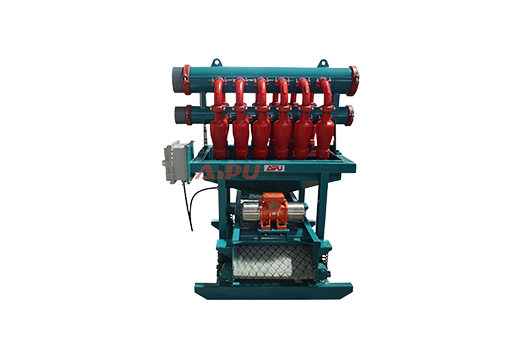
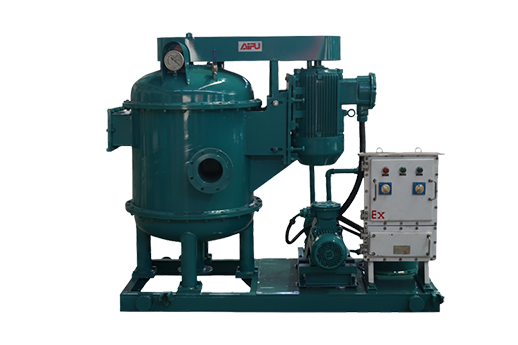
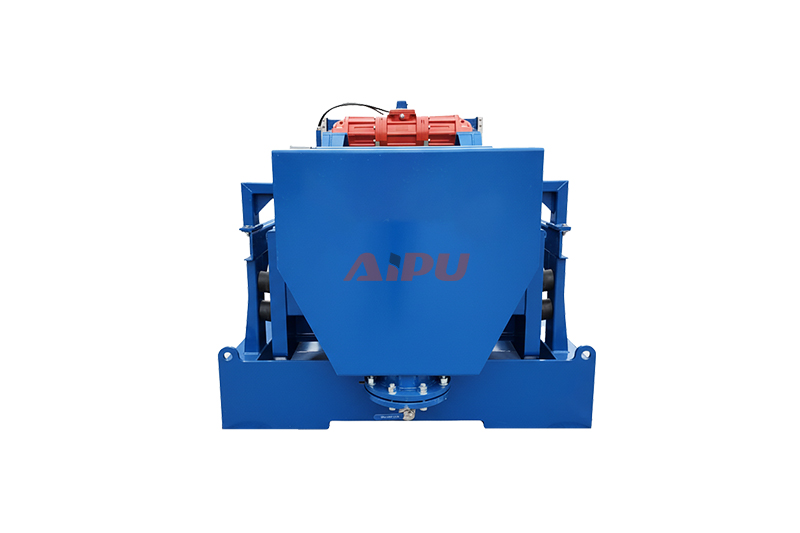
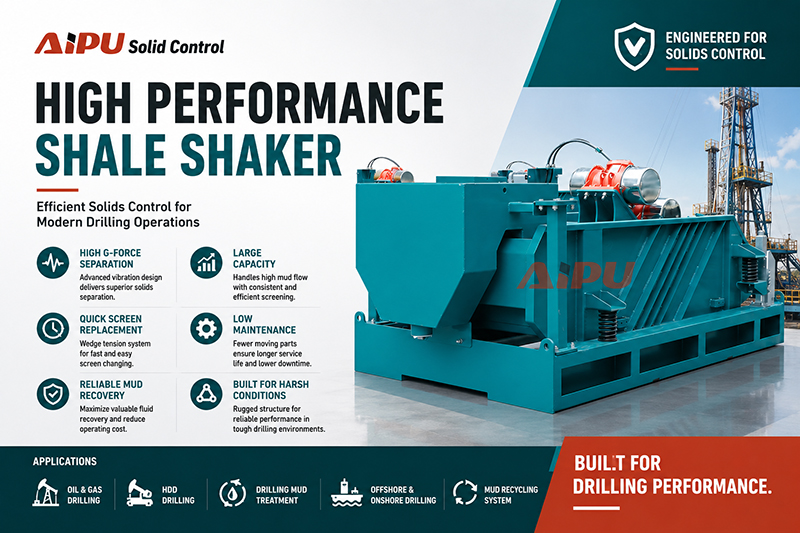
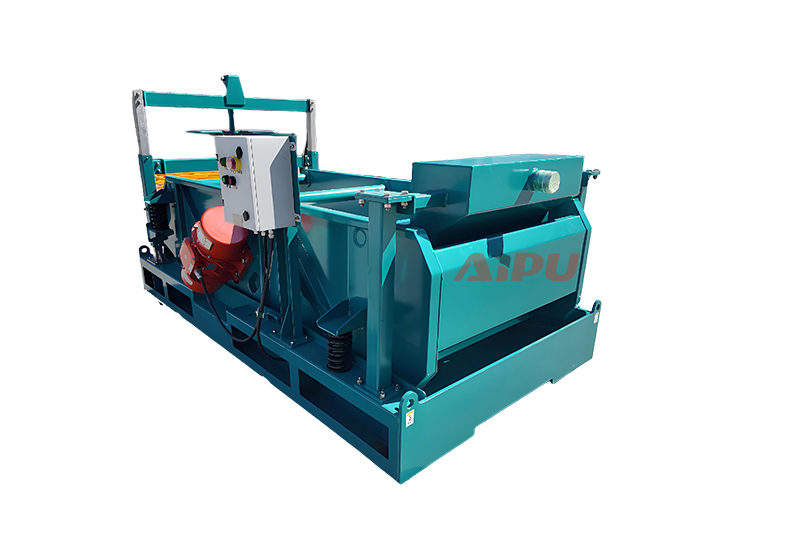
mud cleaner with hydrocyclones and shaker
The mud cleaner is fundamentally defined by its integration of hydrocyclones and a fine-mesh vibrating shaker into a single, purpose-built machine. This hybrid design creates a highly efficient two-stage separation process specifically engineered to solve the problem of fine, abrasive solids in drilling fluids.
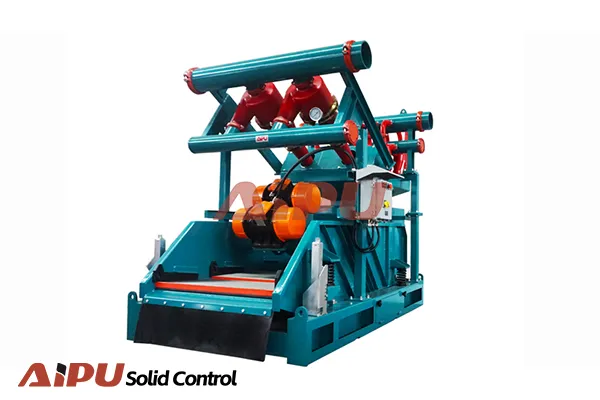
The Synergistic Two-Stage Process
The system operates on a sequential concentrate-then-separate principle:
Stage 1: Hydrocyclone Concentration
-
Function: Acts as a solid concentrator. The hydrocyclone bank does not aim for a perfectly dry discard; instead, it uses centrifugal force to create a dense, solids-rich underflow slurry.
-
Mechanism: Pressurized feed enters tangentially, creating a vortex. Heavier/larger solids migrate to the wall and spiral down to the apex.
-
Output: Two streams:
-
Overflow (Clean): The central, upward-moving vortex carrying cleaned fluid and ultra-fines returns to the active system.
-
Underflow (Waste Stream): A concentrated slurry of target solids (15-74 micron) and a limited amount of liquid discharged onto the shaker.
-
Stage 2: Shaker Separation & Recovery
-
Function: Acts as a fluid recovery and solids drying screen. It separates the valuable liquid and weight material from the concentrated waste stream.
-
Mechanism: The high-frequency vibrating screen provides a final, precise separation based on particle size and shape.
-
Output: Two final products:
-
Screen Throughs (Recovered Value): Liquid and desirable solids (like barite) pass through the fine mesh and back to the mud tanks.
-
Screen Overs (Discard): Dried, fine drilled solids are conveyed off the deck for disposal.
-
Schematic Flow of the Integrated System
[Feed Slurry from Shaker Tank]
            ↓
    [Charge Pump] → Pressurizes Feed
            ↓
    [Header Box] → Even Distribution
            ↓
[Bank of 4" or 5" Hydrocyclones]
         ↙️          ↘️
  (Overflow)       (Underflow)
  Clean Fluid    Concentrated Slurry
  to Active System    ↓
            [Fine-Mesh Vibrating Shaker]
                    ↙️          ↘️
        (Screen Throughs)   (Screen Overs)
      Liquid & Barite       Dried Fine Solids
      to Active System        to Waste
Why This Integration is Critical
-
Solves the Desilter Limitation: A standalone desilter discards valuable liquid and barite with its underflow. By adding the shaker, the mud cleaner recovers these materials from the desilter's waste stream.
-
Enables Weighted Mud Processing: This is the key application. The hydrocyclones separate solids by mass, and the screen then differentiates by particle size and density, allowing barite (dense, often spherical) to pass while retaining lighter, abrasive drilled cuttings.
-
Maximizes Efficiency: Directly coupling the hydrocyclone underflow to the screen eliminates intermediate tanks and pumps, reducing fluid handling losses and preventing solids settling.
-
Improves Drying: The screen processes a pre-concentrated slurry, meaning it deals with less total fluid volume. This allows for finer mesh screens and more effective drying of the final solids discard.
Key Design Interactions Between Components
-
Apex Size & Screen Capacity: The hydrocyclone's apex valve is adjusted to produce an underflow consistency the shaker can handle—too wet overloads the screen; too dry risks plugging the apex.
-
Feed Pressure & Screen Mesh: Higher hydrocyclone feed pressure creates a finer "cut point." This must be matched with appropriate screen mesh to capture the targeted solids.
-
Shaker G-Force & Screen Blinding: The sticky, fine nature of the underflow requires high G-force and often non-blinding screen technology to prevent plugging and ensure fluid passage.
Operational Modes
-
Weighted Mud Mode: Hydrocyclones process desander underflow. Screen (150-200 mesh) recovers barite.
-
Unweighted Mud Mode: Often uses a combined desander/desilter hydrocyclone setup, with all underflows directed to one shaker for maximum solids removal.
Conclusion:
The mud cleaner is more than the sum of its parts. The integration of hydrocyclones and a shaker creates a unique, intelligent separation system that performs a task neither component could do alone: the selective, economic removal of harmful fine solids while salvaging high-value drilling fluid components. This hybrid design is the definitive solution for managing fine solids in weighted drilling fluids and represents a cornerstone of efficient, closed-loop mud recycling systems.
Related Products