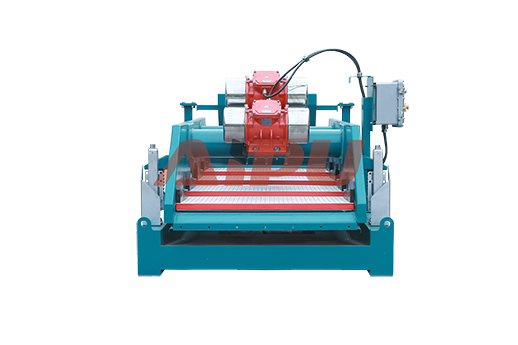
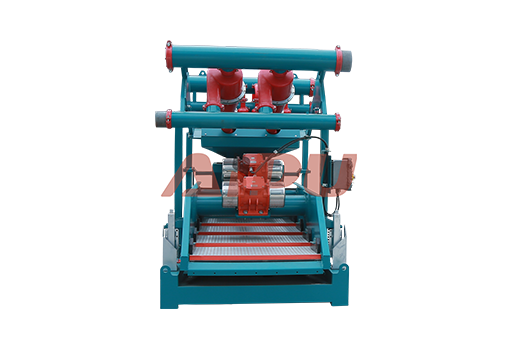
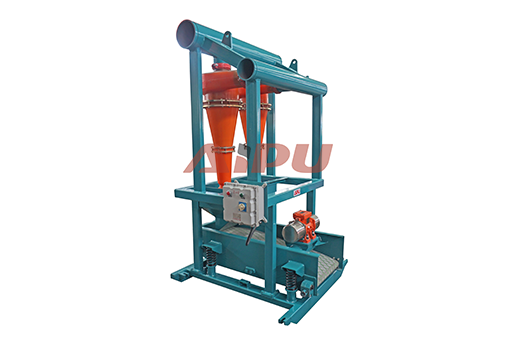
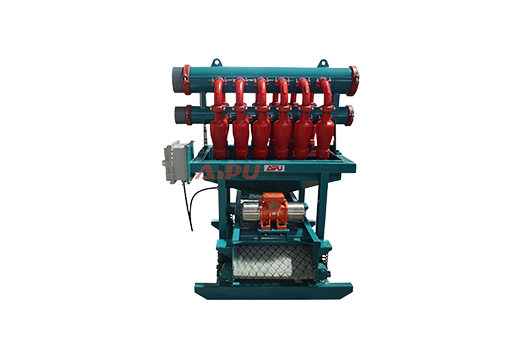
mud cleaner screening and desanding process
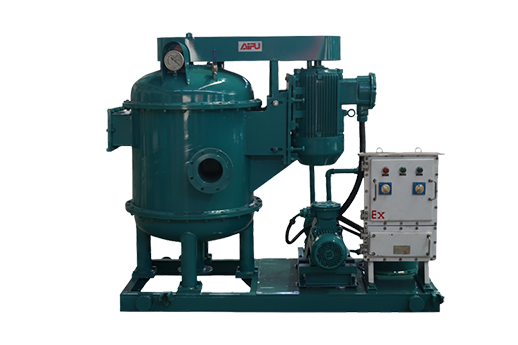
The mud cleaner's screening and desanding process represents a tandem separation technique where centrifugal desanding and fine-mesh screening operate sequentially on a single unit to achieve superior solids control and fluid recovery.
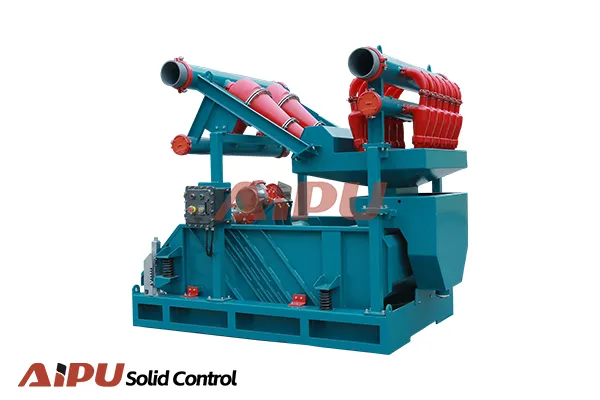
The Combined Process Flow
The process integrates two distinct separation technologies into a continuous operation:
Stage 1: Desanding via Hydrocyclones
Objective: Remove sand-sized particles (44-100+ microns) from the drilling fluid.
-
Feed Source: The mud cleaner receives its feed from the shaker tank (for unweighted mud) or specifically from the underflow of a primary desander (for weighted mud).
-
Hydrocyclone Action: The fluid is pumped under pressure (typically 30-75 psi) into a bank of 4-inch or 5-inch hydrocyclones.
-
Separation Mechanism: Inside each cone, centrifugal force throws heavier/larger solids outward and downward.
-
Overflow (Output 1): Cleaned fluid, ultra-fines, and valuable weight material (barite) exit from the top vortex finder and return to the active mud system.
-
Underflow (Output 2): A concentrated slurry of sand and fine solids (15-74 microns), along with some carrier fluid, is ejected from the bottom apex directly onto the vibrating screen.
-
Stage 2: Screening for Recovery and Drying
Objective: Recover liquid/barite and dry the solids from the hydrocyclone underflow.
-
Feed: The hydrocyclone underflow slurry is distributed evenly across the full width of a fine-mesh vibrating screen (typically 150-200 mesh).
-
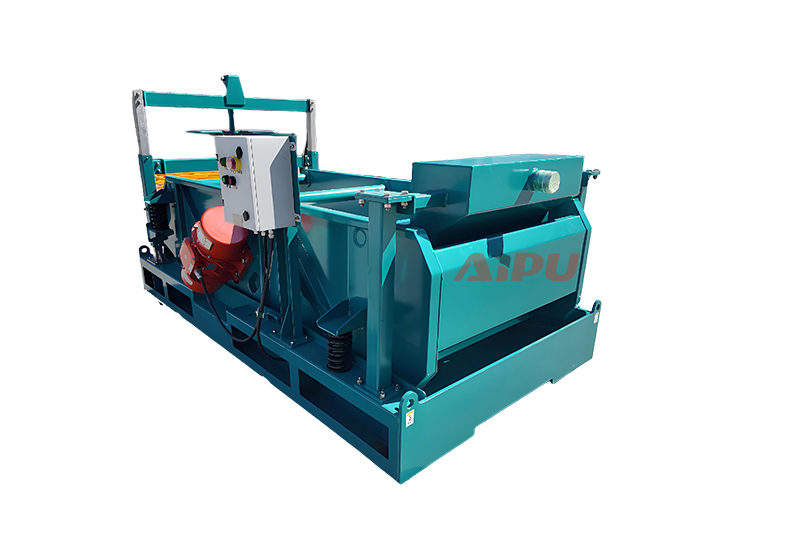
Screening Action: High-frequency, linear vibration creates a stratification and separation effect.
-
Screen Throughs (Recovered): Liquid and particles smaller than the screen mesh (including barite) pass through the screen and back to the mud tanks.
-
Screen Overs (Discard): Dried, sand-sized and finer solids are conveyed up the deck and discharged as waste.
-
Critical Process Interactions and Control Points
-
Apex Adjustment: The hydrocyclone's bottom opening is the primary control valve for the entire process.
-
Too Open: Produces a "wet" underflow (rope discharge), overloading the screen with fluid and reducing drying efficiency.
-
Too Closed: Creates a "dry" underflow (spray discharge), risking apex plugging and sending too many solids back to the active system via the overflow.
-
Optimal: A consistent "spray" pattern that delivers a concentrated slurry the screen can effectively dry.
-
-
Screen Mesh Selection: Dictates the final cut-point and recovery efficiency.
-
For Weighted Muds (Barite Recovery): 150-200 mesh. Allows spherical barite (~75 microns) to pass while retaining plate-like drilled solids.
-
For Unweighted Muds (Solids Removal): 150-200 mesh. Focuses on maximum solids drying and fluid recovery.
-
-
Feed Density Management: High-density feed reduces hydrocyclone efficiency and increases screen loading. Strategic dilution upstream can optimize the entire process.
Application-Specific Process Paths
A. For Unweighted Drilling Muds:
[Whole Mud from Shaker Tank]
          ↓
[Charge Pump] → Pressurizes feed
          ↓
[Mud Cleaner Hydrocyclones] → DESANDING
          ↓
[Fine-Mesh Screen (e.g., 200)] → SCREENING & DRYING
         ↙️               ↘️
[Clean Fluid to Tanks]  [Dry Solids to Waste]
-
Process Goal: Maximum removal of sand and silt in one compact unit.
B. For Weighted Drilling Muds (with Barite):
[Desander Underflow (Sand + Barite + Fluid)]
          ↓
[Mud Cleaner Hydrocyclones] → Further concentration
          ↓
[Fine-Mesh Screen (e.g., 150)] → BARITE RECOVERY SCREEN
         ↙️               ↘️
[Barite & Fluid to Tanks] [Dry, Fine Solids to Waste]
-
Process Goal: Salvage barite from the desander's waste stream; discard only low-gravity drilled solids.
Performance Indicators of an Optimized Process
-
Visual Underflow: Hydrocyclone discharges a consistent "spray" or "umbrella" pattern.
-
Screen Behavior: Fluid passes through screen with minimal pooling; solids convey dry off the discharge end.
-
Discard Condition: Solids should form a "cookie" that breaks, not bends, when handled (indicating low liquid content).
-
System Stability: Mud properties (density, viscosity) in the active system remain stable with minimal dilution.
Common Process Challenges and Solutions
| Challenge | Cause | Solution |
|---|---|---|
| Screen Blinding | Sticky clays or high feed density | Use non-blinding pyramid screens; install spray bars; dilute feed. |
| Apex Plugging | Oversized solids or thickened underflow | Ensure proper shaker performance upstream; adjust apex size; check feed density. |
| Poor Drying | Too-wet underflow or insufficient vibration | Adjust apex to drier setting; increase shaker G-force; reduce feed rate. |
| Barite Loss | Screen mesh too fine or torn | Use correct mesh for barite size; implement regular screen inspection. |
Conclusion
The mud cleaner's integrated screening and desanding process transforms two simple separation principles into a sophisticated recovery system. By using hydrocyclones to concentrate the problem solids and a fine screen to selectively separate them from valuable components, it solves a critical economic dilemma in drilling: how to remove harmful abrasives without discarding expensive drilling fluid ingredients. This tandem process is what enables the practical use of weighted muds and makes fine-solids control both technically feasible and economically viable in modern drilling operations. The efficiency of the entire solids control system often hinges on the precise tuning and operation of this combined process within the mud cleaner.
Related Products