Shale Shaker Definition in Oil and Gas: The Essential Primary Solids Control Equipment
In the specialized vocabulary of the oil and gas industry, few terms are as universally recognized yet technically nuanced as "shale shaker." While the name suggests a simple shaking device, the shale shaker definition in oil and gas encompasses a highly engineered piece of equipment critical to the success, safety, and economics of drilling operations. This article provides a precise definition, explores the technical underpinnings of its design, and explains why this equipment is the foundation of effective solids control.
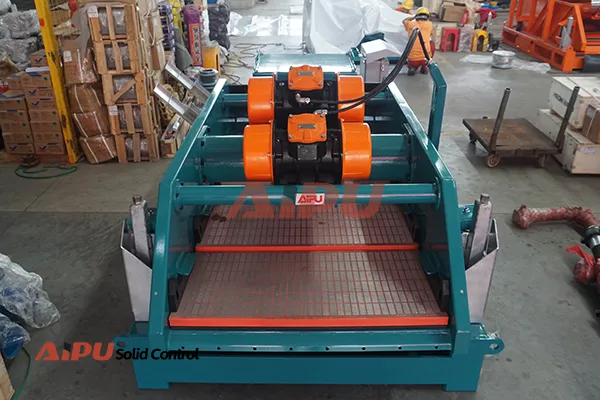
Formal Definition of a Shale Shaker
In the context of oil and gas drilling, a shale shaker is defined as the first-stage mechanical solids control device used to remove large-diameter drill cuttings and formation solids from the circulating drilling fluid system. It operates on the principle of vibratory screening, wherein returning mud from the wellbore annulus is passed over one or more angled, vibrating screen decks. The vibration facilitates the separation of solids (typically larger than 74–100 microns) from the liquid phase, allowing the cleaned drilling fluid to be recovered for recirculation while the separated cuttings are discarded or directed to downstream processing.
From a regulatory and operational standpoint, the shale shaker is the initial barrier preventing the accumulation of detrimental drilled solids in the active mud system. Its performance directly dictates the efficiency of all subsequent solids control equipment, including desanders, desilters, and centrifuges.
Core Components and Mechanical Definition
To fully understand the shale shaker definition in oil and gas, it is necessary to examine the primary sub-systems that constitute the equipment:
-
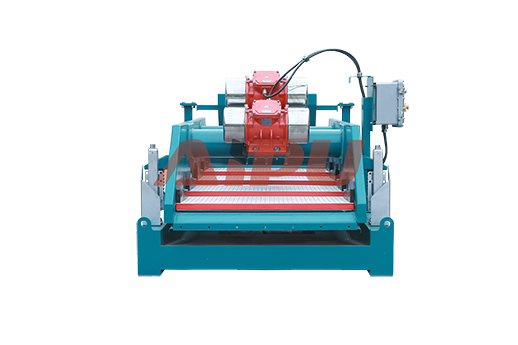
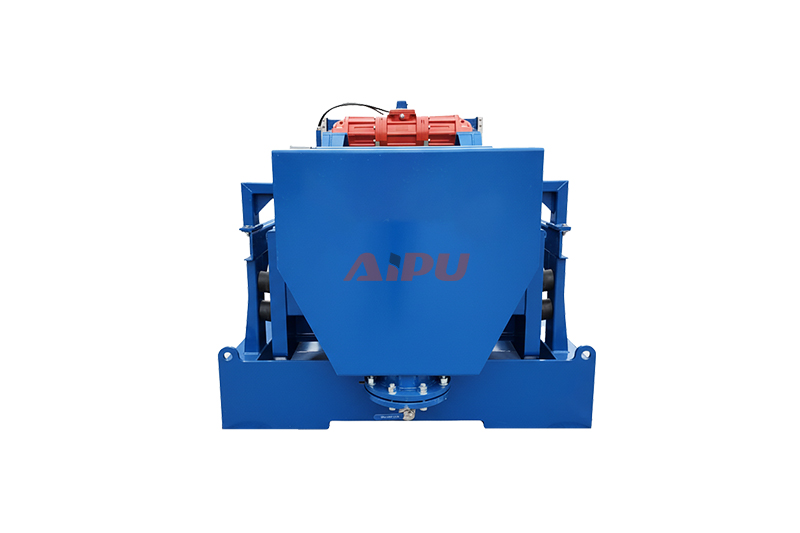
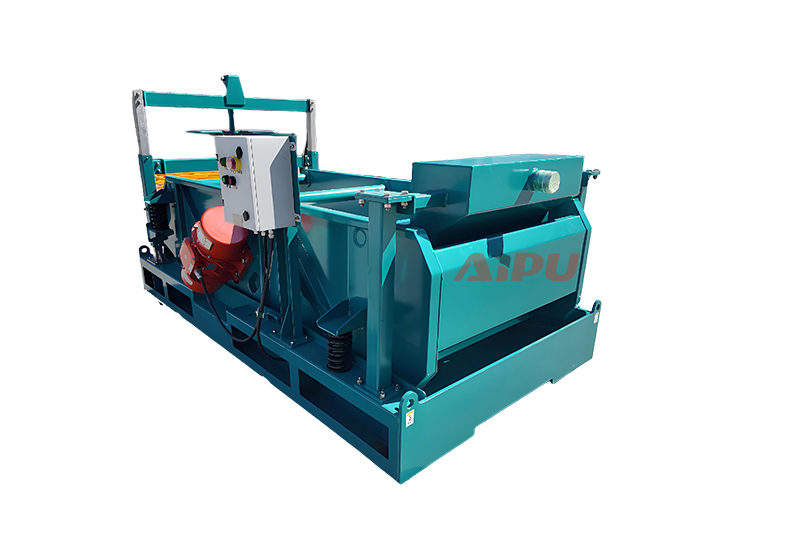
Vibrating Basket Assembly: A robust, dynamically balanced steel structure designed to withstand continuous high-frequency oscillation. It houses the screen bed and transfers vibratory energy uniformly across the screening surface.
-
Screen Panels (API Screens): Precision-manufactured filtration media with designated mesh sizes conforming to API RP 13C standards. The screen's conductance and cut point define the shaker's separation efficiency.
-
Vibratory Motors: Typically two counter-rotating, explosion-proof electric motors that generate the directional force vector. The positioning and rotational synchronization determine whether the shaker operates in linear motion or balanced elliptical motion.
-
Deck Angle Adjustment Mechanism: A manual or hydraulic system allowing operators to modify the basket's slope relative to the horizontal plane. This adjustment is critical for managing fluid retention time and solids transport velocity.
The Role of the Shale Shaker in the Drilling Fluid Cycle
Defining a shale shaker requires contextualizing its position within the drilling fluid circulation loop:
-
Mud Return: Drilling fluid carrying crushed rock (cuttings) exits the well via the annulus and travels up the flow line.
-
Primary Separation: The fluid-solids mixture is directed into the shaker's feeder, which distributes it across the vibrating screens.
-
Fluid Recovery: The liquid phase and fine particles pass through the screen openings and gravity-flow into the active mud tanks.
-
Solids Disposal: The retained cuttings are vibrated off the discharge end of the deck into a collection box, cuttings dryer, or transfer system.
Without this critical first step, the entire mud system would be overwhelmed by abrasive solids within a matter of hours, leading to catastrophic pump failure and well control issues.
Distinguishing Features of a Modern Shale Shaker
The modern definition of a shale shaker in oil and gas extends beyond basic screening. Advanced features now include:
-
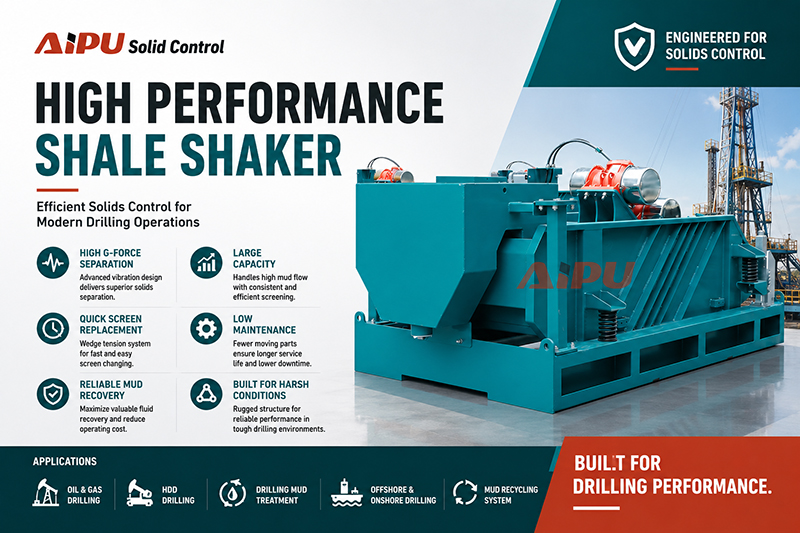
High G-Force Capability: Modern shakers operate at sustained acceleration levels of 6.0G to 7.5G, enabling effective separation of sticky or hydrated clay solids that would blind conventional screens.
-
Dual-Motion Technology: Advanced models offer the ability to switch between linear and elliptical vibration patterns. Linear motion excels at conveying coarse, abrasive cuttings, while elliptical motion is superior for processing viscous muds and preventing screen blinding in reactive shale formations.
-
Composite Screen Technology: The use of durable, non-metallic composite frames and layered mesh improves screen life and provides more consistent cut points compared to traditional steel frames.
AIPU Hunter-MG Series: Embodying the Definition of High-Performance Shale Shakers
When discussing the shale shaker definition in oil and gas, the AIPU Hunter-MG series serves as a benchmark for modern design and manufacturing excellence. Aipu Solid Control Co., Ltd, leveraging over 20 years of industry experience, has engineered the Hunter-MG lineup to meet the rigorous demands of global drilling operations.
Precision Engineering for Defined Separation
The Hunter-MG series is defined by its versatile capacity range and robust construction. The lineup includes:
-
Hunter-MG3: 2.0 m² screen area, 120 m³/h capacity.
-
Hunter-MG4: 2.7 m² screen area, 140 m³/h capacity.
-
Hunter-MG5: 3.4 m² screen area, 180 m³/h capacity.
-
Hunter-MG4T: 8.1 m² screen area, 420 m³/h capacity.
Each model features an adjustable deck angle from -1° to +5°, allowing drilling crews to fine-tune the shaker's performance in real time to match varying lithology and drilling rates. The screen panels are available in steel-framed or composite-framed options, and electrical systems are fully customizable to meet international voltage and frequency standards.
Advanced Motion: The Hunter-MGD Dual-Motion Shaker
For operators seeking the pinnacle of adaptability, the Hunter-MGD redefines the capabilities of a primary shaker. This model utilizes specialized motors to achieve both balanced elliptical and linear vibration modes using only two motors. This internationally advanced design concept allows the shaker to transition seamlessly between modes while running. In balanced elliptical mode, it efficiently handles sticky, hydrated clays that cause screen blinding; in linear mode, it aggressively conveys coarse, abrasive sandstone cuttings. This dual functionality eliminates the need for multiple shaker configurations on the same rig.
Reliability and Compliance
Adhering to the strict definition of oilfield equipment, the Hunter-MG series is built with explosion-proof motor options (ATEX, IECEX available) and heavy-duty corrosion-resistant coatings. The shakers are manufactured in a 50,000-square-meter production facility equipped with advanced manufacturing systems, ensuring that every unit delivered meets stringent API and HSE requirements.
Conclusion
The shale shaker definition in oil and gas is more than a dictionary entry; it is a functional specification for a device that protects millions of dollars in drilling assets, preserves the integrity of engineered drilling fluids, and minimizes environmental waste. It is the indispensable first step in the solids control hierarchy. By selecting a shaker that aligns with the highest standards of engineering—such as the AIPU Hunter-MG series—drilling contractors ensure that this definition translates into tangible operational efficiency, reduced non-productive time, and lower total well costs.
Related Products