How does a shale shaker work
Based on the content from the provided product catalogs, here is a detailed explanation of how a shale shaker works.
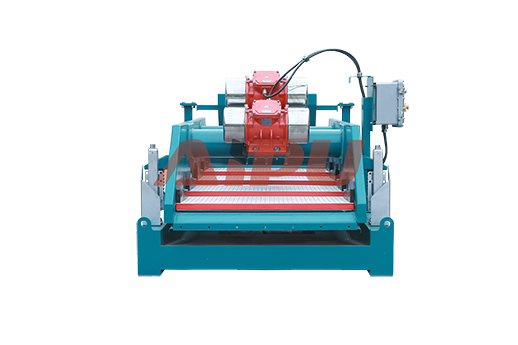
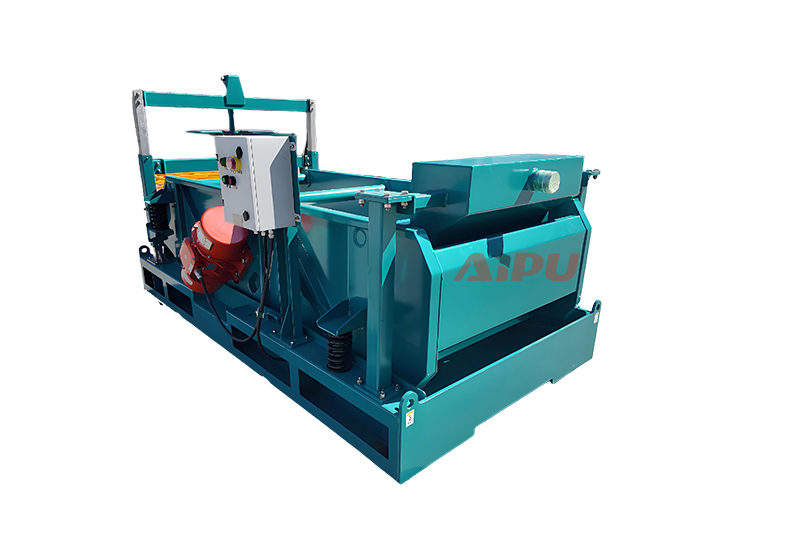
A shale shaker is the primary and first-stage solids control equipment in a drilling rig's mud system. Its core function is to separate large drilled cuttings from the drilling fluid (mud) that returns from the wellbore. The working principle is a combination of vibrational motion and mechanical screening.
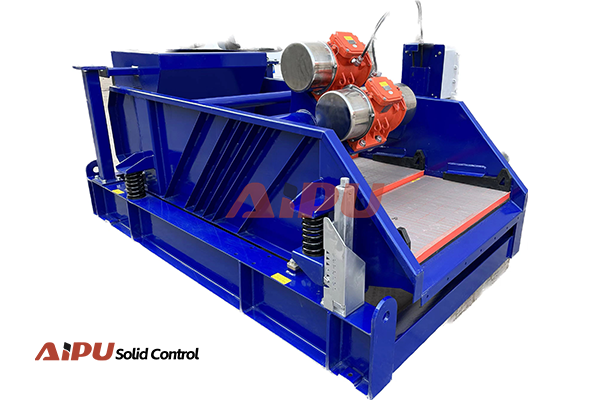
Here is a step-by-step breakdown of its operation:
-
Feeding: The unprocessed drilling fluid, laden with cuttings of various sizes, is fed onto the shaker. It is typically distributed evenly across the width of the inclined screen deck(s).
-
Vibration and Separation: This is the core of the process. The screen deck is mounted on a vibrating system powered by eccentrically weighted motors.
-
The motors generate a high-frequency, oscillating motion (linear, elliptical, or a combination) that is transmitted to the entire screen deck.
-
This vigorous shaking action has two key effects:
-
Liquid and Fine Particle Passage: It forces the liquid drilling fluid and particles smaller than the screen mesh openings to pass through the screen. This "clean" or processed mud is collected in a tank below the shaker and returns to the active mud system.
-
Solid Conveyance and Discharge: It propels the larger solid particles (cuttings) that cannot pass through the screen mesh to travel upthe inclined deck. The vibrational motion conveys these separated solids to the discharge end of the shaker, where they fall off into a collection trough or bin for disposal.
-
-
-
Key Operational Features (from the AIPU catalog):
-
Screen Mesh: The size of the screen openings (measured in mesh or microns) determines the cut-point—the size of the smallest particles removed. The document notes that screens are a critical component, with options for steel-framed or composite-framed panels.
-
Deck Angle: The angle of the screen panels is often adjustable (e.g., AIPU's Hunter-MG series offers an adjustment range of -1° to +5°). A steeper angle increases the conveyance speed of solids but may reduce liquid throughput. A shallower angle allows more time for liquid to pass through, potentially increasing fluid recovery.
-
Motion Type: Different vibration patterns optimize performance for different conditions.
-
Linear Motion: Provides positive solids conveyance, good for sticky solids and high flow rates.
-
Elliptical/Balanced Motion: Offers a good balance between fluid processing and solids conveyance.
-
Dual Motion: Advanced shakers like the AIPU Hunter-MGD can switch between linear and elliptical motion during operation. As the catalog states, this allows the shaker to "adapt the vibration pattern to actual drilling conditions for optimal use." Only two motors are needed to achieve this dual-motion functionality.
-
-
-
Result: The process results in a continuous separation stream: cleaned drilling fluid returns to the circulating system, and dry(er) drilled cuttings are discarded. This first-stage removal is crucial as it protects downstream equipment (like desanders, desilters, and centrifuges) from being overloaded with large, abrasive particles, thereby improving the efficiency and longevity of the entire solids control system.
In summary, a shale shaker works by using controlled vibration to stratify incoming dirty mud on a screen, allowing liquid and fine particles to fall through while mechanically conveying and discharging the larger cuttings off the end of the screen.
Related Products