Basic Introduction to Shale Shaker: Understanding the First Step in Solids Control
For anyone entering the oil and gas drilling industry, or even for experienced professionals seeking a refresher, a solid grasp of the basic introduction to shale shaker equipment is essential. The shale shaker is often the first major piece of machinery encountered on a drilling rig's mud return system, and its function sets the stage for the entire drilling fluid management process. This article provides a foundational overview of what a shale shaker is, how it operates, its key components, and why it is considered the cornerstone of effective solids control.
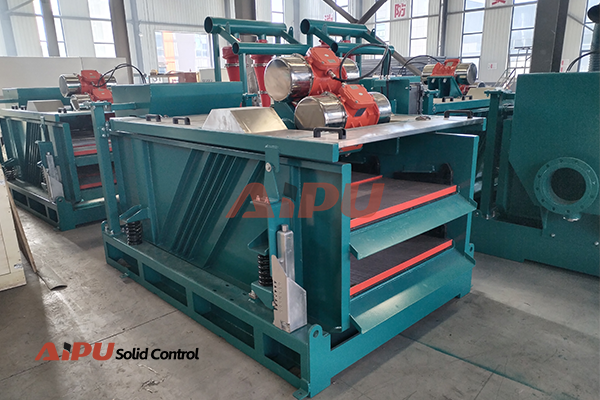
What Is a Shale Shaker? A Simple Definition
At its simplest, a shale shaker is a vibrating screening device designed to separate solid particles (drill cuttings) from the liquid drilling fluid (drilling mud) as it returns from the wellbore. Imagine a kitchen sieve that uses vibration instead of manual shaking to separate solids from liquids—this is the fundamental concept, scaled up to handle hundreds of cubic meters of mud per hour in demanding industrial conditions.
In the context of a drilling rig, the shale shaker sits directly downstream of the well's flow line. As mud carrying crushed rock and formation debris exits the well, it flows onto the shaker's vibrating screens. The liquid and fine particles pass through the mesh openings, while larger cuttings are retained on the screen surface and conveyed to a discharge point for disposal or further treatment.
Core Components of a Shale Shaker
To understand the basic introduction to shale shaker operation, it helps to be familiar with its main parts:
-
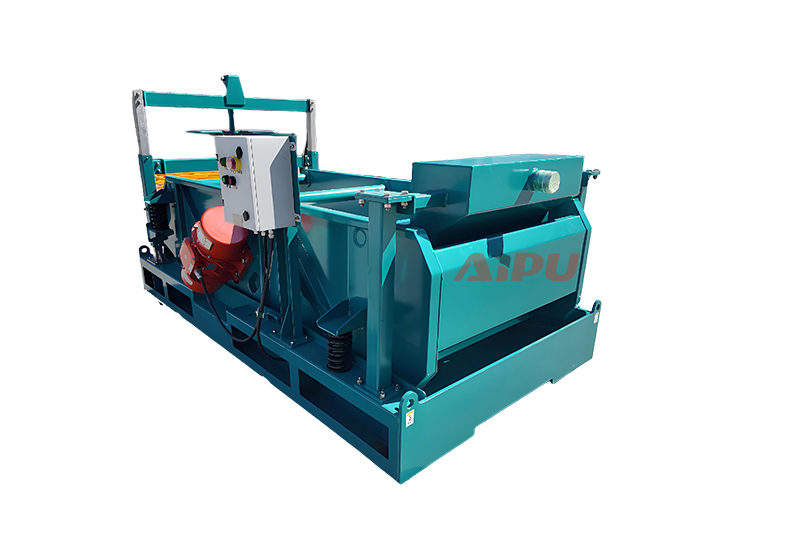
Feed Box (Feeder / Flow Distributor): This component receives the returning mud from the flow line and distributes it evenly across the width of the screen. Even distribution is critical for maximizing the effective screening area and preventing localized overloading.
-
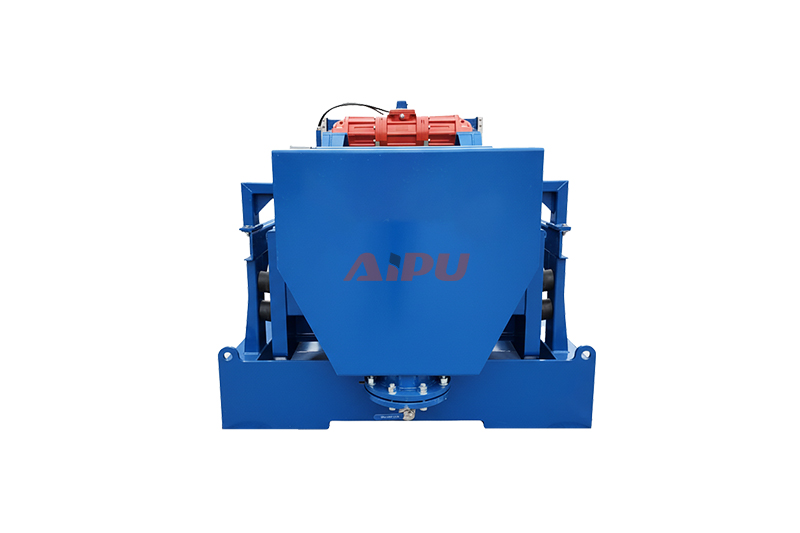
Screen Basket: The basket is a robust steel frame that holds the screen panels and vibrates as a single unit. It is engineered to withstand high G-forces and the abrasive nature of drilling solids.
-
Screen Panels: These are the replaceable filtering elements. Modern shakers use pre-tensioned screens manufactured to precise API (American Petroleum Institute) specifications. The screen "mesh" or "API number" determines the size of particles that will be separated.
-
Vibratory Motors: Typically two electric motors mounted on the basket. They are the power source for the shaker's motion. By rotating in specific directions and at specific speeds, they generate the vibration necessary for separation and solids transport.
-
Deck Angle Adjustment: Most modern shakers allow the operator to change the incline of the basket. Adjusting the deck angle alters how quickly solids move across the screen and how long the liquid has to pass through the mesh.
How Does a Shale Shaker Work? The Basic Principle
The working principle of a shale shaker relies on controlled, high-frequency vibration. As the mud pool contacts the vibrating screen surface, two things happen simultaneously:
-
Separation: The vibration energy fluidizes the mud, breaking down its gel structure and reducing its viscosity near the screen surface. This allows the liquid portion to flow through the screen openings (apertures) under gravity.
-
Transportation: The directional force generated by the vibratory motors propels the retained solid cuttings across the screen deck. Because the deck is typically angled slightly uphill, the solids are conveyed toward the discharge end while clean mud passes through below.
This continuous process ensures that the drilling fluid is quickly cleaned and returned to the active mud system, while waste solids are removed from the circulating stream.
Why Is the Shale Shaker So Important?
In any basic introduction to shale shaker systems, emphasis must be placed on its critical role. The shale shaker is the first line of defense in the solids control chain. Its performance has direct consequences for:
-
Drilling Efficiency: Cleaner mud leads to faster drilling rates (ROP).
-
Equipment Life: Removing abrasive solids prevents premature wear on mud pumps, drill bits, and downhole tools.
-
Cost Control: Recovering expensive drilling fluid and reducing waste disposal volumes directly lowers well costs.
Without an effective shale shaker, the entire drilling operation becomes less economical and more prone to mechanical failures.
AIPU Hunter-MG Series: A Modern Introduction to Shale Shaker Excellence
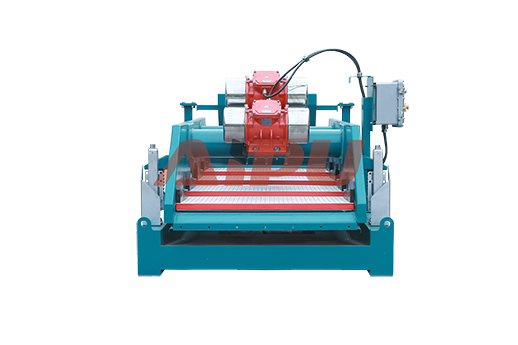
When looking for a practical example of a well-engineered shale shaker, the AIPU Hunter-MG series represents the current industry standard for reliability and performance. Aipu Solid Control Co., Ltd brings over 20 years of specialized experience to the design and manufacture of these essential machines.
Models Tailored to Your Operation
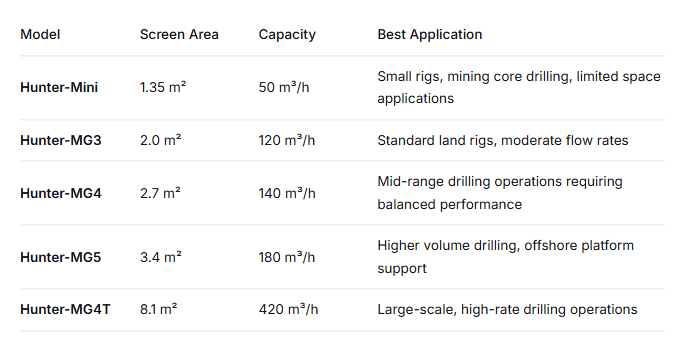
The Hunter-MG lineup is designed to accommodate a wide range of drilling rig sizes and mud flow rates:
Key Features for Reliable Operation
The Hunter-MG series incorporates several features that make it an ideal choice for drilling contractors worldwide:
-
Adjustable Deck Angle: Operators can adjust the basket angle from -1° to +5°, providing real-time control over fluid retention and solids conveyance speed. This is particularly useful when transitioning between different formation types.
-
Premium Vibratory Motors: The shakers are equipped with motors from internationally recognized brands such as Italvibras, Martin, and Oli, ensuring consistent vibration force and long service life.
-
Flexible Screen Options: Screens are available in both traditional steel-framed and lightweight composite-framed designs, allowing users to balance cost and durability based on their specific needs.
-
Dual-Motion Capability (Hunter-MGD): For operators facing highly variable drilling conditions, the Hunter-MGD model offers the unique ability to switch between linear motion (best for coarse, abrasive cuttings) and balanced elliptical motion (best for sticky, reactive clays). This advanced feature, achieved with only two motors, maximizes the shaker's effectiveness across the entire well profile.
Built to Last
Every Hunter-MG shaker undergoes rigorous quality control, including strict sand-blasting and the application of heavy-duty anti-corrosion coatings. Electrical systems are customizable for global power standards (380V/50Hz or 460V/60Hz), and optional certifications such as ATEX and IECEX are available for hazardous area operation.
Conclusion
This basic introduction to shale shaker technology highlights its indispensable role in modern drilling. It is the first and most impactful step in managing drilling fluids—protecting equipment, preserving mud properties, and minimizing environmental waste. By choosing a robust and adaptable shaker like the AIPU Hunter-MG series, drilling operations establish a solid foundation for efficiency, safety, and cost-effectiveness from the very start of the well.
Related Products