Shale Shaker in Oil Drilling Process: The First Critical Step in Solids Control
In the complex sequence of operations that constitute modern oil and gas drilling, the shale shaker occupies a position of foundational importance. While drilling a well involves the coordinated effort of dozens of specialized systems—hoisting, rotating, circulating, and well control—the shale shaker is the gateway through which every liter of drilling fluid must pass before it can be safely reused. Understanding the role of the shale shaker in oil drilling process is essential for anyone seeking to optimize rig performance, reduce operational costs, and maintain environmental compliance. This article explores precisely where the shale shaker fits in the drilling workflow, what it accomplishes, and how it interfaces with the broader solids control system.
The Drilling Fluid Circulation Loop: Where the Shale Shaker Fits
To appreciate the shale shaker's role, one must first understand the drilling fluid circulation system. The process is continuous and cyclical:
-
Downhole Circulation: Drilling fluid (mud) is pumped from the surface mud tanks down the drill string, through the drill bit nozzles, and back up the annular space between the drill pipe and the wellbore wall.
-
Cuttings Transport: As the bit crushes rock at the bottom of the hole, the resulting fragments—called drill cuttings—are entrained in the upward-flowing mud and carried to the surface.
-
Surface Processing: The mud and cuttings mixture exits the well through the flow line and enters the solids control equipment.
-
Recirculation: Once cleaned, the mud is returned to the active tanks for conditioning and pumped back downhole.
The shale shaker is the very first piece of equipment in the surface processing chain. It is positioned directly at the end of the flow line, before any other treatment device. This strategic placement makes it the primary defense against the accumulation of drilled solids in the active mud system.
Step-by-Step: The Shale Shaker's Function During Drilling
When drilling is underway, the shale shaker operates continuously, performing a series of critical functions that directly impact the well's progress:
1. Immediate Removal of Coarse Cuttings
As the mud stream flows onto the vibrating screens, the shaker applies high-frequency G-forces (typically 6.0–7.5G) that fluidize the mud layer. The liquid and fine particles (smaller than the screen's cut point, typically 74–100 microns) pass through the mesh openings and gravity-flow into the sand trap or active tank below. The larger, heavier drill cuttings are retained on the screen surface.
2. Continuous Solids Conveyance and Disposal
The angled deck and directional vibration work together to convey the retained cuttings toward the discharge end of the shaker. This is a continuous process: as new mud enters the feed box, separated cuttings are simultaneously ejected into a collection trough, cuttings box, or screw conveyor for further treatment or disposal.
3. Protection of Downstream Solids Control Equipment
By removing the bulk of the coarse solids, the shale shaker significantly reduces the solids loading on subsequent equipment in the drilling process:
-
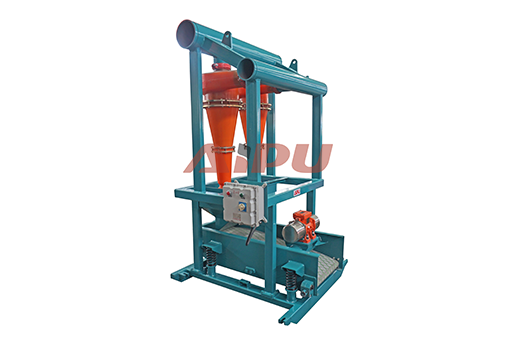
Desanders: Remove medium-sized particles (44–74 μm). Without effective shaker performance, desander cones would clog and wear rapidly.
-
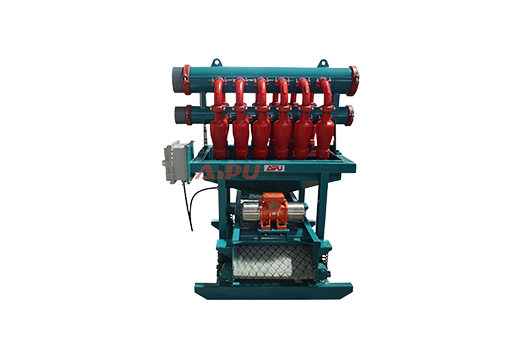
Desilters: Remove fine particles (15–44 μm). Overloading desilters with coarse solids renders them ineffective and shortens their service life.
-
Centrifuges: Perform ultra-fine separation (2–7 μm). Excessive solids entering the centrifuge increase torque, reduce separation efficiency, and can cause mechanical failure.
4. Preservation of Drilling Fluid Properties
During the drilling process, maintaining the engineered properties of the mud—density, viscosity, gel strength, and filtration control—is paramount. Accumulated drilled solids degrade these properties, leading to:
-
Increased plastic viscosity and pump pressure.
-
Thicker filter cakes and higher risk of differential sticking.
-
Greater consumption of expensive chemical additives and dilution fluids.
The shale shaker, by removing solids at the source, helps preserve the designed mud rheology, enabling faster rates of penetration (ROP) and reducing non-productive time (NPT).
5. Reduction of Waste Volume and Environmental Impact
Effective separation at the shale shaker stage minimizes the total volume of drilling waste requiring treatment and disposal. This is especially critical when drilling with oil-based mud (OBM) or synthetic-based mud (SBM), where waste disposal costs are high and environmental regulations are stringent. The shaker's ability to recover clean mud for reuse directly reduces the volume of contaminated cuttings that must be managed.
Integrating the Shale Shaker into the Drilling Process: Key Considerations
The performance of a shale shaker in the oil drilling process is not automatic; it depends on proper selection, setup, and operation. Key factors include:
-
Flow Rate Capacity: The shaker must be sized to handle the maximum anticipated mud flow rate from the well. Undersized shakers lead to mud losses over the discharge end (blinding) or overflow of the feed box.
-
Screen Selection: Choosing the correct API screen size is a balance between maximizing fluid recovery and achieving the desired cut point. Finer screens remove more solids but may reduce fluid capacity.
-
Deck Angle Adjustment: The ability to adjust the basket angle allows drillers to fine-tune the shaker's performance in real time as formation characteristics change. A flatter angle increases fluid retention for better recovery in OBM; a steeper angle speeds solids removal in fast, unconsolidated drilling.
-
Vibration Motion Type: Linear motion shakers are the industry standard for general drilling, while balanced elliptical motion shakers offer advantages in sticky, reactive clay formations by reducing screen blinding.
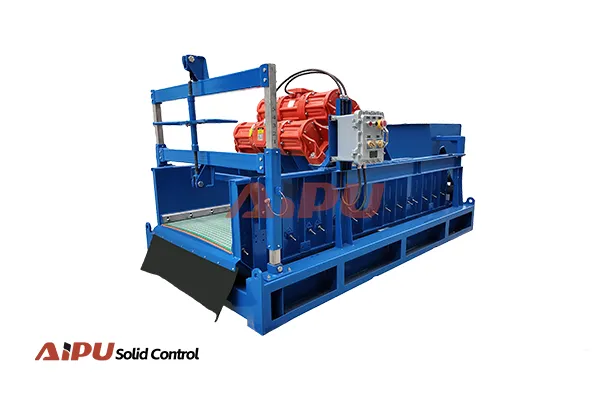
AIPU Hunter-MG Series: Optimized for the Modern Drilling Process
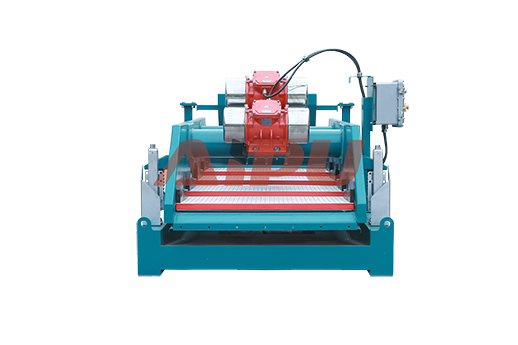
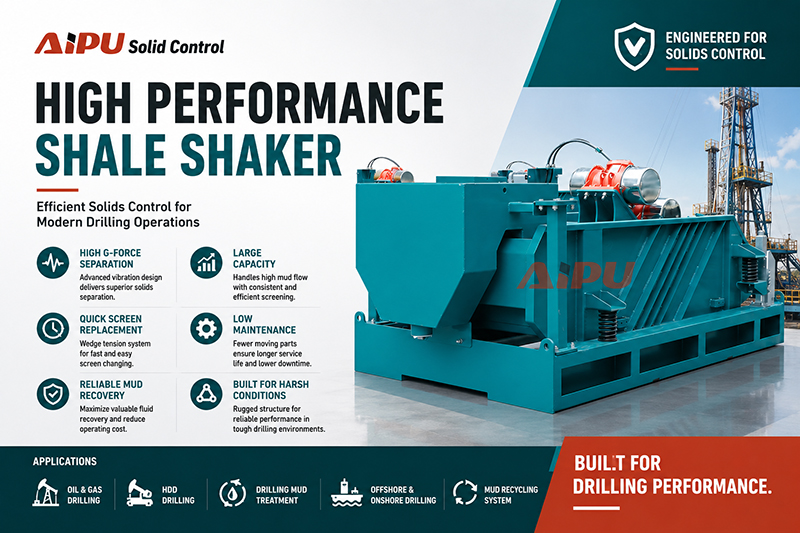
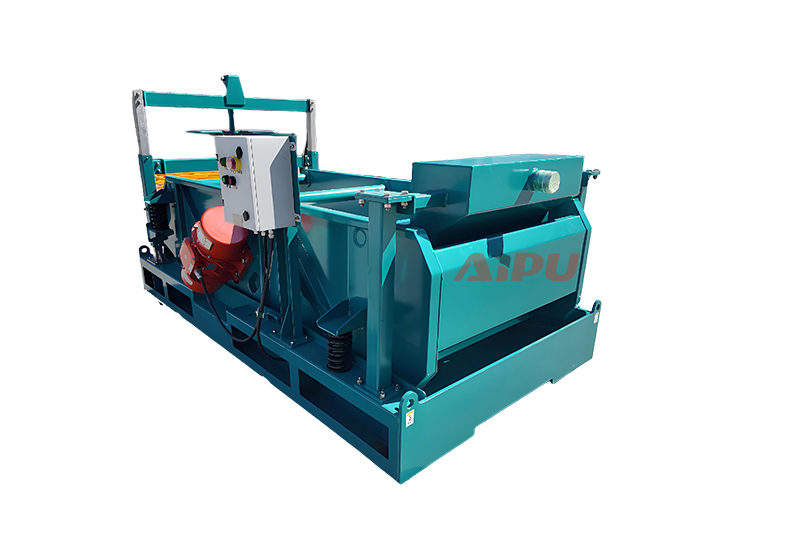
The AIPU Hunter-MG series shale shaker is engineered specifically to excel within the demanding oil drilling process. Manufactured by Aipu Solid Control Co., Ltd, with over two decades of specialized expertise, these shakers incorporate features that address the real-world challenges drillers face daily.
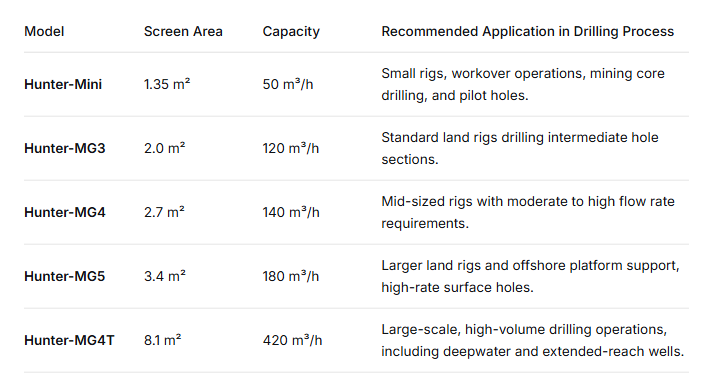
Models Engineered for Every Stage of the Drilling Process
Features That Enhance the Drilling Process
-
Adjustable Deck Angle (-1° to +5°): Enables real-time optimization as the drill bit passes through alternating sand, shale, and limestone formations. Operators can fine-tune fluid retention and solids conveyance without stopping circulation.
-
Premium Vibratory Motors: Equipped with motors from globally trusted brands such as Italvibras, Martin, and Oli, Hunter-MG shakers deliver consistent G-forces and long service intervals, reducing maintenance-related downtime.
-
Dual-Motion Technology (Hunter-MGD): For wells that encounter highly variable lithology, the Hunter-MGD provides the ability to switch between linear and balanced elliptical motion while drilling. This adaptability ensures optimal separation whether drilling abrasive sandstone at high ROP or sticky, swelling clays.
-
Flexible Screen Options: Both steel-framed and composite-framed screen panels are available, allowing operators to match screen durability and cost to the specific phase of the drilling process.
-
Robust Construction: Manufactured in a 50,000-square-meter facility with advanced production equipment, each shaker undergoes strict sand-blasting and anti-corrosion coating procedures to withstand the harshest drilling environments, both onshore and offshore.
Seamless Integration with Downstream Equipment
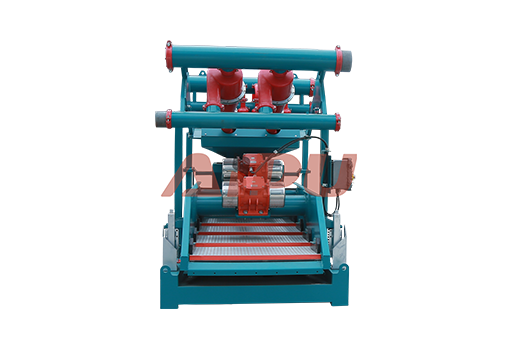
The Hunter-MG series is designed to integrate smoothly with Aipu's complete line of solids control equipment, including desanders, desilters, mud cleaners, and centrifuges. This ensures a cohesive system where each component operates within its optimal performance envelope, maximizing overall drilling efficiency.
Conclusion
The shale shaker in the oil drilling process is far more than a preliminary screening device—it is the cornerstone of effective drilling fluid management. By removing harmful drill cuttings at the very first opportunity, it protects expensive capital equipment, preserves vital mud properties, reduces waste disposal costs, and ensures the entire solids control system functions as designed. Investing in a high-performance shaker like the AIPU Hunter-MG series is a strategic decision that pays dividends throughout the well construction process, from spud to total depth.
Related Products