How Shale Shaker Improves Drilling Efficiency: The Critical Link Between Solids Control and Rig Perf
In the competitive landscape of oil and gas drilling, drilling efficiency is the metric that separates profitable operations from marginal ones. Every component on a rig—from the drill bit to the mud pumps—must contribute to reducing non-productive time (NPT) and lowering the cost per foot drilled. Among these components, the shale shaker stands out as a surprisingly powerful driver of efficiency. Understanding how a shale shaker improves drilling efficiency reveals why this seemingly simple vibrating screen is actually a strategic asset that impacts everything from rate of penetration (ROP) to equipment longevity and fluid management costs. This article explores the multiple pathways through which an effective shale shaker enhances overall drilling performance.
1. Enabling Faster Rate of Penetration (ROP)
The most direct way a shale shaker improves drilling efficiency is by enabling the drill bit to cut faster. This connection is rooted in the relationship between drilling fluid properties and ROP.
When drilled solids accumulate in the circulating mud system, the fluid's plastic viscosity increases and its density rises. Higher viscosity mud requires greater pump pressure to circulate, and it exerts higher hydraulic resistance at the bit face, impeding the removal of freshly cut rock chips. This creates a phenomenon known as "chip hold-down," where cuttings are not efficiently swept away from the bit, causing the bit to re-grind already broken rock instead of cutting new formation. The result is slower drilling and accelerated bit wear.
An efficient shale shaker removes the bulk of coarse solids (>74 microns) immediately upon their return to the surface, preventing their recirculation and degradation into finer, more problematic particles. By maintaining lower solids content in the active mud, the shaker helps preserve lower plastic viscosity and optimized mud weight. This translates directly into higher ROP, allowing the rig to drill more footage in less time—a primary driver of overall well economics.
2. Reducing Non-Productive Time (NPT) from Equipment Failure
Drilling efficiency is severely compromised when operations must halt for unplanned maintenance or equipment replacement. Abrasive drill cuttings are a primary cause of such failures. Without effective primary solids removal, these sharp, hard particles recirculate and cause:
-
Premature wear of mud pump fluid ends: Liners, pistons, valves, and seats are eroded by the constant bombardment of abrasive solids. Pump failures require rig downtime for repair and can lead to lost circulation events.
-
Damage to downhole tools: Mud motors, MWD/LWD tools, and rotary steerable systems contain precision components that are highly sensitive to abrasive wear. Replacing a failed downhole tool can cost hundreds of thousands of dollars in equipment and days of rig time.
-
Accelerated drill bit wear: Recirculated cuttings dull bit cutting structures, requiring more frequent trips out of the hole to change bits. Each trip consumes valuable rig time and exposes the wellbore to potential instability.
By intercepting and removing coarse cuttings at the flow line, the shale shaker acts as a protective shield for the entire circulating system. This extends the service life of pumps, downhole tools, and drill bits, significantly reducing the frequency of unscheduled downtime and the associated costs. A reliable shaker like the AIPU Hunter-MG series contributes directly to higher operational availability and smoother drilling progress.
3. Minimizing Drilling Fluid Dilution and Chemical Costs
Maintaining the engineered properties of drilling fluid requires constant attention and chemical treatment. As fine solids accumulate, the mud's rheology degrades, necessitating the addition of expensive thinners, dispersants, and filtration control additives. Furthermore, to control density and viscosity, operators often resort to dilution—adding fresh base fluid (water, oil, or synthetic) and discarding a portion of the solids-laden mud.
Dilution is costly. It increases the total volume of fluid that must be purchased, mixed, and eventually disposed of. It also increases the volume of waste generated.
A high-performance shale shaker improves efficiency by maximizing the removal of solids at the source, thereby reducing the rate at which fine solids build up in the system. This translates to:
-
Lower consumption of chemical additives.
-
Reduced dilution requirements, saving on base fluid costs.
-
Less waste volume, lowering disposal expenses and environmental liability.
4. Optimizing Downstream Solids Control Equipment Performance
The shale shaker is the first component in a sequential solids control train. Its performance directly dictates the efficiency and longevity of downstream equipment—desanders, desilters, and centrifuges.
When a shaker fails to remove coarse solids, these particles enter the desander and desilter feed. The hydrocyclones become overloaded, experiencing:
-
Accelerated cone and apex wear.
-
Reduced separation efficiency, allowing more fine solids to return to the active system.
-
Increased frequency of plugging and maintenance.
This cascading effect forces the entire solids control system to operate outside its optimal design parameters, consuming more power and requiring more frequent intervention. An efficient shale shaker reduces the solids burden on downstream devices, allowing them to perform their specialized functions more effectively and with less maintenance. This integrated efficiency is a hallmark of well-designed drilling operations.
5. Enhancing Wellbore Stability and Reducing Drilling Problems
Excessive drilled solids in the mud contribute to a range of drilling problems that directly erode efficiency:
-
Thick filter cakes: Solids plastered against the wellbore wall create thick, permeable filter cakes that increase the risk of differential sticking—a costly and time-consuming problem where the drill string becomes immobilized against the borehole wall.
-
Increased surge and swab pressures: High-viscosity, solids-laden mud generates larger pressure fluctuations when the drill string is moved, increasing the risk of lost circulation or formation influx.
-
Poor hole cleaning: Inefficient mud struggles to lift cuttings out of deviated or horizontal well sections, leading to cuttings beds that can cause pack-offs and stuck pipe.
By maintaining a cleaner, lower-viscosity mud, an effective shale shaker helps mitigate these risks. The result is fewer drilling complications, smoother operations, and more predictable progress toward total depth.
AIPU Hunter-MG Series: Engineered to Maximize Drilling Efficiency
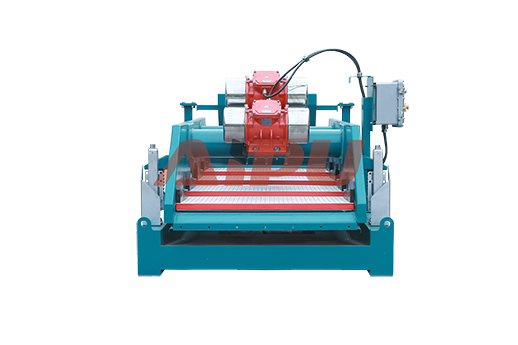
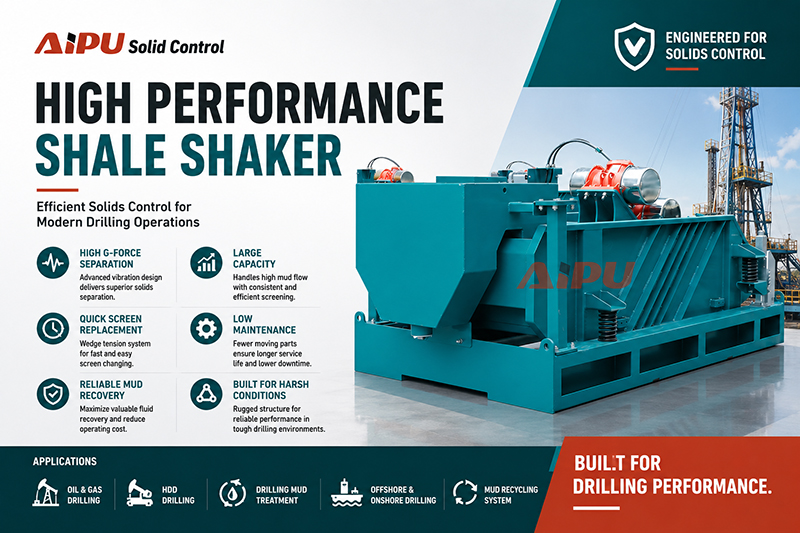
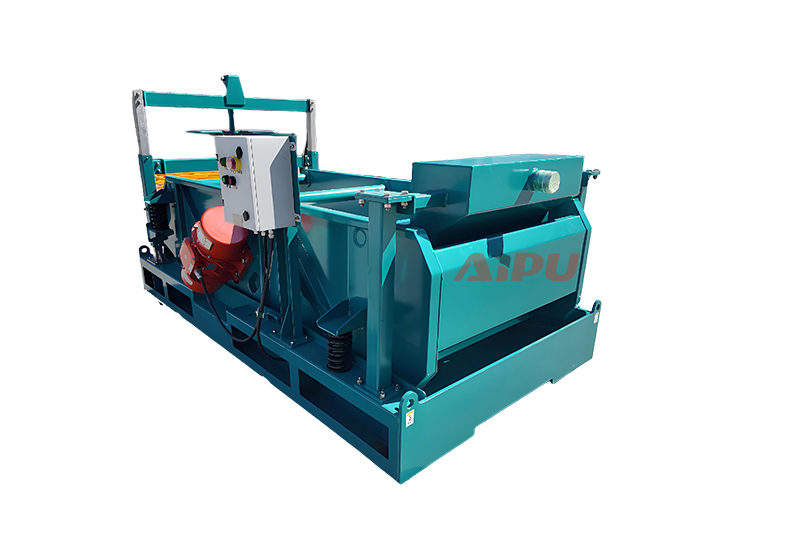
Recognizing how a shale shaker improves drilling efficiency is essential; selecting the right shaker to deliver those benefits is equally critical. The AIPU Hunter-MG series shale shaker is purpose-built to enhance drilling performance through superior solids separation. Manufactured by Aipu Solid Control Co., Ltd, drawing on over 20 years of specialized industry experience, the Hunter-MG lineup incorporates features that directly address the efficiency challenges outlined above.
High-Capacity Separation for Any Drilling Program
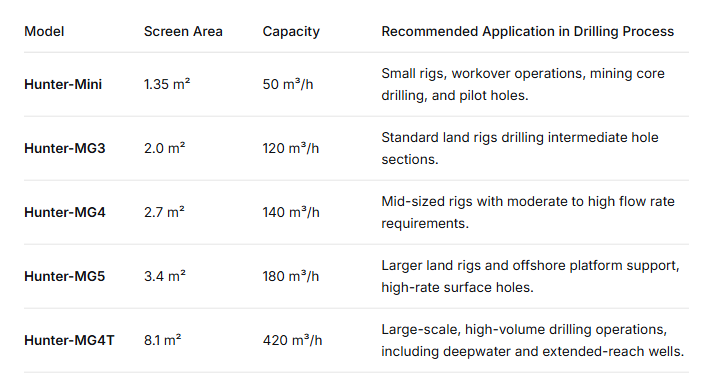
The Hunter-MG series offers a comprehensive range of models, ensuring that every rig—from small workover units to large offshore platforms—can be equipped with a shaker sized appropriately for its flow rate. This prevents the efficiency losses associated with undersized or overloaded equipment.
Features That Drive Efficiency Gains
-
Adjustable Deck Angle (-1° to +5°): The ability to fine-tune the basket angle in real time allows drillers to optimize fluid retention and solids conveyance as formation conditions change. In sticky clay sections, a flatter angle prevents screen blinding; in abrasive sand sections, a steeper angle accelerates cuttings removal. This adaptability keeps the shaker operating at peak efficiency regardless of lithology.
-
Premium Vibratory Motors: Equipped with motors from globally recognized brands like Italvibras, Martin, and Oli, Hunter-MG shakers generate consistent, high G-forces (6.0–7.0G) and double amplitudes (5–6 mm). This ensures effective stratification and rapid fluid throughput, preventing the buildup of a deep mud pool that can lead to fluid losses.
-
Dual-Motion Capability (Hunter-MGD): For drilling programs that encounter highly variable formations, the Hunter-MGD offers a unique efficiency advantage. With the ability to switch between linear motion (ideal for fast, abrasive drilling) and balanced elliptical motion (ideal for sticky, swelling clays) using only two motors, this shaker maintains optimal separation performance across the entire well profile without requiring shaker changes or reconfiguration.
-
Durable Screen Options: Hunter-MG shakers are compatible with both steel-framed and composite-framed screen panels. Composite screens offer lighter weight and excellent corrosion resistance, while steel frames provide rugged durability. The availability of precise API mesh sizes ensures that the optimal cut point can be selected to balance solids removal with fluid recovery—a key efficiency lever.
Reliable Operation and Reduced Maintenance
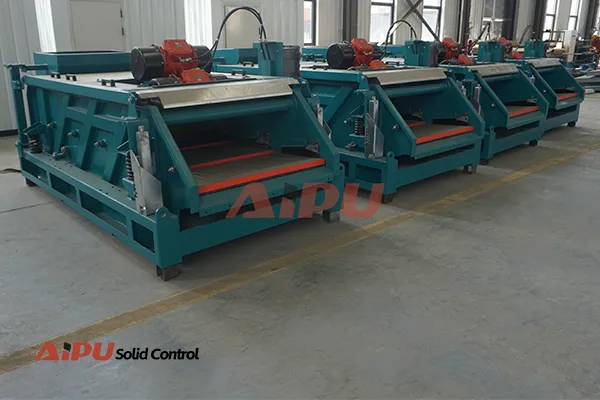
Efficiency is not just about what happens when the shaker is running; it's also about minimizing the time it is not. The Hunter-MG series is built for reliability. Robust welded construction, strict sand-blasting procedures, and heavy-duty anti-corrosion coatings ensure long service life in harsh environments. Customizable electrical systems (380V/50Hz or 460V/60Hz) and optional ATEX/IECEX certifications provide flexibility and safety compliance. Fewer shaker-related breakdowns mean more time drilling and less time troubleshooting.
Conclusion
The question of how a shale shaker improves drilling efficiency has a multi-faceted answer rooted in fundamental solids control principles. By rapidly removing abrasive drill cuttings from the circulating mud stream, an effective shaker enables faster ROP, protects high-value capital equipment, reduces fluid and chemical costs, optimizes downstream separation, and mitigates wellbore stability problems. Each of these contributions compounds to deliver measurable improvements in overall drilling performance and well economics. Investing in a high-performance shale shaker like the AIPU Hunter-MG series is not an expense—it is a strategic efficiency upgrade that pays dividends on every foot drilled.
Related Products