Shale Shaker Safety Tips: Essential Guidelines for Safe and Efficient Solids Control Operations
The shale shaker is a workhorse of the drilling rig, operating continuously under high vibration, heavy loads, and often in hazardous environments. While its primary function is solids separation, its safe operation is paramount to protecting personnel, preventing equipment damage, and ensuring uninterrupted drilling progress. Understanding and implementing proper shale shaker safety tips is not just a regulatory requirement—it is a fundamental responsibility for every rig crew member, from the derrickhand to the drilling supervisor. This article provides a comprehensive guide to shale shaker safety, covering pre-operation checks, operational best practices, maintenance precautions, and the importance of selecting equipment with inherent safety features.
1. Pre-Operation Safety Checks
Before starting a shale shaker, a thorough inspection is essential. Many incidents can be prevented by identifying potential hazards during the pre-start phase.
Visual and Structural Inspection
-
Check the Shaker Basket and Frame: Inspect welds, support beams, and the basket structure for cracks, corrosion, or signs of fatigue. High-frequency vibration (typically 6.0–7.0 G) places enormous stress on the frame. Any structural compromise can lead to catastrophic failure during operation.
-
Examine Vibration Isolation Springs or Mounts: Damaged or broken springs can cause the basket to vibrate erratically or contact the supporting skid, transmitting dangerous vibration to the rig structure.
-
Verify Screen Panel Installation: Loose or improperly wedged screen panels can detach during operation, becoming high-velocity projectiles. Ensure all screen wedges, tension bolts, and retaining mechanisms are secure and in good condition.
Electrical and Motor Safety
-
Inspect Power Cables and Connections: Look for frayed insulation, exposed conductors, or loose conduit fittings. In hazardous drilling environments, faulty electrical connections are a potential ignition source.
-
Verify Motor Guard Placement: All rotating motor shafts and couplings must have guards in place to prevent entanglement of clothing, tools, or limbs.
-
Confirm Area Classification Compliance: Ensure the shaker's electrical components—motors, junction boxes, control panels—are rated for the specific hazardous area classification of the rig (e.g., Class I, Division 1 or 2; ATEX/IECEX zones).
Work Area Preparation
-
Clear the Surrounding Area: Remove tools, wash-down hoses, and debris from around the shaker skid. Tripping hazards near vibrating equipment are especially dangerous.
-
Ensure Adequate Lighting: Proper illumination of the shaker deck, discharge chute, and control panel is critical for safe monitoring and adjustment.
-
Check Emergency Stop Functionality: Test the emergency stop button or pull-cord to confirm it immediately cuts power to the shaker motors.
2. Operational Safety Best Practices
Once the shaker is running, continuous vigilance and adherence to safe operating procedures are required.
Personal Protective Equipment (PPE)
Working around a shale shaker requires full PPE compliance:
-
Hearing Protection: Shale shakers typically generate noise levels of 85 dB or higher. Prolonged exposure without hearing protection can cause permanent hearing loss. Always wear earplugs or earmuffs in the shaker area.
-
Eye Protection: Mud splatter, fine cuttings dust, and the potential for high-pressure wash-down spray necessitate safety glasses with side shields or goggles.
-
Hand Protection: Screens can have sharp edges, and surfaces may be hot or contaminated with drilling fluids. Wear appropriate cut-resistant and chemical-resistant gloves when handling screens or working near the discharge.
-
Respiratory Protection: When drilling with oil-based mud or in formations containing H₂S, the shaker area may have elevated vapor or gas concentrations. Follow rig-specific respiratory protection protocols.
Safe Interaction with Operating Equipment
-
Never Touch Moving Screens or Motors: The shaker basket oscillates at high frequency. Contact with the moving basket or exposed motor shafts can cause severe crushing or entanglement injuries.
-
Use Caution When Adjusting Deck Angle: If the shaker is equipped with manual deck angle adjustment, stop the shaker before making changes. Never attempt to adjust hydraulic or manual angle mechanisms while the basket is vibrating.
-
Avoid Standing in the Discharge Path: The discharge chute ejects heavy, abrasive cuttings at a steady rate. Stand clear to avoid being struck by flying debris or engulfed in a cuttings pile.
-
Monitor Mud Levels: A high mud pool on the screen can indicate screen blinding or overloading. Do not attempt to clear blinded screens by hand while the shaker is running. Stop the shaker and use appropriate tools or adjust vibration settings.
Managing Screen Changes Safely
Screen changes are the most frequent maintenance task and a common source of injury.
-
Lockout/Tagout (LOTO): Before replacing screens, always lock out and tag out the electrical power source to the shaker motors. This prevents accidental startup while personnel are working on the basket.
-
Use Proper Lifting Techniques: Screens, especially larger composite or steel-framed panels, can be heavy and awkward. Use two-person lifts or mechanical assistance to prevent back and shoulder injuries.
-
Handle with Care: Screen edges are sharp. Wear gloves and handle panels from the sides to avoid cuts. Damaged screens with protruding wires are especially hazardous.
3. Maintenance Safety Precautions
Routine maintenance is essential for shaker reliability but must be performed with strict attention to safety.
-
Follow Lockout/Tagout Procedures: This applies not only to screen changes but also to motor lubrication, belt tensioning (if applicable), and electrical troubleshooting.
-
Allow Motors to Cool: Vibratory motors can reach high surface temperatures during operation. Allow sufficient cooling time before touching motor housings to prevent burns.
-
Use Proper Tools for Screen Removal: Use the manufacturer-supplied screen wedge removal tool. Improvising with pry bars or hammers can damage the basket and cause hand injuries.
-
Inspect Lifting Points: If the shaker basket or entire unit must be lifted for maintenance, use only designated lifting eyes and slings rated for the load. Inspect lifting hardware for wear or deformation before each use.
4. Hazardous Environment Considerations
Drilling operations often involve flammable gases, hydrogen sulfide (H₂S), and combustible dust. Shale shaker safety must account for these risks.
-
Explosion-Proof Equipment: In areas where flammable gases or vapors may be present, the shaker's electrical components must carry appropriate certifications (e.g., ATEX, IECEX). Using non-certified equipment in a classified area can have catastrophic consequences.
-
H₂S Awareness: When drilling in sour gas zones, H₂S can be released at the shaker as gas breaks out of the mud. Ensure fixed or portable H₂S monitors are functioning and that personnel are trained in emergency response procedures, including the use of escape respirators.
-
Static Electricity Control: The flow of non-conductive drilling fluids (especially oil-based mud) can generate static charges. Ensure the shaker and associated piping are properly grounded and bonded to prevent static discharge.
5. Selecting a Shale Shaker with Inherent Safety Features
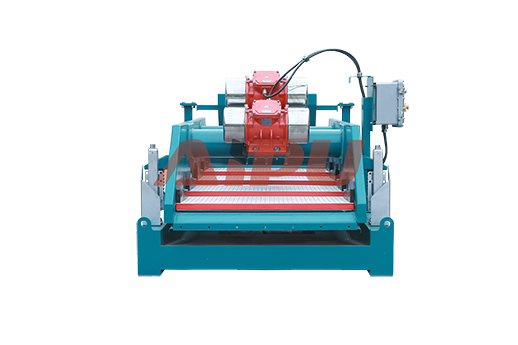
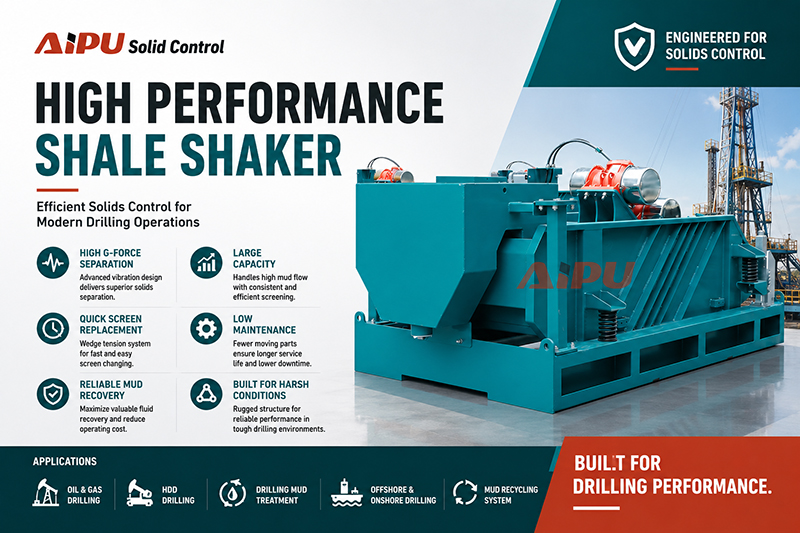
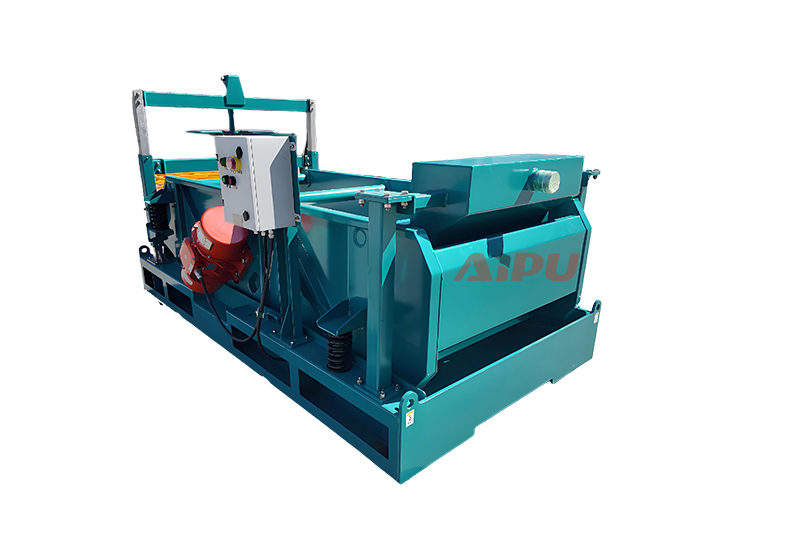
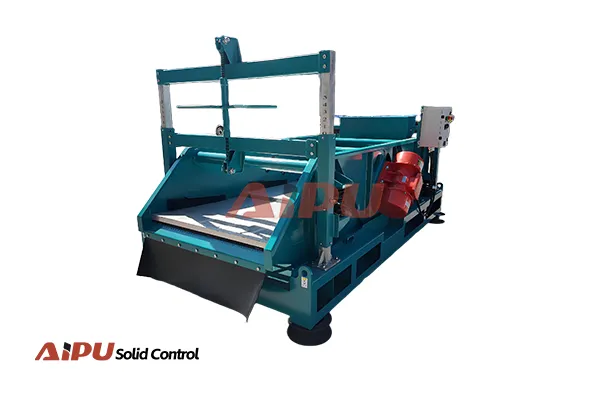
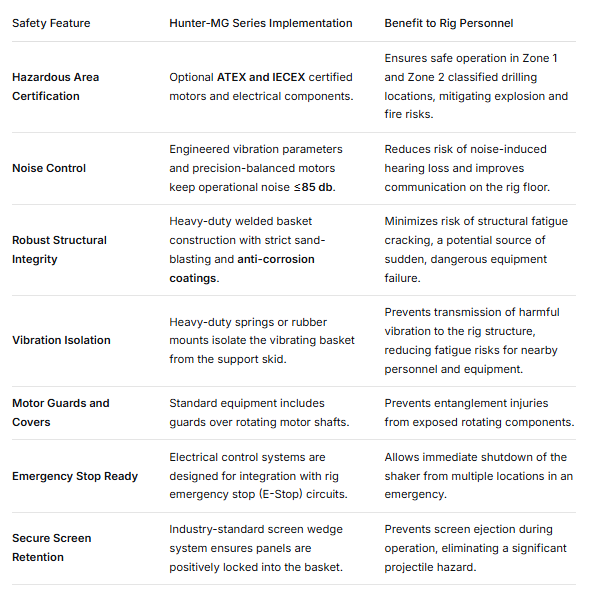
One of the most effective ways to enhance rig safety is to select equipment that incorporates safety into its design. The AIPU Hunter-MG series shale shaker is engineered with operator safety and hazardous environment compliance as core design principles. Manufactured by Aipu Solid Control Co., Ltd, with over 20 years of industry expertise, the Hunter-MG lineup includes features that directly address many of the safety concerns outlined above.
Key Safety Features of the AIPU Hunter-MG Series
The Hunter-MGD Dual-Motion Shaker: Reducing Manual Intervention
The Hunter-MGD model offers a unique safety advantage through its dual-motion capability. By allowing operators to switch between linear motion (for abrasive formations) and balanced elliptical motion (for sticky clays) with just two motors, the Hunter-MGD reduces the need to manually change screens or adjust shaker configuration to combat screen blinding. Less manual interaction with the shaker basket means fewer opportunities for hand injuries, slips, and ergonomic strains.
Safe Maintenance Access
Hunter-MG shakers are designed with maintenance access in mind. The placement of motors, angle adjustment mechanisms, and screen retention points is optimized to allow technicians to perform routine tasks without placing themselves in awkward or hazardous positions. Clear labeling of lifting points and component weights aids in safe rigging and handling.
Compliance and Documentation
Aipu provides comprehensive documentation with each shaker, including:
-
Operation and Maintenance Manuals: Detailed safety instructions, lockout/tagout procedures, and maintenance schedules.
-
Certification Documents: ATEX, IECEX, and other compliance certificates as specified by the customer.
-
Rig-Specific Electrical Customization: Shakers can be configured for 380V/50Hz or 460V/60Hz power supplies, with motor options from Italvibras, Martin, and Oli to meet local standards and preferences.
6. Emergency Response Preparedness
Even with the best safety practices and equipment, emergencies can occur. Rig crews should be trained and drilled on:
-
Shaker Fire Response: Know the location of fire extinguishers rated for electrical and flammable liquid fires. Understand the procedure for shutting down the shaker and isolating power.
-
H₂S Release at the Shaker: Recognize the alarm signals and don respiratory protection immediately. The shaker area is a primary gas breakout point.
-
Personnel Injury: Have a plan for extracting an injured person from the shaker area, which may involve confined space considerations if the shaker is housed in a closed module or room.
Conclusion
Adhering to proper shale shaker safety tips is a non-negotiable aspect of professional drilling operations. From thorough pre-start inspections and disciplined lockout/tagout procedures to the selection of equipment with built-in safety features, every precaution contributes to a safer rig environment. The AIPU Hunter-MG series shale shaker exemplifies how modern engineering can address these safety imperatives—through hazardous area certifications, noise reduction, structural robustness, and features that minimize manual intervention. By combining vigilant operational practices with inherently safer equipment, drilling contractors can protect their most valuable assets: their people and their operational integrity.
Related Products