What Is a Linear Motion Shale Shaker? A Comprehensive Guide to the Industry Standard for Solids Cont
In the world of drilling fluids processing, the term linear motion shale shaker appears frequently in equipment specifications, rig layouts, and technical discussions. It represents the most widely adopted vibration technology in modern solids control systems, yet its precise meaning and operational significance are not always fully understood. This article provides a detailed explanation of what a linear motion shale shaker is, how it works, its advantages and limitations, and why it remains the industry standard for primary solids separation in oil and gas drilling operations.
Defining the Linear Motion Shale Shaker
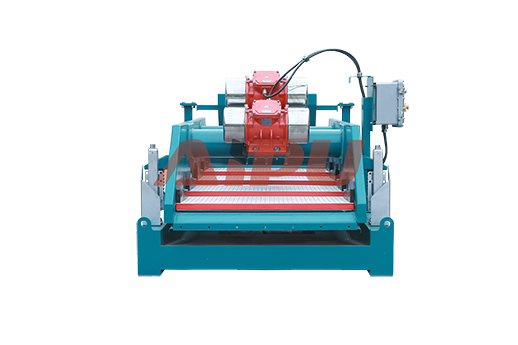
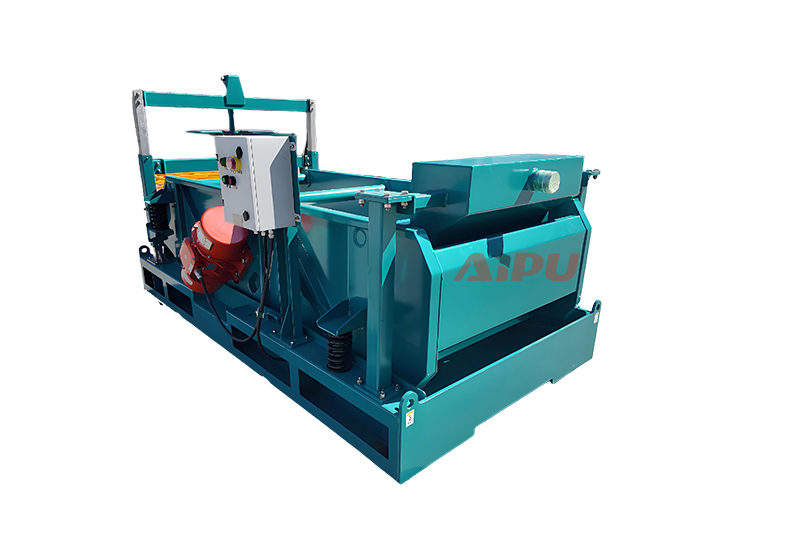
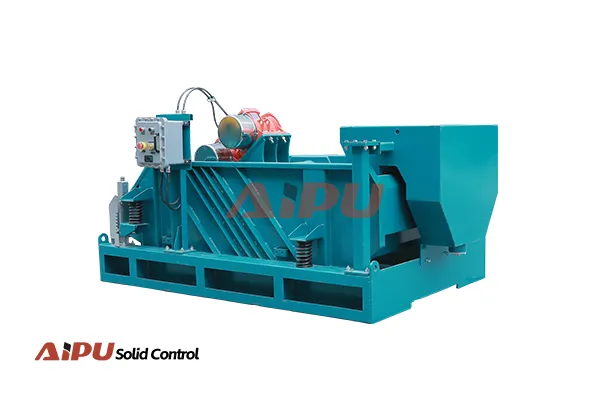
A linear motion shale shaker is a vibrating screening device in which the screen basket moves in a straight-line, back-and-forth trajectory at a fixed angle relative to the screen deck. This motion is generated by two counter-rotating vibratory motors mounted on the basket. As the motors rotate in opposite directions, their combined centrifugal forces produce a resultant force vector that is purely linear—the basket accelerates forward and upward along a single axis, then retracts along the same axis.
The angle of this linear motion—typically 45° to 60° relative to the horizontal screen surface—is a critical design parameter. It determines both the vertical lift component that fluidizes the mud and the horizontal transport component that conveys solids toward the discharge end. This elegant mechanical principle enables the shaker to perform two essential functions simultaneously: separating liquid from solids and moving the retained cuttings off the screen deck.
How Linear Motion Is Generated
The generation of linear motion relies on precise mechanical synchronization. Two identical vibratory motors are mounted on the shaker basket, positioned symmetrically about the basket's center of gravity. These motors are equipped with eccentric weights that create centrifugal force as they rotate. The key to achieving linear motion lies in the counter-rotation of the two motors:
-
Motor 1 rotates clockwise; Motor 2 rotates counter-clockwise.
-
At any given moment, the horizontal components of the centrifugal forces from the two motors cancel each other out, while the vertical components add together.
-
The result is a resultant force vector that oscillates along a single, straight line.
The angle of this linear force vector relative to the screen deck is determined by the mounting position of the motors on the basket. By adjusting the motor mounting angle, manufacturers can tailor the shaker's motion to optimize either fluid retention or solids conveyance, depending on the intended application.
The Working Principle of a Linear Motion Shaker
When drilling mud laden with cuttings flows onto the vibrating screen deck, the linear motion shaker applies a consistent, directional acceleration to the entire mud pool. This triggers a sequence of physical processes:
1. Fluidization and Stratification
The vertical component of the linear acceleration lifts and fluidizes the mud layer, breaking down its gel structure and temporarily reducing its viscosity. This allows the denser, larger drill cuttings to settle toward the screen surface while the lighter liquid phase rises to the top—a phenomenon known as stratification.
2. Liquid Passage
As the mud stratifies, the liquid and fine particles smaller than the screen openings pass through the mesh under the combined influence of gravity and the downward component of vibration. The cleaned drilling fluid is collected below the shaker and returned to the active mud system.
3. Solids Conveyance
Simultaneously, the horizontal component of the linear motion propels the retained solids along the screen deck toward the discharge end. The cuttings are literally "thrown" forward in a series of micro-trajectories. With each oscillation cycle, they land further along the deck, creating a continuous, tumbling conveyance action.
4. Discharge
The separated cuttings eventually reach the discharge chute and are ejected into a collection box, screw conveyor, or secondary drying shaker for further processing or disposal.
Advantages of Linear Motion Shale Shakers
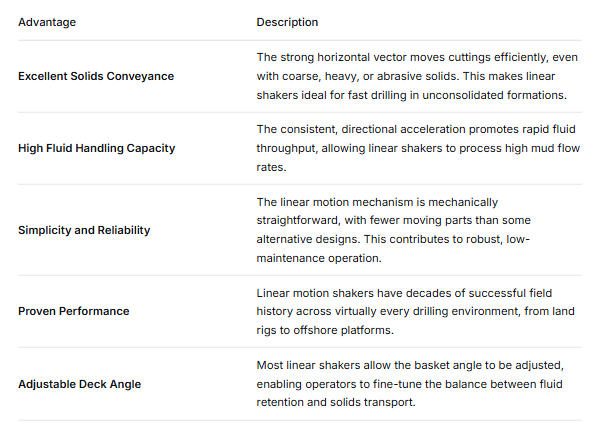
Linear motion shakers have become the industry standard for primary solids control due to several compelling advantages:
Limitations and Considerations
While linear motion is highly effective for most drilling applications, it does have limitations in specific scenarios:
-
Sticky, Reactive Clays: In formations containing "gumbo" or highly hydrated clays, linear motion can sometimes be insufficient to prevent screen blinding—the adhesion of sticky clay particles to the screen wires, blocking fluid passage.
-
Screen Wear: The aggressive conveying action, while beneficial for cuttings removal, can accelerate screen wear when processing highly abrasive sands, especially if G-forces are set excessively high.
For operations that frequently encounter these challenging conditions, balanced elliptical motion shakers offer an alternative that reduces blinding and can be gentler on screens.
AIPU Hunter-MG Series: Linear Motion Excellence in Solids Control
When selecting a linear motion shale shaker for your drilling program, performance, reliability, and flexibility are paramount. The AIPU Hunter-MG series represents a premier implementation of linear motion technology, engineered by Aipu Solid Control Co., Ltd with over 20 years of specialized industry expertise. These shakers are purpose-built to deliver the consistent, high-efficiency solids separation that modern drilling operations demand.
Hunter-MG Linear Motion Models
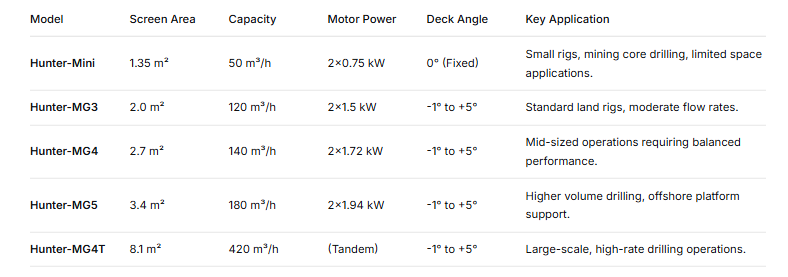
The Hunter-MG lineup includes several linear motion models tailored to different rig sizes and flow rate requirements:
Key Features of Hunter-MG Linear Shakers
-
Adjustable Deck Angle (-1° to +5°): The ability to modify the basket inclination in real time allows drilling crews to optimize fluid retention and solids conveyance as formation conditions change. A flatter angle maximizes fluid recovery in expensive oil-based mud systems; a steeper angle accelerates cuttings removal during fast surface intervals.
-
Premium Vibratory Motors: Hunter-MG shakers are equipped with motors from globally recognized brands such as Italvibras, Martin, and Oli. These precision-balanced motors deliver the consistent G-forces (6.0–7.0 G) and double amplitudes (5–6 mm) essential for effective linear motion separation.
-
Robust Construction: Each shaker features a heavy-duty welded basket, strict sand-blasting procedures, and anti-corrosion coatings for long service life in harsh drilling environments.
-
Flexible Screen Options: Operators can select from steel-framed or composite-framed API screen panels to match the specific demands of their drilling program. Composite screens offer lighter weight and corrosion resistance, while steel frames provide maximum durability.
-
Customizable Electrical Systems: Shakers can be configured for 380V/50Hz or 460V/60Hz power supplies, with optional ATEX and IECEX certifications for hazardous area operation.
Beyond Linear Motion: The Hunter-MGD Dual-Motion Shaker
For drilling programs that encounter highly variable lithology—alternating between abrasive sand sections and sticky clay intervals—Aipu offers the Hunter-MGD dual-motion shaker. This advanced model retains all the benefits of a high-performance linear motion shaker but adds the capability to switch on the fly to balanced elliptical motion. In elliptical mode, the shaker effectively processes sticky, reactive clays that would blind a standard linear shaker, then switches back to linear motion for fast, abrasive drilling. This dual-motion capability, achieved with just two specialized motors, provides unparalleled flexibility and ensures optimal separation throughout the well.
Applications of Linear Motion Shale Shakers
Linear motion shakers are deployed across a wide range of drilling applications:
-
Oil and Gas Drilling: The primary application, where linear shakers serve as the first stage of solids control on land rigs, offshore platforms, and deepwater vessels.
-
Horizontal Directional Drilling (HDD) : Linear shakers process drilling fluid returns in trenchless pipeline and utility installation projects.
-
Water Well Drilling: Compact linear shakers like the Hunter-Mini are ideal for water well and geothermal drilling operations.
-
Mining and Mineral Exploration: Core drilling and exploration rigs utilize linear shakers for efficient cuttings removal.
-
Tunneling and Construction: Slurry separation in tunnel boring and diaphragm wall construction often employs linear motion screening technology.
Conclusion
A linear motion shale shaker is defined by its straight-line vibratory trajectory, generated by counter-rotating motors and delivering a consistent, directional force to the drilling mud pool. This motion pattern excels at conveying coarse, abrasive cuttings while providing high fluid handling capacity, making it the industry workhorse for primary solids control. The AIPU Hunter-MG series embodies the best of linear motion engineering, offering a range of models with adjustable deck angles, premium motors, and flexible screen options to meet the demands of any drilling operation. For applications requiring additional versatility, the Hunter-MGD extends this capability with on-the-fly switching to balanced elliptical motion, ensuring peak performance regardless of downhole conditions.
Related Products