What Is an Elliptical Motion Shale Shaker? Understanding Advanced Vibration Technology for Challengi
In the hierarchy of solids control equipment, the shale shaker's primary function is universal: separate drill cuttings from drilling fluid. However, not all shakers achieve this separation in the same way. While linear motion shakers dominate the industry for their robust conveying of coarse solids, a specialized variant—the elliptical motion shale shaker—offers distinct advantages in specific, often challenging drilling conditions. Understanding what an elliptical motion shale shaker is, how it differs from linear motion, and when to deploy it can significantly improve drilling efficiency, reduce screen blinding, and enhance fluid recovery in reactive formations. This article provides a comprehensive technical overview of elliptical motion technology and highlights how modern dual-motion shakers combine the best of both worlds.
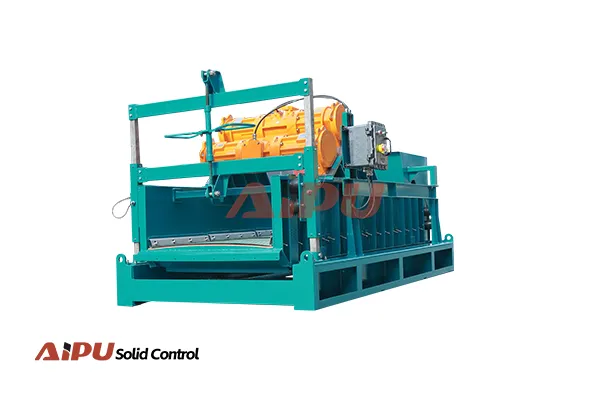
Defining Elliptical Motion in a Shale Shaker
An elliptical motion shale shaker is a vibrating screening device in which the screen basket moves in an elliptical or oval-shaped trajectory rather than a straight line. Unlike linear motion, where the acceleration vector remains fixed in a single direction, elliptical motion produces a continuously changing acceleration vector—both in magnitude and direction—throughout each vibration cycle.
The shape of the ellipse can vary from nearly circular to highly elongated, and the orientation of the major axis can be tailored by the manufacturer. In modern balanced elliptical shakers, the motion is specifically engineered so that the feed end of the deck exhibits a different elliptical pattern than the discharge end. This variation optimizes the shaker's performance along the length of the screen, providing aggressive fluidization where mud first enters and gentler, more controlled conveyance near the discharge.
How Elliptical Motion Is Generated
Elliptical motion is produced by two vibratory motors operating with a phase difference—meaning their rotational positions are intentionally offset from perfect synchronization. The specific mechanism depends on the shaker design:
-
Standard Elliptical Motion: The two motors are mounted at different angles relative to the basket, or they rotate at slightly different speeds. This asymmetry prevents the horizontal force components from completely canceling out, resulting in a net force vector that traces an elliptical path.
-
Balanced Elliptical Motion: A more advanced form where the motors are synchronized but the vibration frequency and phase angle are precisely controlled. This creates a "rolling" elliptical pattern that changes shape from the feed end to the discharge end. At the feed end, the ellipse is more open and vertical, promoting rapid fluidization and stratification. At the discharge end, the ellipse flattens, providing efficient solids conveyance without excessive fluid loss.
The key difference from linear motion is that elliptical motion never produces a purely straight-line force. The basket experiences a combination of vertical and horizontal accelerations that vary throughout the cycle, creating a complex, three-dimensional agitation of the mud pool.
The Working Principle of an Elliptical Motion Shaker
When drilling mud flows onto an elliptical motion shaker, the separation process unfolds with some important distinctions from linear motion:
1. Enhanced Fluidization with Reduced Screen Blinding
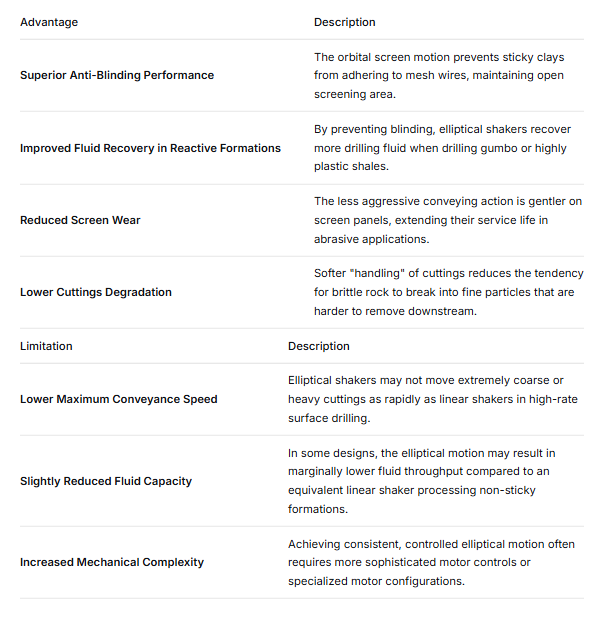
The changing acceleration vector of elliptical motion imparts a "scrubbing" or "wiping" action to the screen surface. As the basket moves through its elliptical path, the screen wires experience a slight twisting or orbital motion that prevents sticky, hydrated clay particles from adhering to the mesh. This is the single most important advantage of elliptical motion: it dramatically reduces screen blinding in reactive formations such as gumbo shales and swelling clays.
2. Variable Stratification Along the Deck
In balanced elliptical shakers, the motion characteristics change from inlet to outlet. At the feed end, a more vertical, aggressive ellipse rapidly fluidizes the incoming mud, breaking gel strength and initiating stratification. As the material moves toward the discharge, the ellipse becomes more elongated and horizontal, transitioning to a motion that closely resembles linear conveyance. This tailored approach optimizes both fluid recovery and solids transport.
3. Gentle Solids Conveyance
Because the horizontal force component varies during the cycle, elliptical shakers typically convey solids with less aggressive throwing action than linear shakers. While this may slightly reduce maximum conveyance speed, it also reduces screen wear and minimizes the tendency for brittle cuttings to shatter into finer, harder-to-remove particles.
4. Liquid Passage
The fluid phase still passes through the screen under gravity and vibratory acceleration. The elliptical motion's enhanced anti-blinding properties ensure that a greater percentage of the screen's open area remains available for fluid flow, maintaining high conductance even in sticky formations.
Advantages and Limitations of Elliptical Motion Shakers
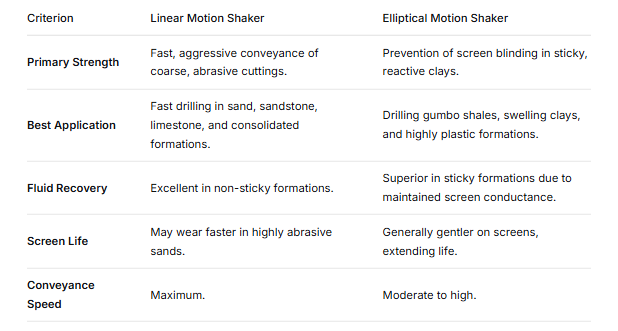
The ideal solution for many drilling programs is not choosing one over the other, but having the flexibility to switch between both motions as formation conditions change.
AIPU Hunter-MGD: The Dual-Motion Solution Combining Linear and Elliptical Motion
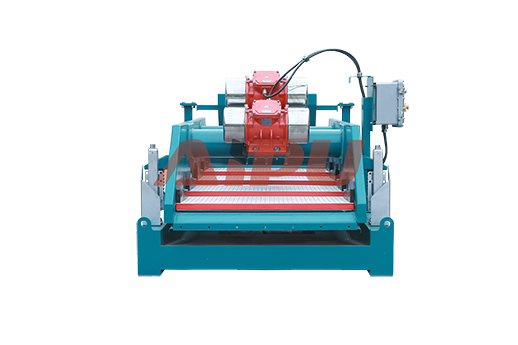
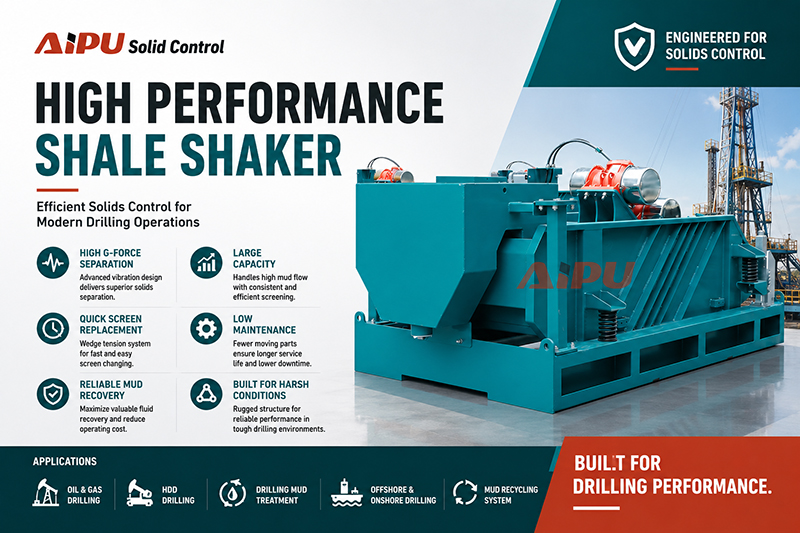
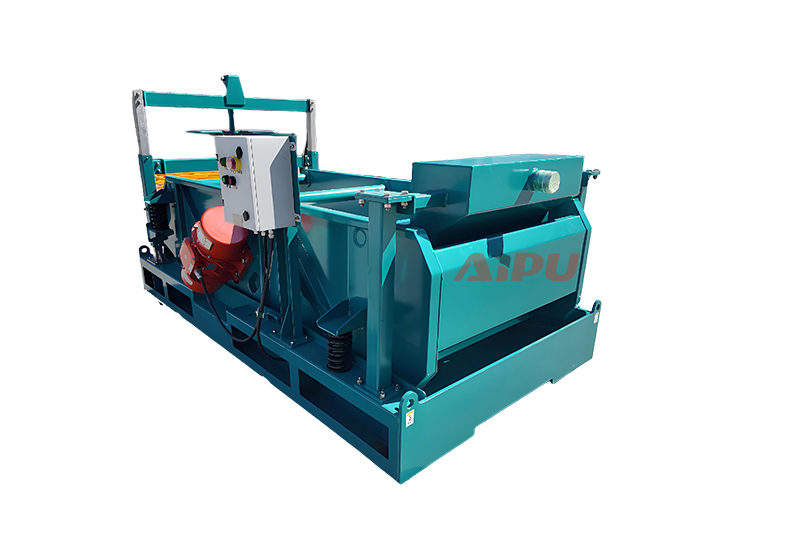
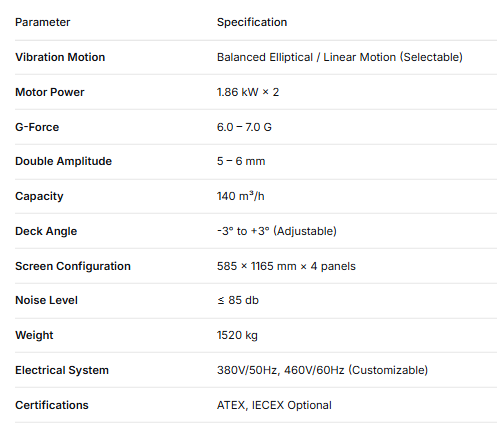
For drilling contractors who face variable lithology—alternating between abrasive sandstone sections and sticky, reactive clay intervals—the AIPU Hunter-MGD dual-motion shale shaker offers the ultimate in operational flexibility. Manufactured by Aipu Solid Control Co., Ltd, a company with over 20 years of specialized solids control expertise, the Hunter-MGD is engineered to deliver both balanced elliptical and linear motion from a single shaker, using just two vibratory motors.
How the Hunter-MGD Achieves Dual-Motion Capability
The Hunter-MGD employs specialized vibratory motors and an intelligent control system that allows the operator to switch vibration modes on the fly—without stopping the shaker, changing mechanical components, or reconfiguring the basket. This is accomplished by altering the electrical phase relationship between the two motors.
-
Linear Motion Mode: The motors are synchronized in counter-rotation, canceling horizontal forces to produce a pure linear vector at approximately 45°. This mode excels at rapidly conveying coarse, abrasive cuttings in fast-drilling surface intervals and consolidated formations.
-
Balanced Elliptical Motion Mode: The motors operate with a controlled phase offset, generating the characteristic elliptical path. The ellipse shape is optimized to provide aggressive anti-blinding action at the feed end and smooth conveyance at the discharge end. This mode is ideal for sticky, reactive clays, gumbo shales, and formations that cause screen blinding.
Why the Hunter-MGD Represents an Internationally Advanced Design
The Hunter-MGD's dual-motion capability is not merely a marketing feature—it is an internationally advanced design concept that has gained significant traction in sophisticated drilling markets, particularly in Europe and the Middle East. The ability to adapt vibration mode to actual drilling conditions in real time delivers tangible operational benefits:
-
Reduced Non-Productive Time: No need to stop drilling to change shakers or reconfigure screens when encountering sticky formations.
-
Optimized Fluid Recovery: Maintain high fluid recovery rates in expensive oil-based mud systems, even through reactive clay sections.
-
Extended Screen Life: Use linear motion for abrasive sands and elliptical motion for sticky clays, matching the motion to the wear mechanism.
-
Single Shaker Inventory: One Hunter-MGD replaces the need for separate linear and elliptical shakers, simplifying logistics and reducing capital expenditure.
Seamless Integration with AIPU Solids Control Systems
The Hunter-MGD is designed to integrate smoothly with Aipu's complete line of solids control equipment. Whether deployed as a primary shaker on a land rig or as part of a sophisticated offshore mud system, the Hunter-MGD provides the first-stage separation performance that downstream desanders, desilters, and centrifuges depend on.
Applications of Elliptical Motion and Dual-Motion Shakers
Elliptical motion shakers, and particularly dual-motion units like the Hunter-MGD, are ideally suited for:
-
Gumbo Shale Drilling: Offshore Gulf of Mexico, West Africa, and other regions with highly reactive, swelling clays.
-
Highly Plastic Formations: Areas where shale hydration and accretion are significant problems.
-
Oil-Based Mud (OBM) Recovery: Maximizing base oil recovery in formations that would otherwise blind linear shaker screens.
-
Exploration Wells: Where formation characteristics are uncertain, dual-motion shakers provide insurance against unexpected lithology changes.
Conclusion
An elliptical motion shale shaker is defined by its oval-shaped vibratory trajectory, which imparts a scrubbing action to the screen surface that prevents blinding in sticky, reactive formations. While linear motion remains the industry standard for general drilling, elliptical motion is an essential tool for efficiently processing problematic clays and shales. The AIPU Hunter-MGD dual-motion shaker takes this a step further by offering both motion types in a single machine, switchable on the fly. This advanced design empowers drilling crews to maintain peak solids control performance regardless of downhole conditions, protecting equipment, preserving fluid, and reducing overall well costs.
Related Products