Components of a Solids Control System: Complete Breakdown of Each Stage
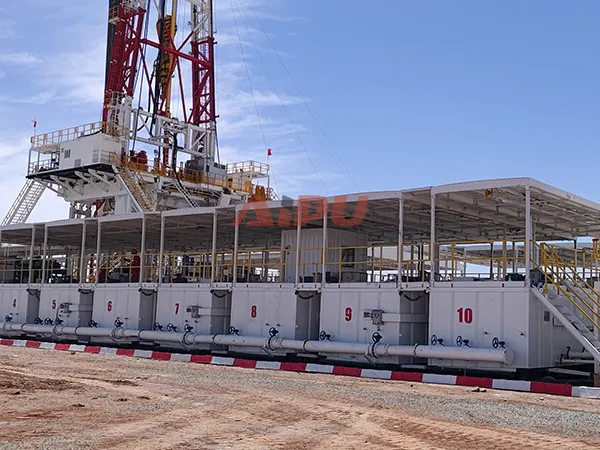
1. Overview: What Makes Up a Solids Control System?
A typical modern solids control system consists of the following major components, arranged in order from coarse to fine separation:
-
Shale shakers – first‑stage solids removal
-
Vacuum degasser – gas removal (if needed)
-
Desander – medium‑solids removal
-
Desilter – fine‑solids removal
-
Decanter centrifuge – ultra‑fine solids control or barite recovery
-
Mud agitators – keeping solids suspended in tanks
-
Shearing pumps – polymer hydration and clay dispersion
-
Jet mud mixers (jet hoppers) – adding barite, bentonite, and chemicals
-
Centrifugal pumps – transferring mud between components
-
Mud tanks – compartmented vessels that hold the fluid
Supporting components include piping, valves, walkways, and electrical control panels. Each component plays a unique role. Let us examine them one by one.
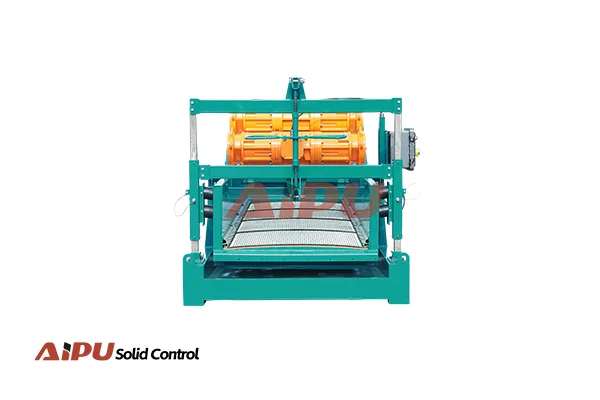
2. Component #1: Shale Shaker
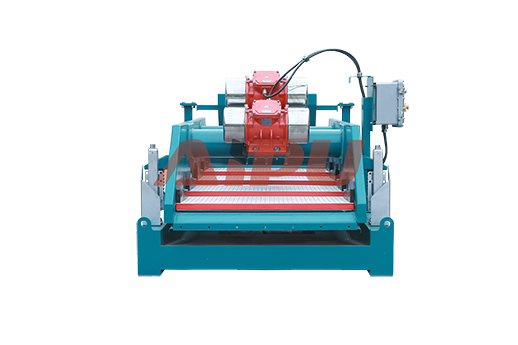
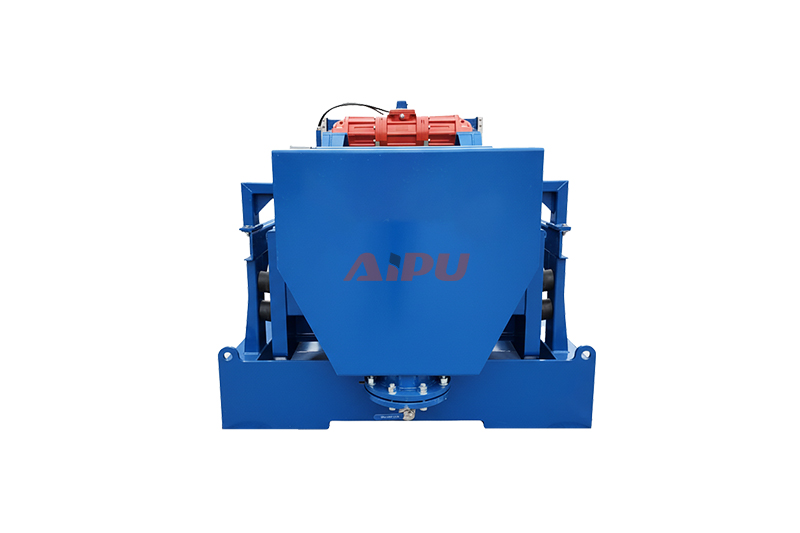
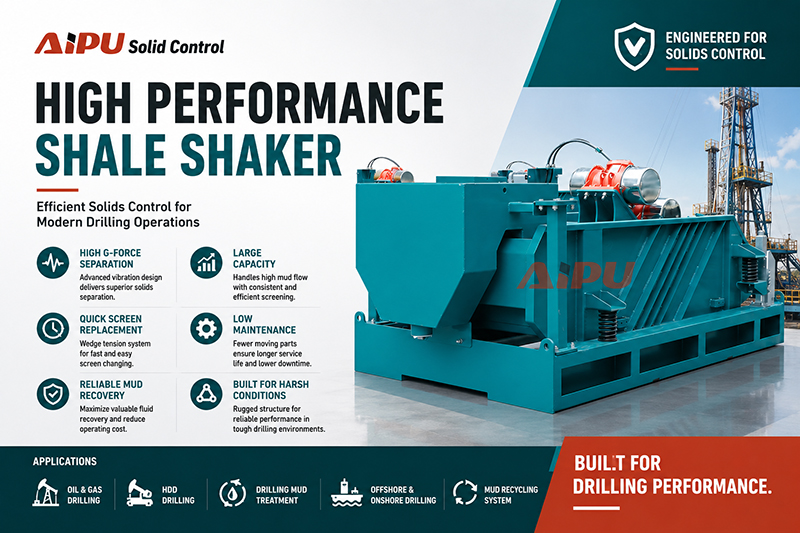
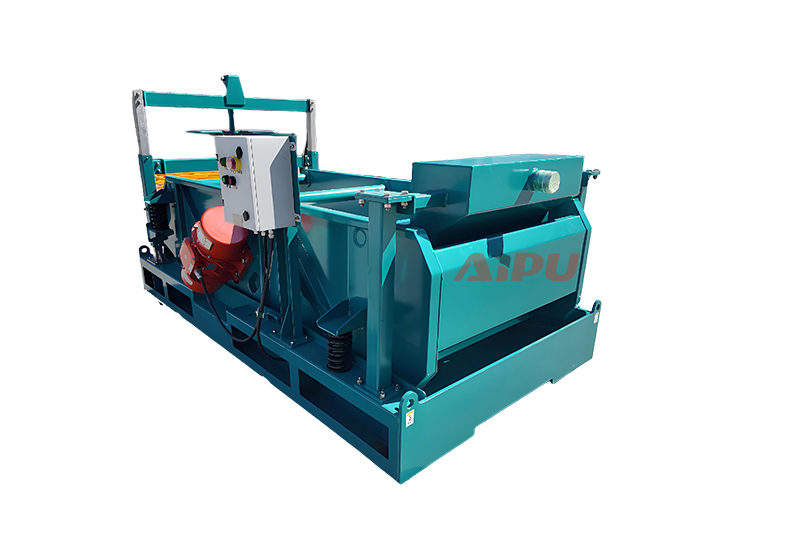
Function: The shale shaker is the first stage of solids control. It removes large drilled cuttings (>75 µm) from the returning mud using a vibrating screen. Without a shaker, large solids would break down into smaller particles that are much harder to remove.
How it works: Mud flows onto a vibrating screen deck. The vibration moves solids toward the discharge end while liquid passes through the screen mesh. Different screen meshes (API 20 to API 325) are used depending on the required separation size.
AIPU solutions:
-
Hunter‑MG series – single, dual, or triple motion; capacities from 50 to 420 m³/h.
-
Hunter‑MGD dual‑motion shaker – switches between linear and balanced elliptical motion.
-
Hunter‑Mini – compact design for small rigs or special applications.
All AIPU shakers feature adjustable deck angles, explosion‑proof motors, and optional ATEX/IECEX certifications.
3. Component #2: Vacuum Degasser
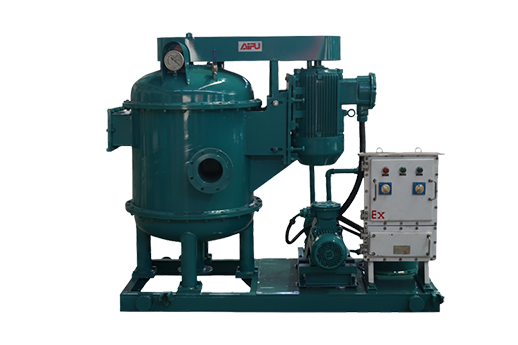
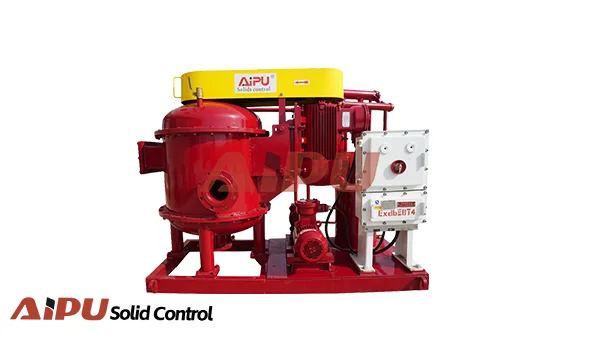
Function: The vacuum degasser removes entrained and dissolved gases (methane, H₂S, CO₂) from drilling fluid. Gas bubbles reduce mud density, cause pump cavitation, and create safety hazards.
How it works: A vacuum pump creates a partial vacuum inside a sealed vessel. Gas‑cut mud is spread into a thin film, where bubbles expand under low pressure and are sucked away. Efficiency exceeds 95%.
AIPU solutions:
-
APLCQ300 vertical degasser – compact, 300 m³/h capacity, 22 kW main motor.
-
APZCQ series (tank‑mounted) – capacities from 240 to 360 m³/h, for high‑flow rigs.
-
APVD series (float‑controlled) – energy‑saving, automatic level control.
H₂S‑resistant steel (316L/2205) and ATEX certifications are available.
4. Component #3: Desander
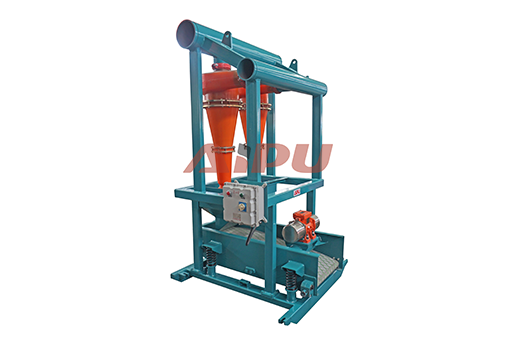
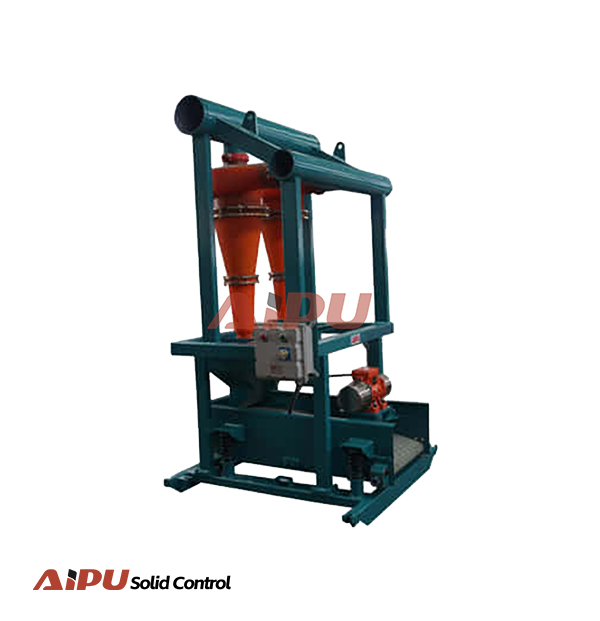
Function: The desander removes medium‑sized solids (44–74 µm) – typically sand and coarse silt – using large hydrocyclones (10‑inch or 12‑inch cones).
How it works: A centrifugal pump feeds mud into the hydrocyclone tangentially. The spinning motion creates centrifugal force that throws heavier solids to the wall and out the bottom, while cleaned mud exits through the top (overflow). An optional bottom shaker can further dry the discarded solids.
AIPU solutions:
-
Hunter S series – capacities 120–360 m³/h, with bottom shaker options.
-
APCS series – from 60 to 360 m³/h, with clamp‑type polyurethane cones.
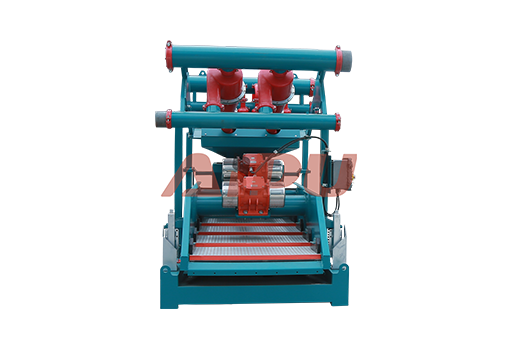
Desanders are often combined with a small shale shaker (mud cleaner) for better solids drying.
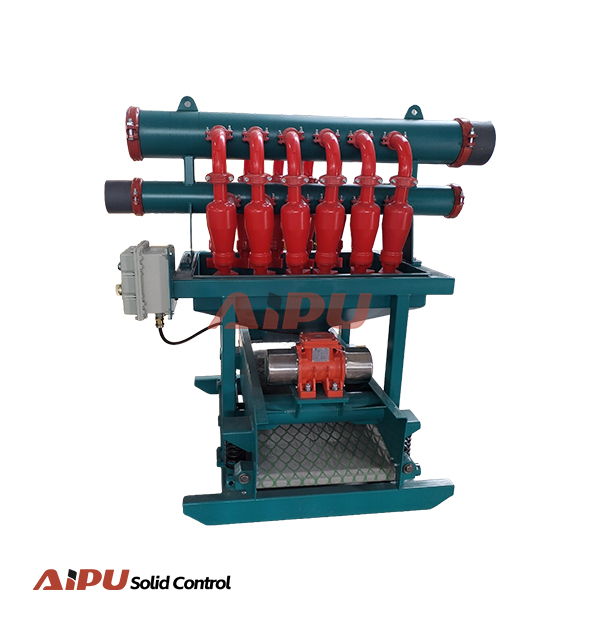
5. Component #4: Desilter
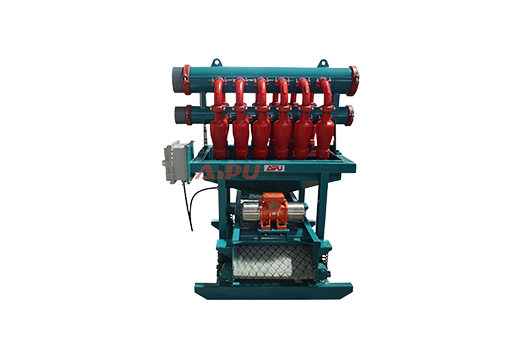
Function: The desilter removes fine solids (15–44 µm) using smaller hydrocyclones (4‑inch or 5‑inch cones). It follows the desander in the solids control sequence.
How it works: The same hydrocyclone principle applies, but with smaller cones that generate higher centrifugal force to capture finer particles. Like the desander, a desilter can have a bottom shaker to dewater the separated solids.
AIPU solutions:
-
Hunter N series – capacities 120–360 m³/h.
-
APCN series – 60–360 m³/h, with 100% polyurethane cones for long life.
AIPU desilters are available with H₂S‑resistant materials and ATEX motors.
6. Component #5: Decanter Centrifuge
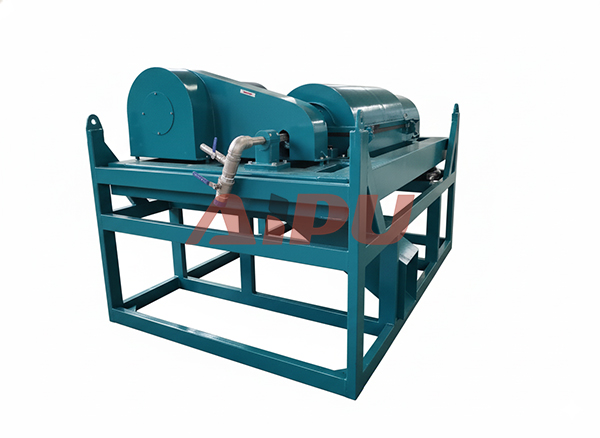
Function: The centrifuge is the final stage. It removes ultra‑fine solids (2–7 µm) from unweighted mud or recovers barite from weighted mud.
How it works: A horizontal rotating bowl spins at high speed (up to 3200 rpm). Solids settle against the bowl wall while liquid overflows. A screw conveyor (scroll) moves the solids to the discharge end. Separation efficiency is very high, and the discharge is dry.
AIPU solutions:
-
APLW355X1257‑N – 35 m³/h, 2–5 µm separation.
-
APLW450X1350‑N – 60 m³/h, 2–5 µm.
-
APLW530X1540‑N – 65 m³/h, 2–5 µm.
-
APLW600X1019‑N – 60 m³/h, 5–7 µm (for barite recovery).
All AIPU centrifuges feature hardened stainless steel rotors, tandem mechanical seals, and customizable electrical systems.
7. Component #6: Mud Agitator
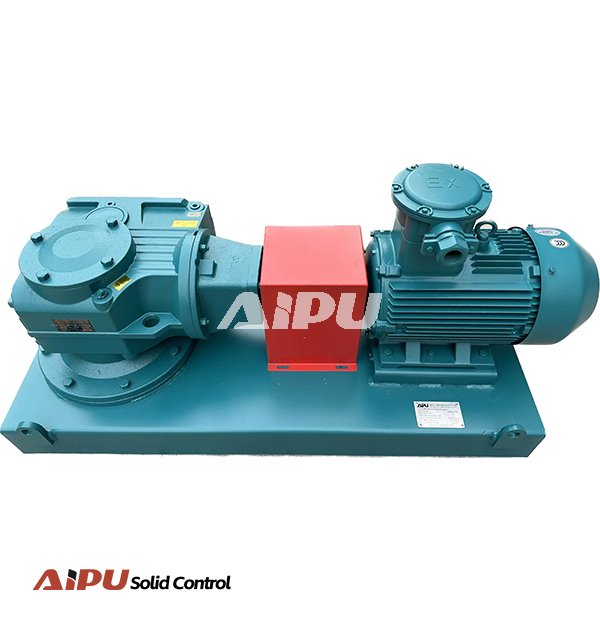
Function: Mud agitators keep solids suspended in the mud tank, preventing settling. Without agitation, barite and drilled solids would form a hard cake at the bottom, leading to cleaning difficulties and inconsistent mud properties.
How it works: A motor drives a gearbox that turns a vertical shaft with impellers. Low‑speed (60–72 rpm), high‑torque rotation creates a flow pattern that lifts solids from the bottom.
AIPU solutions:
-
APMA series – 5.5 kW to 15 kW, single or dual impeller.
-
Optional shaft stabilizer for deep tanks.
-
ATEX/IECEX certified versions available.
Industry standard: one agitator per 3 m of tank length, or one per compartment.
8. Component #7: Shearing Pump
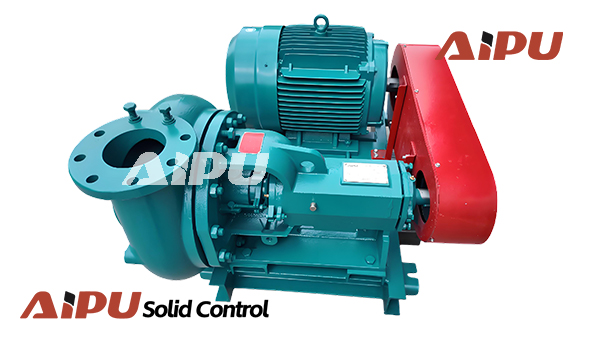
Function: The shearing pump hydrates polymers and disperses clays (bentonite). It eliminates “fish eyes” (unhydrated polymer lumps) and saves up to 30% on bentonite and 15% on polymers.
How it works: High‑speed rotation (1900–2200 rpm) forces mud through a special shear plate and nozzles, creating intense mechanical shear that breaks down polymer chains and clay clusters.
AIPU solutions:
-
APJQB6535 – 100 m³/h, 37 kW, 1900 rpm.
-
APJQB6545 – 155 m³/h, 55 kW, 2200 rpm.
AIPU shearing pumps are built with hardened 440C stainless steel rotors and tandem mechanical seals.
9. Component #8: Jet Mud Mixer (Jet Hopper)
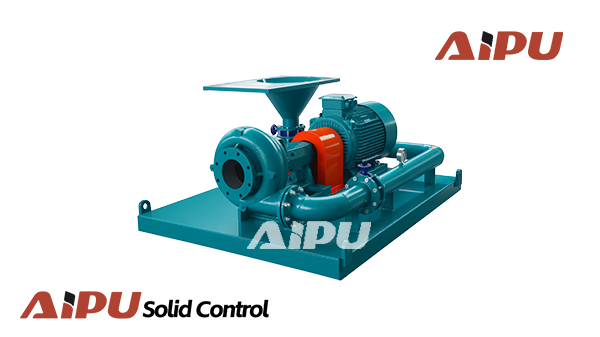
Function: The jet mixer rapidly adds barite, bentonite, and powdered chemicals to the mud system. It uses the Venturi principle to suck dry powder into a high‑velocity fluid stream.
How it works: A centrifugal pump sends mud through a nozzle, creating a vacuum in the Venturi throat. The vacuum pulls powder from the hopper into the fluid, where it is instantly wetted and mixed.
AIPU solutions:
-
APSLH series fixed jet hopper – capacities matched with AIPU APSB pumps.
-
APSLH portable hopper – movable unit for batch mixing.
-
Mixing rates: up to 315 kg/min barite, 180 kg/min clay.
All AIPU jet mixers feature heavy‑duty butterfly valves, precision nozzles, and three‑layer marine coating.
10. Component #9: Centrifugal Pump
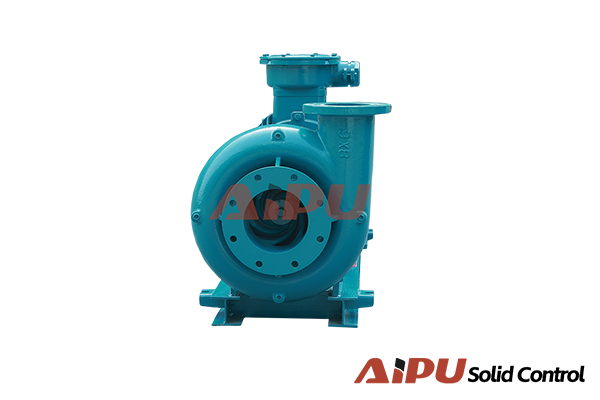
Function: Centrifugal pumps provide the hydraulic power to move mud between tanks, feed desanders/desilters, supply jet hoppers, and transfer mud to centrifuges.
How it works: An impeller rotating at 1450 rpm (50 Hz) or 1750 rpm (60 Hz) accelerates the fluid, converting velocity into pressure.
AIPU solutions:
-
APSB series – API 7th edition design, interchangeable with MISSION Magnum series.
-
Sizes from APSB3x2 to APSB8x6.
-
Power from 7.5 kW to 75 kW.
-
Flow rates from 40 m³/h to 255 m³/h.
-
Vertical or horizontal configuration, custom voltages.
11. Component #10: Mud Tanks
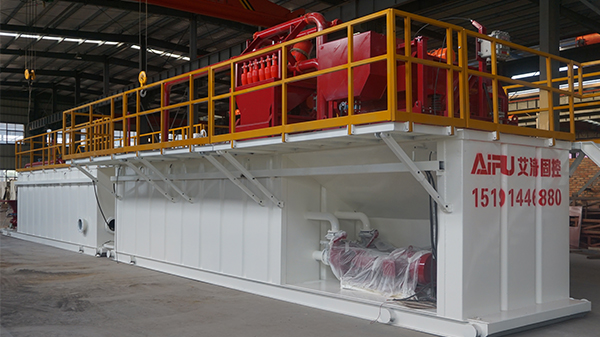
Function: Mud tanks store and condition the drilling fluid. They are divided into compartments by weir plates to ensure that mud flows through each stage in the correct sequence.
How it works: Each compartment has agitators, suction lines, and discharge lines. Sloped or V‑shaped bottoms prevent solids accumulation and make cleaning easy.
AIPU solutions:
-
Custom mud tanks – any size, any number of compartments.
-
Sloped or V‑shaped bottom as standard.
-
Three‑layer marine anti‑corrosion coating.
-
H₂S‑resistant steel option.
-
Integrated walkways, guardrails, and piping.
AIPU designs tanks to mount shakers, degassers, desanders, desilters, centrifuges, agitators, and pumps directly on the deck.
12. How All Components Work Together
A returning mud sample follows this path:
-
Flowline → Shale shaker (large cuttings removed)
-
Degasser (gas removed if present)
-
Desander (sand and medium solids removed)
-
Desilter (fine silt removed)
-
Centrifuge (ultra‑fine solids or barite recovery)
-
Suction pit (clean mud ready for mud pumps)
Throughout the process:
-
Agitators keep solids suspended.
-
Centrifugal pumps move mud between stages.
-
Shearing pump and jet mixer are used when adding new materials.
13. Why AIPU for Your Solids Control Components?
AIPU Solid Control has over 20 years of experience and has delivered equipment to more than 30 countries, with cumulative shipments exceeding 300 system‑equivalent products. AIPU holds API, HSE, and multiple product certifications, as well as independent invention patents.
Key advantages of choosing AIPU components:
✅ Full range – every component from one supplier, fully compatible.
✅ Custom engineering – AIPU designs the entire system based on your flow rate, mud type, and space.
✅ Robust quality – three‑layer marine coating, H₂S‑resistant steel options.
✅ Global certifications – ATEX, IECEX, pressure vessel inspection.
✅ Proven performance – 30+ countries, 300+ system shipments.
✅ Easy maintenance – standardized parts, clear documentation.
14. Conclusion
The components of a solids control system work together as a team. The shale shaker removes large cuttings, the degasser eliminates gas, the desander and desilter take out medium and fine solids, and the centrifuge polishes the mud or recovers barite. Agitators, shearing pumps, jet mixers, centrifugal pumps, and mud tanks support the separation process. Each component is essential; missing one means lower efficiency, higher costs, and greater risk.
AIPU Solid Control supplies every component you need, built to API standards and ready for the toughest drilling environments. Whether you are building a new system or upgrading an existing one, AIPU delivers reliability, performance, and global support.
Choose AIPU – complete solids control, one trusted source.
Related Products