How to Choose the Right Oilfield Shale Shaker for Your Drilling Operation
Selecting the right oilfield shale shaker is one of the most critical decisions an drilling engineer or procurement manager can make. As the first line of defense in the solids control system, the shale shaker is responsible for removing the majority of drilled cuttings from the drilling fluid. A subpar choice can lead to excessive fluid loss, premature wear on downstream equipment, and skyrocketing operational costs.
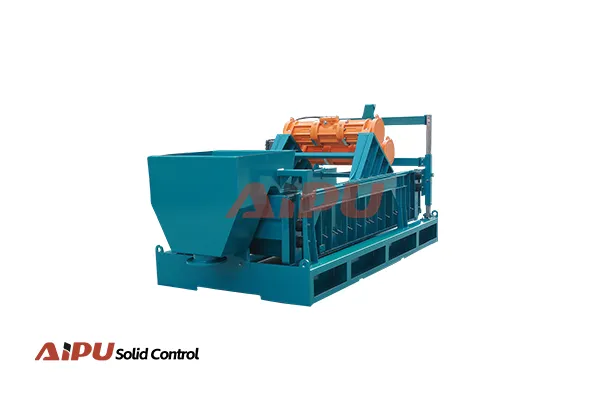
Conversely, the right shaker enhances drilling efficiency, reduces waste disposal costs, and maintains the integrity of your drilling fluid. But with so many models and specifications on the market, how do you choose?
Here is a comprehensive guide on the key factors you must consider when selecting an oilfield shale shaker, featuring industry-leading solutions from Aipu Solid Control.
1. Evaluate Your Required Handling Capacity
The primary factor in choosing a shale shaker is its flow rate capacity, which must align with your Maximum Anticipated Flow Rate (MAFR). If the shaker is undersized, it will overflow, causing massive fluid loss. If it is oversized, you are wasting capital and deck space.
Shakers are typically rated by gallons per minute (GPM) or cubic meters per hour (m³/h). You need a shaker that can comfortably handle your peak circulation rates while leaving room for occasional spikes.
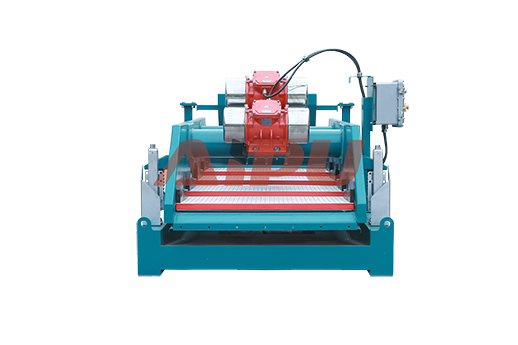
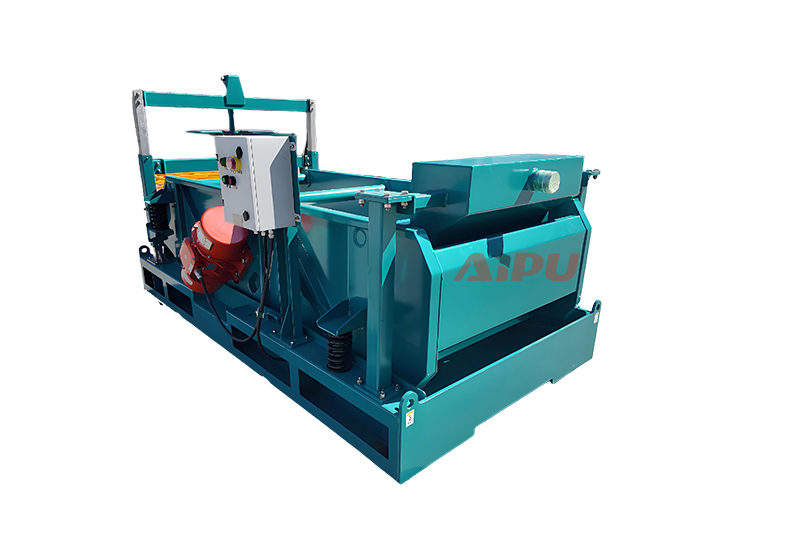
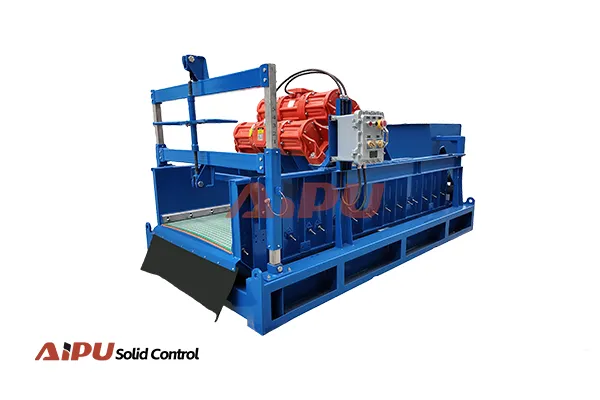
The AIPU HUNTER-MG Series offers a versatile range of capacities to match any operation. For instance, the Hunter-MG3 handles 120 m³/h, while the heavy-duty Hunter-MG4T tandem model can manage an impressive 420 m³/h. This ensures you only pay for the capacity you truly need.
2. Consider the Vibration Mode: Linear vs. Balanced Elliptical
The vibration mode dictates how cuttings are transported across the screen and how effectively the liquid passes through.
-
Linear Motion: Uses two motors rotating in opposite directions. It provides a sharp, aggressive throw that is excellent for conveying sticky cuttings and maximizing liquid recovery.
-
Balanced Elliptical Motion: Offers a smoother, rolling action that is gentler on the screens and better for handling high-viscosity fluids or fragile formations.
Can't decide? The AIPU HUNTER-MGD Dual-Motion Shale Shaker eliminates the need to compromise. Equipped with specialized motors, it allows operators to effortlessly switch between Balanced Elliptical and Linear motion during operation. This internationally advanced design ensures optimal performance regardless of how your drilling conditions change.
3. Assess the Available Deck Space and Configuration
Space on a drilling rig, whether onshore or offshore, is incredibly limited and expensive. The physical footprint of the shaker, as well as its weight, must fit within your designated area. Furthermore, consider the deck angle adjustment range. The ability to tweak the uphill or downhill slope (-1° to +5° is standard) allows you to fine-tune the fluid retention time on the screen.
Aipu understands the constraints of rig layouts. The HUNTER-MG Series is engineered for a compact footprint relative to its massive screen area. For example, the Hunter-MG4 provides a 2.7 m² screen area using only 4 panels, maximizing separation efficiency without monopolizing your rig floor. Need more space? The Hunter-Mini offers a portable 50 m³/h capacity with a tiny footprint.
4. Analyze Screen Area and Replacement Mechanics
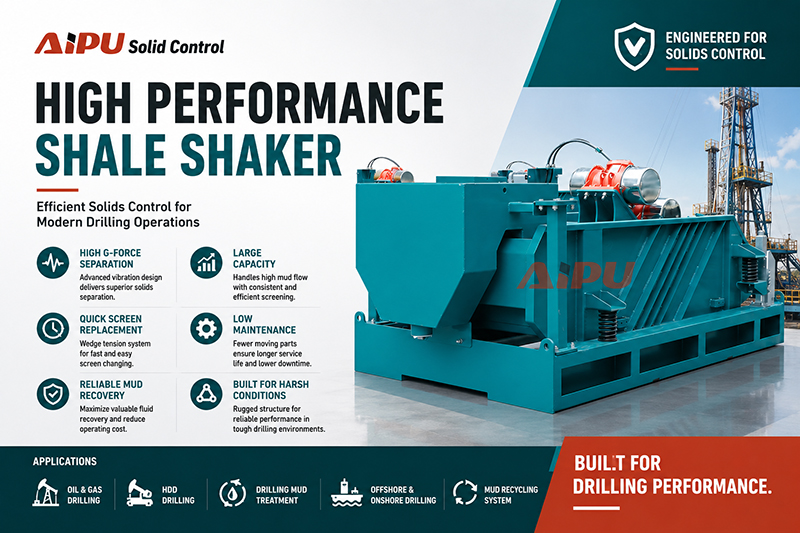
The effective screen area determines the shaker's actual processing limit. More area means better separation at lower G-forces, which extends screen life. Additionally, consider the screen replacement mechanism. In the field, changing screens is a frequent and messy task. A quick-change, easy-tensioning system is not a luxury—it is a necessity for minimizing costly downtime.
Aipu shakers are designed with a "Quick-replace screen design." Whether you prefer steel-framed or composite-framed screens, the Hunter series allows for rapid swaps, significantly reducing your Non-Productive Time (NPT).
5. Verify Motor Quality and G-Force Generation
The vibration motors are the heart of the shaker. They must be robust enough to generate the necessary G-force (typically between 6.0 and 7.0 G's) to move dense, viscous mud. Cheap motors burn out quickly in harsh drilling environments.
Reliability is non-negotiable. That’s why Aipu allows customers to customize their electrical systems and choose premium international motor brands like Ital-Vibras, Martin, or Oli. With power configurations ranging from 0.75 kW (Hunter-Mini) up to 2 x 1.72 kW per unit (Hunter-MG4/5), you are guaranteed consistent, powerful performance.
6. Don't Overlook Customization and International Certifications
If you are operating in sensitive environments (like the Middle East or Europe), you may have strict requirements for explosion-proofing (ATEX/IECEx), specific paint coatings (for corrosion resistance), or H₂S-resistant materials. A good manufacturer should act as a partner, offering flexible configurations to meet your local regulations.
With over 20 years of experience and deliveries to more than 30 countries, Aipu Solid Control excels in customization. We offer ATEX/IECEx compliant electrical systems, specialized abrasion and corrosion-resistant coatings, and tailor-made solutions to ensure your equipment passes all local safety and environmental audits.
Conclusion: Make an Informed Investment
Choosing the right shale shaker requires balancing capacity, vibration mechanics, footprint, and durability. By aligning these factors with your specific drilling parameters, you can significantly enhance your operational efficiency.
Ready to upgrade your solids control system? Explore the full range of Aipu Hunter Shale Shakers and let our experts help you configure the perfect solution for your next drilling project.
Related Products