Operation principles of drilling fluids desander
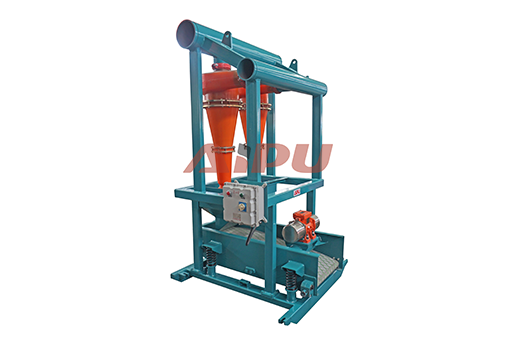
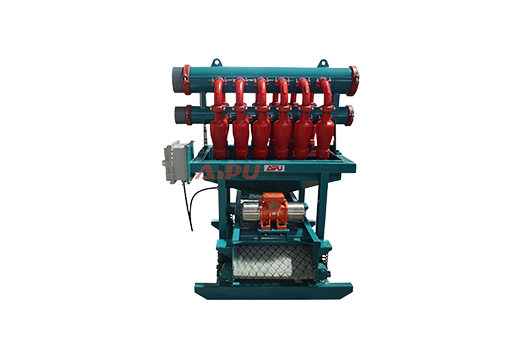
Normally, mud desander is mounted on the top of the first mud tank together with shale shaker and vacuum degassers, while desilter is mounted together with centrifuges. Sometimes to save the top area of the mud tank, desander and desilter are combined together to work as high efficient mud cleaner.
Operating desanders at peak efficiency is a simple matter, since most desanders are relatively uncomplicated devices. Here are a few fundamental principles to keep in mind.
1. Operate the desander unit at the recommended feed manifold pressure, usually around 30 PSI. A feed pressure too low decreases efficiency and a pressure too high puts un-due wear & tear on the cyclone.
2. Check cones regularly to ensure the discharge orifice is not plugged.
3. Run the desander continuously let fluid overflow back and process over & over.
4. Operate the desander with a light spray rather than a rope discharge to maintain peak efficiency.
5. Maintenance of desanders normally entails no more than checking all cone parts for excessive wear and flushing out the feed manifold between bores. Large trash may collect in feed manifold, which could cause cone plugging during operation. Preventive maintenance minimizes downtime & repairs are simpler between bores, rather than during drilling operations.
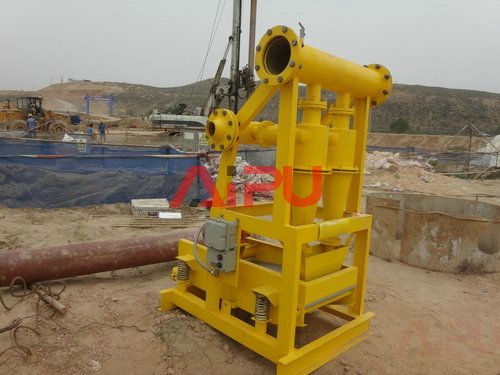
Operating desanders at peak efficiency is a simple matter, since most desanders are relatively uncomplicated devices. Here are a few fundamental principles to keep in mind.
1. Operate the desander unit at the recommended feed manifold pressure, usually around 30 PSI. A feed pressure too low decreases efficiency and a pressure too high puts un-due wear & tear on the cyclone.
2. Check cones regularly to ensure the discharge orifice is not plugged.
3. Run the desander continuously let fluid overflow back and process over & over.
4. Operate the desander with a light spray rather than a rope discharge to maintain peak efficiency.
5. Maintenance of desanders normally entails no more than checking all cone parts for excessive wear and flushing out the feed manifold between bores. Large trash may collect in feed manifold, which could cause cone plugging during operation. Preventive maintenance minimizes downtime & repairs are simpler between bores, rather than during drilling operations.
Related Products