What is a Solids Control System? The Complete Guide to Drilling Fluids Management
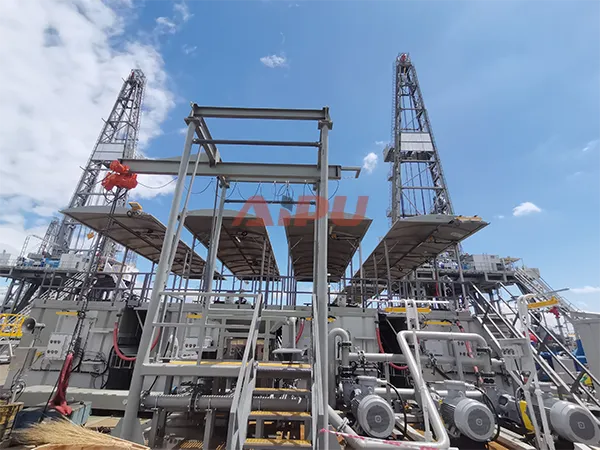
In the high-stakes world of oil and gas drilling, the management of drilling fluid—or "mud"—is a critical operational pillar. A Solids Control System is the technological backbone of this process, a sophisticated assembly of equipment designed to remove drilled cuttings and other undesirable solids from the drilling fluid, allowing the clean mud to be recirculated. This system is not merely a collection of machines; it is an integrated solution that ensures drilling efficiency, reduces costs, and minimizes environmental impact. This guide delves into the components, stages, and benefits of a modern solids control system, highlighting the advanced solutions offered by industry leaders.
The Core Objective: Why Solids Control is Indispensable
Drilling fluid performs essential functions: cooling and lubricating the drill bit, carrying cuttings to the surface, and maintaining wellbore pressure. As it circulates, it becomes contaminated with rock fragments (cuttings). If not cleaned, this contaminated fluid increases wear on equipment, reduces drilling speed, elevates the risk of downhole complications, and leads to excessive waste disposal costs. A solids control system continuously purifies the mud, maintaining its optimal properties for safe, efficient, and economical drilling operations.
The Multi-Stage Purification Process: A Cascade of Precision
A typical solids control system employs a multi-stage, "cascade" separation process, where each stage targets progressively smaller solid particles. The most common configuration is a four-stage system, as exemplified by Aipu's comprehensive product line.
Stage 1: Primary Separation – The Shale Shaker
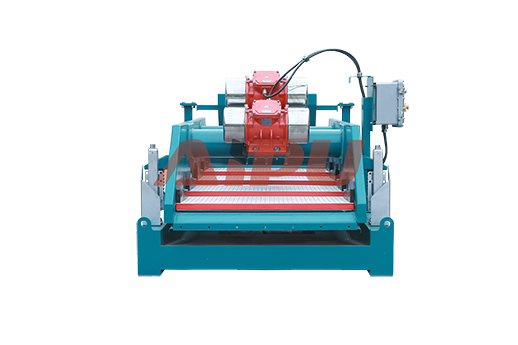
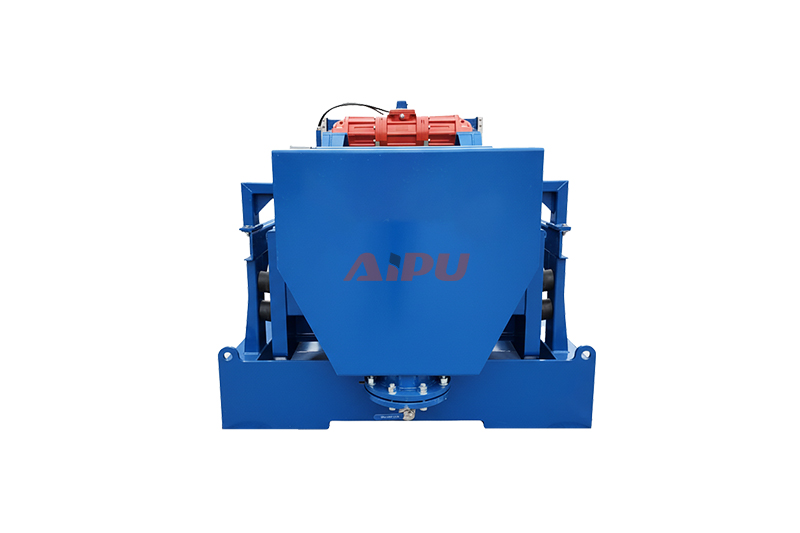
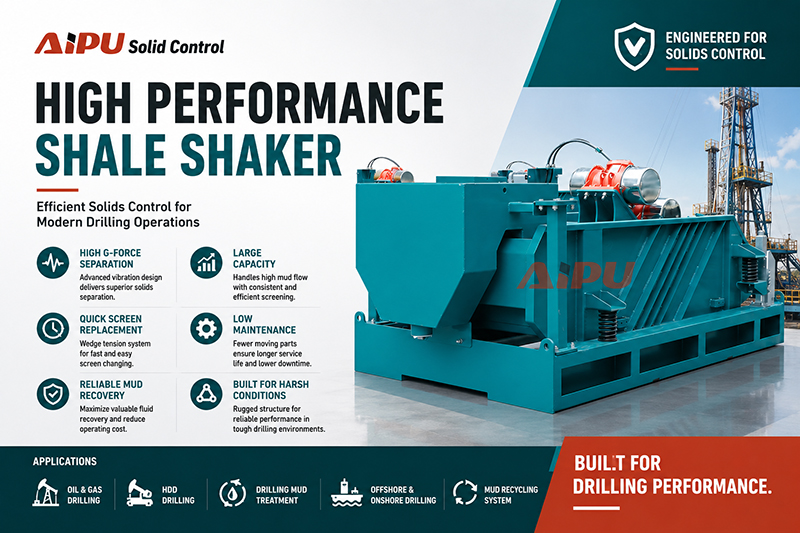
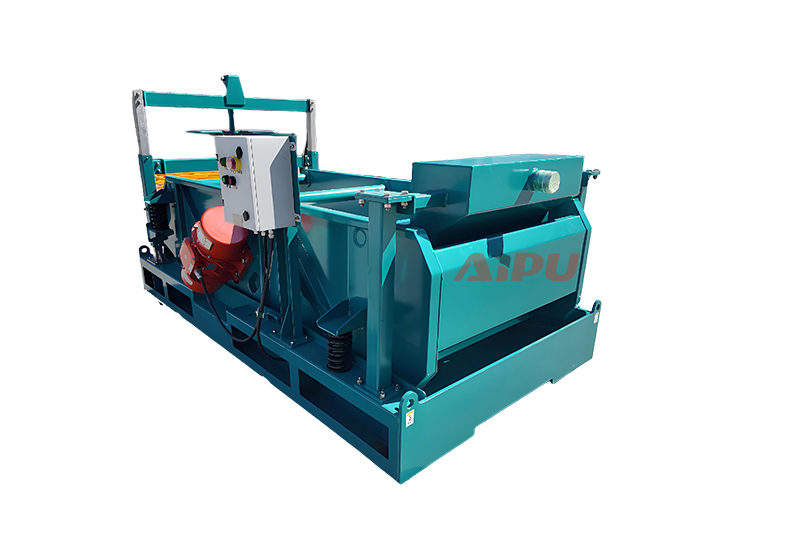
The first line of defense is the shale shaker, which uses vibrating screens to remove the largest cuttings (typically larger than 74 microns). Aipu's Hunter-MG series shale shakers are engineered for this task, featuring high treating capacity and larger effective screen areas. For instance, the Hunter-MG4 model offers a capacity of 140 m³/h with a screen area of 2.7 m². The innovative Hunter-MGD dual-motion shale shaker allows operators to switch between elliptical and linear vibration modes during operation, adapting to different drilling conditions for optimal separation efficiency.
Stage 2: Secondary Separation – Degassing and Desanding
After screening, the fluid may contain entrained gas and medium-sized solids. This stage often involves two parallel processes:
-
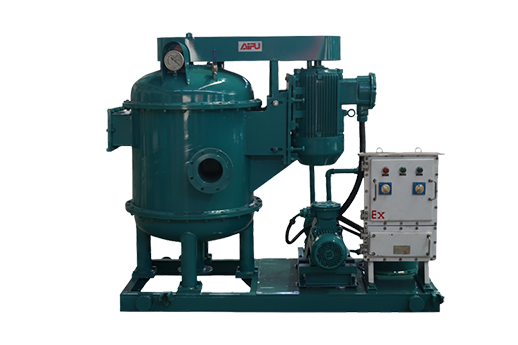
Degassing: Equipment like the APZCQ Vacuum Degasser removes harmful gases (e.g., H₂S, CH₄) encapsulated in the fluid. The APZCQ300 model, for example, handles 300 m³/h with an efficiency exceeding 95%.
-
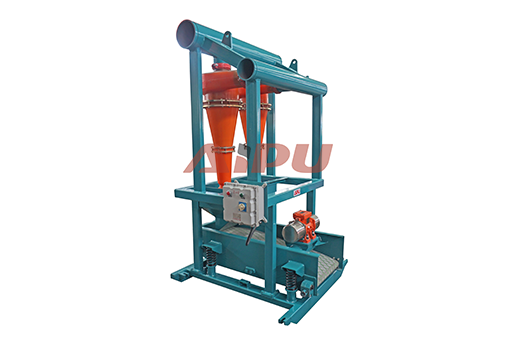
Desanding: The APCS Desander utilizes hydrocyclones to remove solids in the 44 to 74-micron range. The APCS120 model, equipped with a 10" hydrocyclone, processes 90-120 m³/h.
Stage 3: Tertiary Separation – Desilting and Mud Cleaning
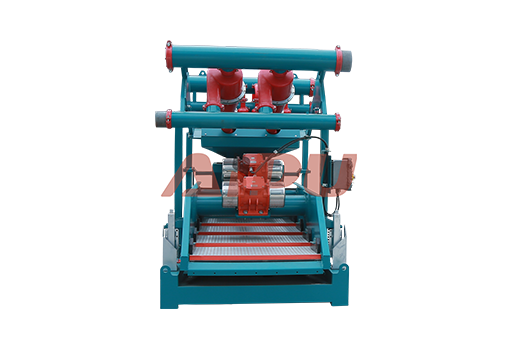
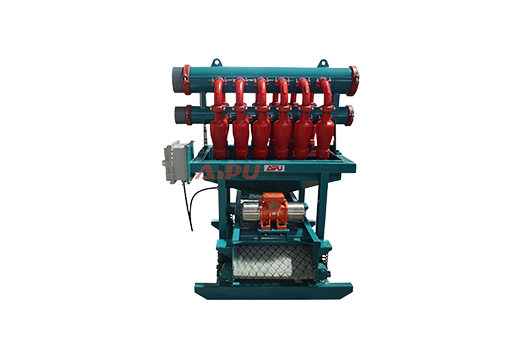
This stage targets fine solids. A Mud Cleaner is a combination unit that integrates a desander and a desilter with a bottom shaker. Aipu's Hunter series mud cleaners, such as the Hunter240, combine 12x 4" desilter cones and 2x 10" desander cones with a shale shaker to efficiently remove particles as fine as 15 microns. Standalone APCN Desilters are also used for precise removal of 15-44 micron particles.
Stage 4: Advanced/Fine Separation – The Centrifuge
The final stage employs high-speed centrifuges to recover valuable weighting materials (like barite) and remove ultra-fine particles (2-7 microns) that affect mud viscosity. Aipu's APLW Mud Decanter Centrifuge series is pivotal here. The APLW355×1460-N model, with a speed of 3200 RPM, achieves a separation factor of 2032G, capable of removing 2-5μm particles. For the most challenging environments, the APFHD Full Hydraulic Decanter Centrifuge offers robust performance, capable of operating in high-temperature conditions with a compact, skid-mounted design.
Supporting Equipment: The Unsung Heroes of the System
A complete system relies on auxiliary equipment for fluid handling, mixing, and transfer:
-
Agitation & Transfer: APMA Drilling Mud Agitators keep solids suspended in tanks, while APSB Centrifugal Pumps and APG Screw Pumps provide reliable fluid transfer. The APVTP Vacuum Transfer Pump can convey slurries with up to 80% solid content, ideal for moving cuttings and sludge.
-
Mixing & Conditioning: The APSLH Jet Mud Mixer and Shear Pump are crucial for preparing and conditioning the drilling fluid, ensuring additives are properly hydrated and blended.
-
Safety & Environmental: The APMGS Mud Gas Separator provides primary degassing for safety, and the APFI Flare Ignition Device safely incinerates vented harmful gases.
The Integrated System Advantage: More Than the Sum of Its Parts
True efficiency is achieved when these components are integrated into a cohesive, engineered system. Aipu's solids control systems are designed as holistic solutions. The company leverages over 20 years of experience to design systems that are not only high-performing but also practical. Key design features include:
-
Robust Construction: Tank structures use one-time cold-pressed corrugated panels for high strength and aesthetics. Tank surfaces are fitted with serrated galvanized steel grating or fiberglass anti-slip plates.
-
Optimized Layout: Internal piping manifolds are rationally arranged, with valve controls ensuring smooth and efficient fluid flow. Equipment on the tank surface is secured with limit fixing devices for easy installation.
-
Operational Efficiency: The skid-mounted design of tank bottoms allows for quick on-site positioning and connection. Sloped bottom plates inside tanks facilitate sediment cleaning.
-
Safety & Service: Systems are equipped with integrated guardrails and walkways. Aipu supports clients with circumspect service throughout the entire sales and implementation process, offering true cost-effective solutions.
Beyond Drilling: Waste Management Systems
Modern solids control extends to waste management with "closed-loop" or "zero-discharge" systems. Aipu provides tailored solutions like:
-
Oil-Based Mud Waste Management: Systems utilizing equipment like the APVCD Vertical Cuttings Dryer to recover base oil, reducing the oil content on cuttings to ≤5% for safe disposal.
-
Water-Based Mud Waste Management: Processes that dewater waste to produce a solid cake with ≤40% moisture content, minimizing environmental impact.
Conclusion
A Solids Control System is a meticulously engineered ecosystem vital for efficient, safe, and environmentally responsible drilling. From the initial screening by a shale shaker to the fine separation by a high-speed centrifuge, each component plays a specific role in maintaining drilling fluid integrity. By investing in a well-designed system from a knowledgeable provider like Aipu Solid Control—a company with a proven track record, international certifications (API, ISO), and a full range of reliable equipment—operators can significantly reduce total drilling costs, enhance operational safety, and meet stringent environmental standards. It is, unequivocally, the complete solution for intelligent drilling fluids management.
Related Products