What is a Desander in Drilling? The Guardian of the Second-Stage Solids Control
In the sequential purification process of a drilling fluid solids control system, each piece of equipment has a defined mission. Following the initial, coarse separation by shale shakers, the drilling mud, now free of the largest cuttings, proceeds to the second stage. Here, the Desander takes center stage. Its name precisely describes its function: to remove sand-sized particles. In technical terms, a desander is a hydrocyclone-based device designed for the second-stage removal of medium-sized solids (typically in the 44 to 74 micron range) from drilling fluids. It is a critical component for protecting the mud system and enhancing drilling efficiency.
1. Definition and Core Function
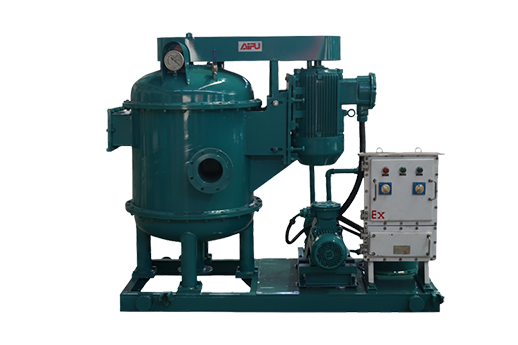
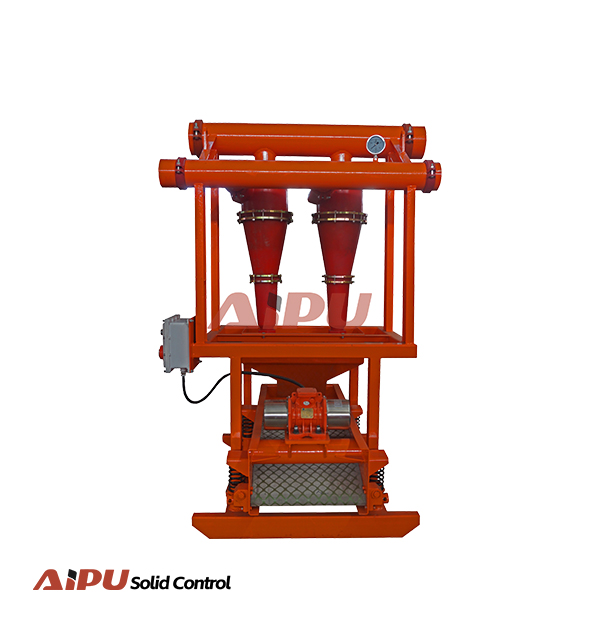
A desander is solids control equipment that utilizes one or more hydrocyclones to separate undesirable solids from the liquid phase based on differences in particle size and density. Positioned as the second-stage equipment in the process, its primary purpose is to remove abrasive sand-sized particles that passed through the shale shaker screens. It is an efficient piece of equipment within the solids control system and waste management process.
2. The Role in the Solids Control Cascade
The desander specializes in a specific particle size range. After the shale shaker (1st stage) removes particles larger than 74 microns, the desander (2nd stage) targets the 44 to 74 micron band. This prevents these abrasive solids from progressing further, where they could cause excessive wear on pumps, pipelines, and the more delicate 3rd-stage desilters. It effectively helps ensure proper drilling mud performance and reduces the potential for drilling problems. Following the desander, a desilter (3rd stage) would remove even finer particles (15 to 44 microns).
3. How Does a Desander Work? The Hydrocyclone Principle
The core of a desander is one or more conical hydrocyclones. Here's how it works:
-
Pressurized Feeding: The drilling fluid is pumped tangentially into the upper, cylindrical section of the hydrocyclone under pressure.
-
Vortex Creation: This inlet creates a high-speed, spinning vortex inside the cone.
-
Centrifugal Separation: Denser, larger solid particles are thrown outward by centrifugal force against the wall of the cone. They spiral downward along the wall and are discharged from the narrow bottom opening (the apex or "underflow") as a slurry.
-
Clean Fluid Overflow: The cleaned fluid, along with the finest particles, forms an inner, upward-spinning vortex and exits through a central pipe at the top (the vortex finder or "overflow").
4. Key Components and Technical Specifications
Desander units are characterized by several key parameters and components:
-
Maximum Capacity: Units are available in various sizes with processing capacities ranging from approximately 60 m³/h to over 360 m³/h.
-
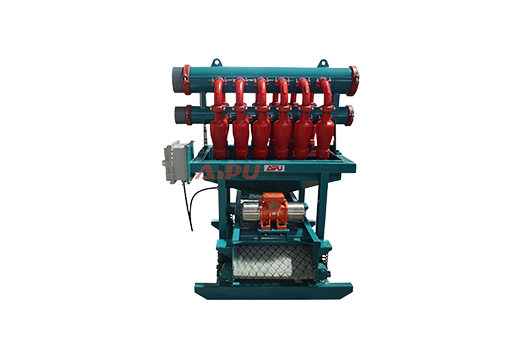
Hydrocyclone Configuration: Defined by the number and size of cones used. Common configurations use one or more cones, often 10 inches (250mm) in diameter.
-
Separation Point: Efficiently removes solids in the 44 to 74 micron range.
-
Construction: Components are built with high-quality, wear-resistant materials. Cones are often made of materials like polyurethane, sometimes reinforced, with abrasion and corrosion resistant coatings applied to metal parts.
-
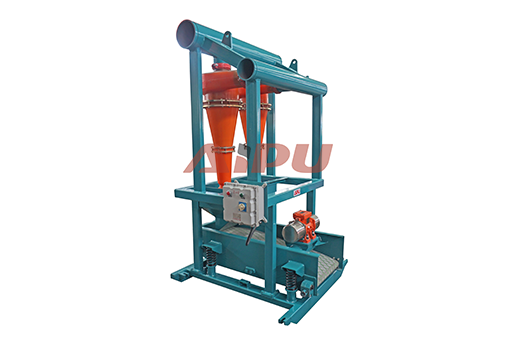
Optional Bottom Shaker: A key feature on some units is the integration of a small vibrating screen ("bottom shaker") to dewater the solids discharged from the hydrocyclone underflow, recovering more liquid and producing drier solids.
5. Main Types and Configurations
-
Standard Desander Units: These consist of a manifold feeding a bank of hydrocyclones, which may or may not include an integrated bottom shaker for underflow drying.
-
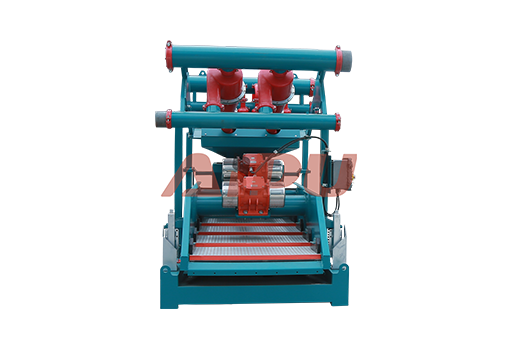
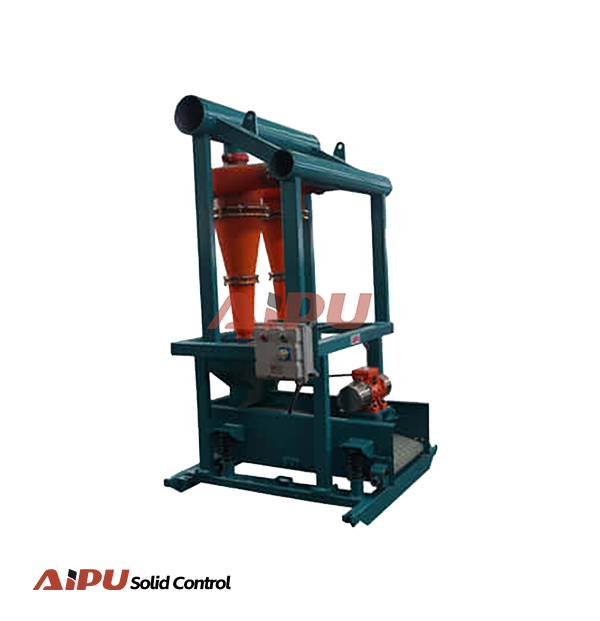
Compact/Skidded Units: These systems integrate the hydrocyclone bank with a dedicated shale shaker on a single skid, providing a complete, self-contained processing package.
-
Customization: Desander units can often be customized with features such as different electrical system specifications, the choice of including a bottom shaker or a simple flow ditch, various international certifications for hazardous areas, and different surface coating colors.
6. Purpose and Advantages
-
Abrasion Protection: Removes medium-sized, abrasive solids, significantly reducing wear on downstream equipment and the entire mud circulation system.
-
Mud Property Management: Helps maintain stable mud weight and viscosity by removing drilled solids, contributing to better hydraulic performance and wellbore stability.
-
Process Efficiency: Acts as a vital preparatory stage for desilters and centrifuges, allowing them to operate at peak efficiency on finer particles.
-
Operational Simplicity: Designed for easy operation and maintenance, often featuring clamp-type cone connections for quick installation and disassembly.
In essence, a desander is a robust, high-efficiency specialist in the solids control system. It performs the critical task of removing the abrasive "sand" fraction from drilling fluid. By doing so, it safeguards the entire drilling fluid system, optimizes the performance of subsequent finer purification stages, and plays a direct role in reducing operational costs and enhancing drilling safety. Whether as a standalone unit or integrated into a compact package, the desander remains an indispensable component for any drilling operation committed to precise fluid management.
Related Products