What is a Desilter in Drilling? The Third-Stage Sentinel of Solids Control
In the multi-stage purification process of a drilling fluid solids control system, each piece of equipment performs a specific duty. After the shale shaker removes large cuttings and the desander extracts sand-sized particles, the drilling fluid still contains fine solids that can adversely affect mud properties and drilling performance. This is where the desilter comes into play. Positioned as the third-stage solids control equipment, a desilter is designed to remove very fine particles—typically in the 15 to 44 micron range—from the drilling fluid. It is a critical component for maintaining optimal mud characteristics and ensuring efficient drilling operations.
1. Definition and Core Function
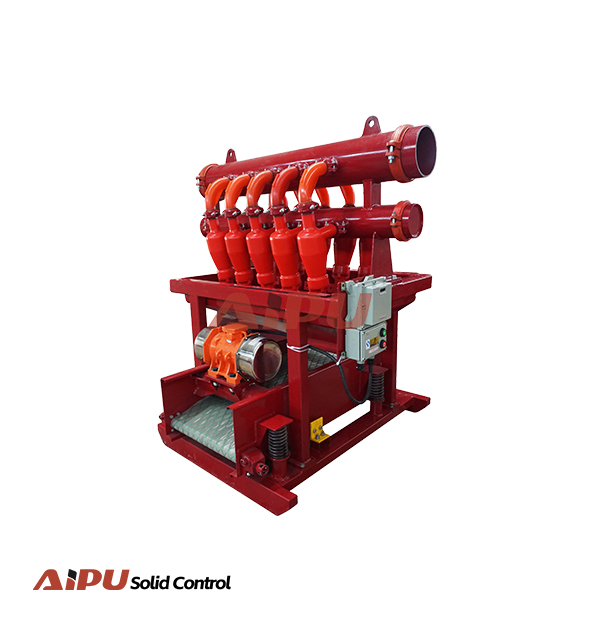
A desilter is solids control equipment that utilizes a set of small hydrocyclones to separate fine solid particles from the liquid phase based on differences in particle size and density. As the third-stage equipment in the solids control system, its primary purpose is to remove the fine particles that remain after the desanding process. By effectively eliminating solids in the 15 to 44 micron range, the desilter helps maintain the desired properties of the drilling mud and reduces the risk of drilling problems associated with high solids content.
2. The Role in the Solids Control Cascade
The desilter specializes in the finest particle range addressed by hydrocyclone-based equipment. Following the shale shaker (1st stage, removing particles >74μm) and the desander (2nd stage, targeting 44-74μm), the desilter (3rd stage) focuses on the 15-44μm fraction. This sequential removal of progressively finer particles prevents these solids from accumulating in the mud system, where they could increase viscosity, affect filter cake quality, and potentially cause formation damage. Following the desilter, a decanter centrifuge (4th stage) can be used to remove even finer particles (2-7μm) or to recover barite in weighted muds.
3. How Does a Desilter Work? The Hydrocyclone Principle
The core of a desilter consists of multiple small hydrocyclones, typically 4 inches (100mm) in diameter, operating in parallel. The working principle is identical to that of a desander, but the smaller cone geometry generates higher centrifugal forces capable of separating finer particles:
-
Pressurized Feeding: Drilling fluid is pumped under pressure (typically 0.25-0.45 MPa) into a manifold that distributes it tangentially to each hydrocyclone.
-
Vortex Creation: The tangential inlet creates a high-speed spinning vortex inside each small cone.
-
Centrifugal Separation: Denser and larger solid particles (down to 15μm) are thrown outward against the cone wall. They spiral downward and are discharged through the bottom apex as underflow slurry.
-
Clean Fluid Overflow: The cleaned fluid, containing only the finest remaining particles, forms an inner upward vortex and exits through the vortex finder at the top.
4. Key Components and Technical Specifications
Desilter units are characterized by several key parameters and components:
-
Maximum Capacity: Units are available in various sizes with processing capacities ranging from approximately 60 m³/h to over 360 m³/h. For example:
-
Small units may handle 60-120 m³/h using 4-8 cones.
-
Larger units can process 200-360 m³/h using 12-16 cones.
-
-
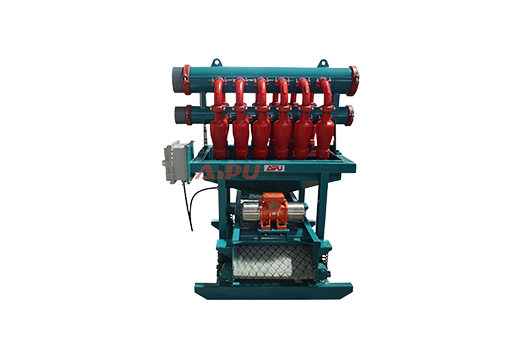
Hydrocyclone Configuration: Defined by the number of 4-inch (100mm) cones. Common configurations include 4, 8, 12, or 16 cones arranged in a manifold assembly.
-
Separation Point: Efficiently removes solids in the 15 to 44 micron range.
-
Construction Materials: Cones are typically manufactured from 100% polyurethane for extended service life. Metal components undergo strict sand-blasting procedures and are coated with abrasion and corrosion resistant paints.
-
Connection Method: Cones feature clamp-type connections for easy installation, inspection, and replacement.
-
Optional Bottom Shaker: Some desilter units can be equipped with an integrated small vibrating screen to dewater the underflow discharge from the cones. When present, this bottom shaker typically provides a screening area of approximately 0.75 m² with a 0.4 kW excitation motor.
-
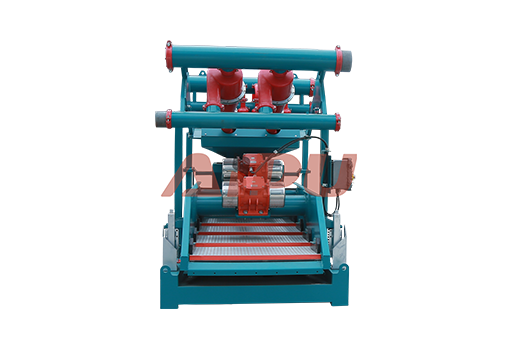
Integrated Units: Desilters are also available as part of combined mud cleaner units, where desilter cones are mounted over a small shale shaker. Models such as the Hunter N120, N240, and N360 integrate 4-inch cone banks with vibrating screens of varying sizes (2 m² to 2.7 m²) and dual motor configurations (2×1.5 kW to 2×1.72 kW). The Hunter MN120 combines 8×4" cones with a 1.35 m² mini shaker powered by 2×0.75 kW motors.
5. Main Types and Configurations
-
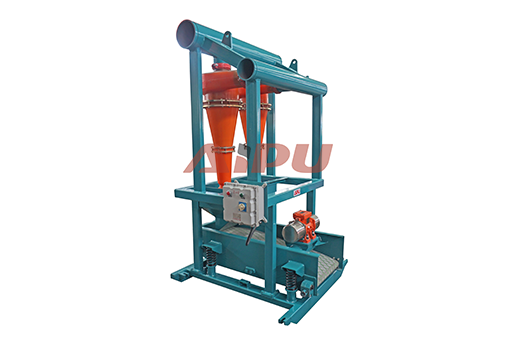
Standard Desilter Units: These consist of a manifold feeding a bank of 4-inch hydrocyclones, mounted over a tank or collection vessel. They may include an integrated bottom shaker for underflow drying or simply discharge directly into the tank.
-
Mud Cleaner Configurations: Desilter cones are often combined with a fine screen shaker to create a mud cleaner, which processes both desander and desilter underflows in a single unit. This configuration recovers additional liquid and produces drier solids.
-
Customization Options: Desilter units can be customized with different electrical system specifications (voltages and frequencies), various international certifications (such as ATEX and IECEx for hazardous areas), and different surface coating colors.
6. Purpose and Advantages
-
Fine Solids Removal: Effectively removes particles in the 15-44 micron range that cannot be separated by desanders or shaker screens, maintaining proper mud rheology and density.
-
Mud Property Management: Helps control viscosity and reduces the need for dilution by eliminating excessive fine solids, thereby lowering overall mud costs.
-
Formation Protection: Reduces the risk of formation damage by minimizing the fine solids content that can invade permeable zones.
-
Equipment Protection: Prevents accelerated wear on downstream equipment, including centrifuges and mud pumps, by removing abrasive fine particles.
-
Operational Simplicity: Designed for easy operation with minimal maintenance requirements. Clamp-type cone connections allow quick replacement of individual cones without special tools.
-
Versatility: Available in various configurations to match different rig sizes and flow rates, from small land rigs to large offshore installations.
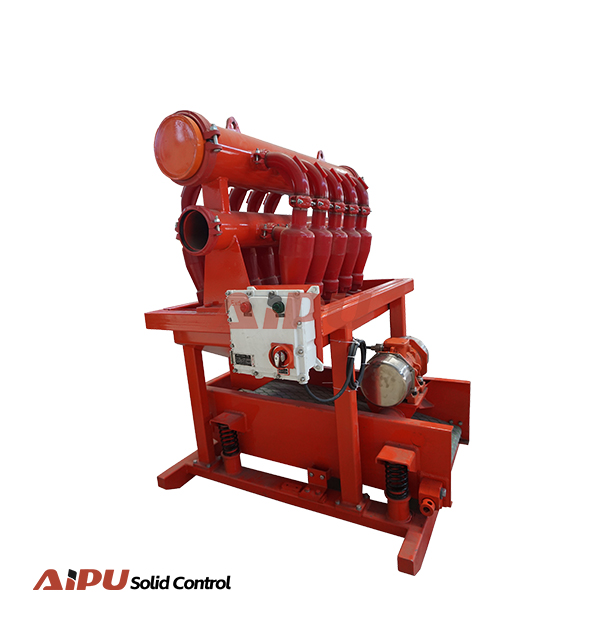
In the systematic approach to solids control, the desilter serves as the specialized third-stage defender, targeting the fine particle fraction that escapes previous separation stages. By efficiently removing solids in the 15 to 44 micron range, it plays an indispensable role in maintaining drilling fluid properties, protecting formation integrity, and optimizing overall drilling performance. Whether deployed as a standalone unit or integrated into a mud cleaner package, the desilter remains essential equipment for any drilling operation committed to precise fluid management and operational excellence.
Related Products