What is a Decanter Centrifuge in Drilling? The Ultimate Fourth-Stage Solids Control Equipment
In the comprehensive multi-stage process of drilling fluid solids control, each piece of equipment targets progressively finer particles. After the shale shaker removes large cuttings, the desander extracts sand-sized particles, and the desilter eliminates fine solids, the drilling fluid still contains ultra-fine particles and colloids that can significantly impact mud properties. This is where the decanter centrifuge comes into play. As the fourth-stage and final mechanical processing equipment in the solids control system, a decanter centrifuge is designed to separate the smallest solid particles—typically in the 2 to 7 micron range—from the drilling fluid. It is essential for maintaining precise mud characteristics, recovering valuable barite, and managing waste volumes effectively.
1. Definition and Core Function
A decanter centrifuge, specifically a horizontal spiral discharge decanter centrifuge, is a mechanical separation device that uses high-speed rotation to generate centrifugal forces many times greater than gravity. These forces separate solid particles from the liquid phase based on density differences. In drilling operations, it serves as the ultimate mechanical barrier against harmful solids, capable of removing particles as fine as 2-7 microns that cannot be captured by screens or hydrocyclones alone.
2. The Role in the Solids Control Cascade
The decanter centrifuge occupies the critical final position in the mechanical solids control process:
-
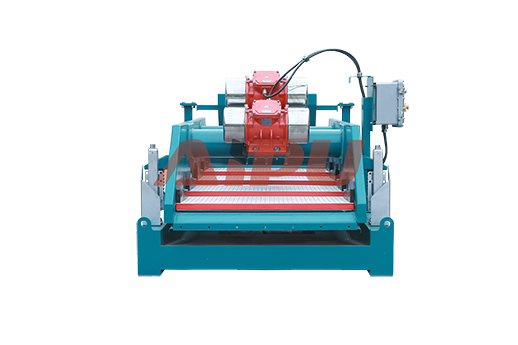
Shale shaker (1st stage): Removes particles larger than 74 microns
-
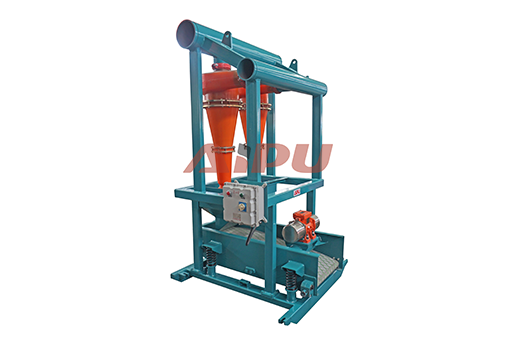
Desander (2nd stage): Targets particles between 44 and 74 microns
-
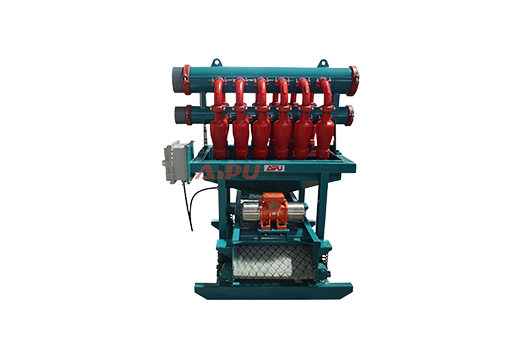
Desilter (3rd stage): Removes particles between 15 and 44 microns
-
Decanter Centrifuge (4th stage): Separates particles from 2 to 7 microns
This sequential refinement ensures that the drilling fluid returned to the active system meets the stringent requirements for efficient drilling, formation protection, and optimal hydraulics.
3. How Does a Decanter Centrifuge Work?
The decanter centrifuge operates on a continuous, high-speed separation principle:
-
Rotating Assembly: The centrifuge consists of a rotating bowl and an internal screw conveyor (scroll) that rotates at a slightly different speed. Both are driven by electric motors through gearboxes.
-
Feed Introduction: Drilling fluid enters the centrifuge through a stationary feed pipe and is accelerated smoothly into the rotating bowl through an inlet distributor.
-
Sedimentation Zone: Inside the rotating bowl, centrifugal forces—often exceeding 2,000 G—cause denser solid particles to settle against the bowl wall. The liquid phase forms an inner layer.
-
Liquid Discharge: The clarified liquid (centrate or effluent) overflows through adjustable weirs or plates at the large end of the bowl and is discharged by gravity.
-
Solids Conveyance: The scroll, rotating at a differential speed relative to the bowl, continuously conveys the settled solids along the bowl wall toward the conical end (beach section).
-
Solids Discharge: As solids emerge from the liquid pool, they are dewatered on the beach before being discharged through ports at the small end of the bowl.
4. Applications in Different Mud Systems
The role of the decanter centrifuge varies significantly depending on the type of drilling fluid:
In Non-Weighted Mud Systems:
The centrifuge serves a critical function by removing virtually all solid phases larger than 2 microns. This effectively solves the problem of ultra-fine harmful solids that cannot be separated by desanders and desilters alone. By eliminating these fine particles, the centrifuge rapidly restores the specific gravity and rheological properties of the drilling fluid, providing a reliable safety guarantee for efficient and scientific drilling operations. It prevents the gradual buildup of low-gravity solids that would otherwise increase viscosity, reduce penetration rates, and increase the risk of differential sticking.
In Weighted Mud Systems:
When barite or other weighting materials are present, the centrifuge serves a different primary purpose—viscosity control and selective separation. In weighted fluids, centrifuges are mainly used to control viscosity by separating out ultra-fine particles and colloids while attempting to retain valuable barite. This selective separation helps maintain proper rheology without excessive dilution, significantly reducing overall mud costs.
5. Key Technical Specifications
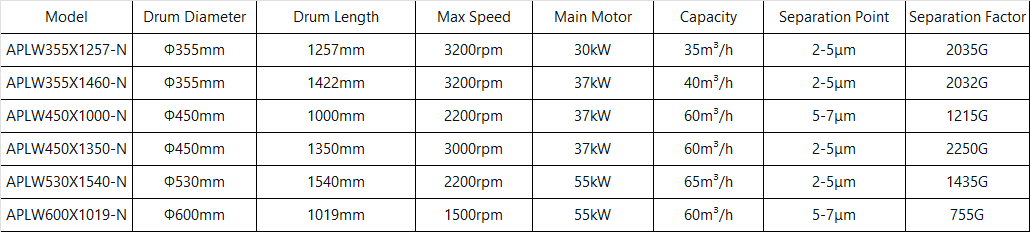
Based on industry-standard configurations, decanter centrifuges are available in various sizes and capacities to match different rig requirements:
Standard Two-Phase Decanter Centrifuges:
Three-Phase Decanter Centrifuges:
For applications requiring separation of two liquid phases along with solids, three-phase centrifuges are available:
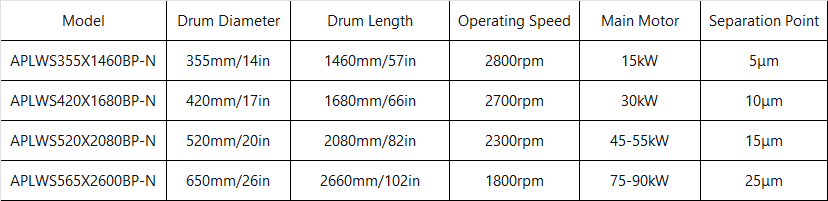
These three-phase centrifuges separate two liquids of different densities while simultaneously discharging solids, making them ideal for applications involving oil-water-solids separation.
6. Main Types and Configurations
-
Two-Phase Decanter Centrifuges: The most common configuration for drilling applications, separating solids from a single liquid phase. Used for both weighted and non-weighted mud systems.
-
Three-Phase Decanter Centrifuges: Designed to separate two immiscible liquids (such as oil and water) while simultaneously removing solids. Particularly valuable in waste management, oily sludge treatment, and situations requiring recovery of both liquid phases.
-
High-Speed vs. Medium-Speed Units: Different bowl speeds and separation factors allow optimization for specific applications—higher speeds for finer particle removal, moderate speeds for barite recovery.
-
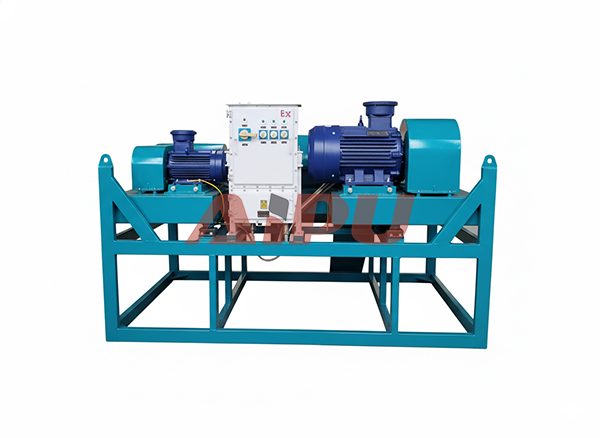
Customization Options: Decanter centrifuges can be customized with different electrical system specifications (voltages and frequencies), material options for wetted parts, various international certifications (ATEX, IECEX for hazardous areas), and different surface coating colors.
7. Purpose and Advantages
-
Ultra-Fine Particle Removal: Capable of separating particles down to 2-5 microns, addressing the fraction that mechanical screens and hydrocyclones cannot capture.
-
Barite Recovery: In weighted mud systems, centrifuges can be operated to recover valuable barite while rejecting low-gravity drilled solids, significantly reducing mud costs.
-
Viscosity Control: By removing colloidal and ultra-fine particles, centrifuges help maintain proper rheology without excessive dilution or chemical treatment.
-
Waste Volume Reduction: Concentrates solids into a drier cake, reducing the volume of waste requiring disposal and lowering overall environmental compliance costs.
-
Liquid Phase Clarification: Produces a clean liquid phase that can be reused in the mud system or, in some cases, discharged after further treatment.
-
Versatility: Suitable for a wide range of applications beyond drilling, including municipal wastewater treatment, industrial wastewater treatment, oil-bearing wastewater treatment, and sludge dewatering.
-
Continuous Operation: Designed for uninterrupted, automated operation with minimal operator intervention.
8. Feeding and Auxiliary Equipment
Proper operation of a decanter centrifuge requires appropriate feeding equipment. Single screw pumps are commonly used as centrifuge feed pumps in solids control systems due to their stable flow rate and working pressure. Through the unique geometry of the screw shaft (rotor) and screw sleeve (stator), these pumps generate progressive cavities that allow mud to flow smoothly with the shaft, ensuring consistent feed conditions essential for optimal centrifuge performance.
The decanter centrifuge represents the pinnacle of mechanical solids control technology in drilling operations. As the fourth and final stage of the mechanical separation process, it addresses the most challenging fraction of solids—the ultra-fine particles that can significantly impair drilling fluid performance, increase costs, and complicate waste management. Whether employed to restore the properties of non-weighted fluids through comprehensive solids removal or to selectively separate fine particles while recovering barite in weighted systems, the decanter centrifuge is indispensable for any drilling operation committed to precise fluid management, operational efficiency, and environmental responsibility. By completing the solids control cascade, it ensures that drilling fluids maintain the exact characteristics required for safe, efficient, and cost-effective drilling.
Related Products