What Does a Shearing Pump Do? The Essential Functions of High-Energy Mixing in Drilling Fluid System
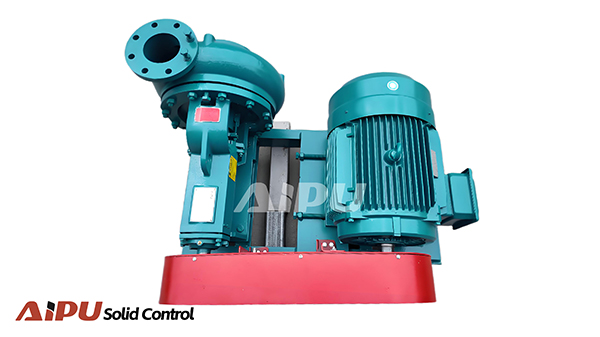
Following the explanation of what a shearing pump is, this article focuses specifically on its functions—the actual work it performs in drilling fluid management. While other solids control equipment removes solids or moves fluid, the shearing pump prepares the fluid itself, performing a set of critical functions that enable proper polymer and clay hydration.
1. Primary Function: Accelerate Polymer and Clay Hydration
The shearing pump's most fundamental function is to dramatically accelerate the hydration of high molecular weight polymers and bentonite clays.
What This Means:
When dry polymer powder or bentonite first contacts water, hydration begins at the particle surface. The outer layer swells and forms a gelatinous barrier that slows or prevents water from reaching the interior. Under simple agitation, this process can take hours—and may never complete fully, leaving partially hydrated "fish eyes."
How the Shearing Pump Performs This Function:
-
Physical Disruption: The intense shear forces generated by high-speed rotation and tight clearances physically tear apart polymer agglomerates and clay clusters.
-
Surface Renewal: As particles are broken apart, fresh surfaces are continuously exposed to water, eliminating the barrier effect.
-
Energy Input: The pump delivers massive mechanical energy directly into the fluid, overcoming the natural resistance of polymers to hydration.
-
Time Compression: What would take 2-4 hours of simple agitation occurs in 15-30 minutes with proper shearing.
Result: Polymers and clays reach their full rheological potential faster and more completely, providing target viscosity and fluid loss control with less total product.
2. Function: Eliminate "Fish Eyes" and Partially Hydrated Particles
Perhaps the most visible function of a shearing pump is the elimination of partially hydrated polymer globules—commonly called "fish eyes."
What These Are:
Fish eyes are gelatinous, partially hydrated polymer particles that form when water cannot penetrate the dry interior of a polymer granule. They range from pinhead-sized to several millimeters in diameter and have a distinctive translucent, gel-like appearance.
Problems They Cause:
-
Formation Damage: If they reach the reservoir, fish eyes can lodge in pore throats, permanently reducing permeability.
-
Screen Blinding: On the first circulation, they blind shale shaker screens, causing fluid losses and requiring screen cleaning.
-
Inconsistent Mud Properties: They create erratic rheology and unpredictable fluid performance.
-
Chemical Waste: Polymer trapped inside fish eyes never contributes to fluid properties.
How the Shearing Pump Performs This Function:
-
The intense shear forces physically rip apart these globules
-
Exposed interior particles then hydrate properly
-
Complete dispersion eliminates the globule form entirely
-
The result is a homogeneous fluid with no visible polymer clumps
3. Function: Reduce Bentonite and Polymer Consumption
By ensuring complete hydration of every particle, shearing pumps significantly reduce the amount of product needed to achieve target properties.
The Mechanism:
Without proper shear, a significant percentage of added polymer or bentonite never fully hydrates—it remains trapped inside fish eyes or partially hydrated clusters. Operators unknowingly over-add to compensate, wasting expensive chemicals.
Quantified Benefit:
As noted in the technical specifications, proper shearing can "save over 30% of bentonite." For polymer additives, savings of 10-20% are typical.
Economic Impact:
For a major drilling operation, these savings translate to tens of thousands of dollars per well in reduced chemical costs.
4. Function: Improve Filter Cake Quality
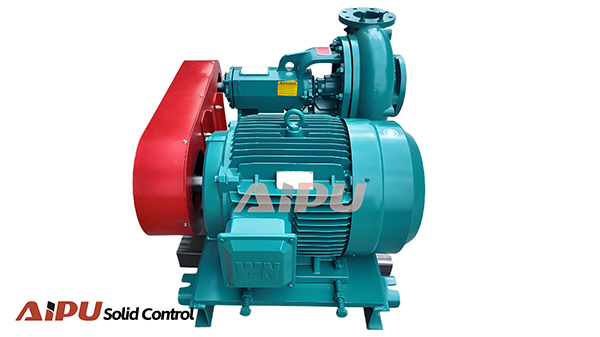
Shearing pumps directly improve the quality of filter cake formed by drilling fluid against the formation.
The Connection:
Filter cake quality depends on the particle size distribution and hydration state of polymers and clays. Poorly hydrated materials produce thick, permeable, easily eroded filter cakes. Properly sheared materials produce thin, impermeable, tough filter cakes.
Specific Improvements:
-
Reduced Thickness: Fully hydrated polymers pack more efficiently, producing thinner cakes
-
Lower Permeability: Complete dispersion eliminates channels and weak spots
-
Higher Strength: Properly sheared gels have higher mechanical strength
-
Better Fluid Loss Control: Thinner, tighter cakes mean less filtrate invasion
Operational Benefit:
Better filter cake reduces differential sticking risk, minimizes formation damage, and improves wellbore stability.
5. Function: Protect Shaker Screens from Blinding
By eliminating large polymer globules before they enter the main circulation, shearing pumps protect shale shaker screens from premature blinding.
The Problem:
When unsheared polymer enters the mud system, the first place it encounters is the shale shaker on the return flow. Fish eyes and partially hydrated clumps immediately begin blinding screens, causing:
-
Reduced processing capacity
-
Fluid loss over the screen sides
-
Need for screen cleaning or replacement
-
Operational delays
How Shearing Helps:
By the time fluid reaches the shaker, shearing pumps have already eliminated the large particles that cause blinding. Screens stay clean, process at design capacity, and last longer.
6. Function: Prevent Formation Damage
One of the most critical functions of shearing pumps is protecting the producing formation from damage caused by partially hydrated polymers.
The Damage Mechanism:
Fish eyes and polymer agglomerates are typically larger than formation pores. When they encounter a pore throat, they:
-
Bridge across the opening
-
Trap smaller particles
-
Form an internal filter cake that is nearly impossible to remove
-
Permanently reduce permeability in the near-wellbore region
The Consequence:
Reduced permeability means lower production rates, potentially costing millions in lost revenue over the life of the well.
How Shearing Pumps Perform This Function:
By ensuring complete polymer dispersion before fluid ever reaches the formation, shearing pumps eliminate the source of this damage mechanism.
7. Function: Enhance Solids Control Efficiency
Properly sheared polymers actually improve the performance of solids control equipment.
The Mechanism:
Poorly hydrated polymers can coat drilled solids, making them:
-
Sticky and prone to agglomeration
-
Harder to separate by screens or hydrocyclones
-
More likely to blind equipment
The Improvement:
When polymers are fully sheared:
-
Drilled solids remain discrete and free-flowing
-
Separation equipment operates at design efficiency
-
Solids discharge is drier and easier to handle
8. Function: Enable Consistent, Predictable Rheology
Shearing pumps ensure that the drilling fluid delivered to the wellbore has consistent, predictable properties.
Why This Matters:
Drilling engineers design hydraulics programs, hole cleaning calculations, and ECD management based on expected fluid properties. If those properties vary due to inconsistent polymer hydration, the entire program becomes unreliable.
How Shearing Helps:
-
Complete hydration means every batch of mud performs identically
-
Target viscosity is achieved consistently without guesswork
-
Chemical treatments produce predictable responses
-
Drilling parameters remain stable and controllable
9. Function: Reduce Overall Drilling Costs
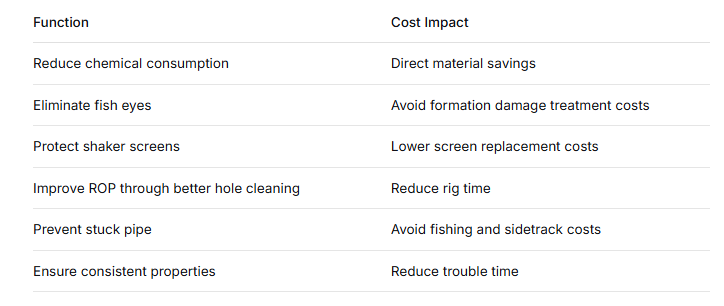
All the specific functions of shearing pumps ultimately contribute to a single overarching function: reducing total drilling costs.
Cost Reduction Pathways:
The Cumulative Effect:
While each individual saving may be modest, their combination produces significant economic benefit over the course of a drilling program.
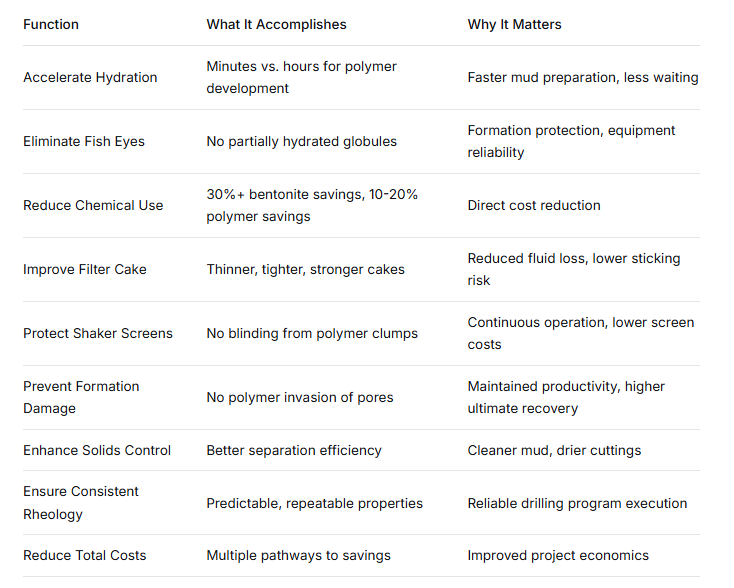
10. Function Summary Table
Conclusion
A shearing pump performs a set of essential functions that no other equipment in the solids control system can duplicate. While shakers remove solids, centrifuges separate fines, and agitators maintain suspension, the shearing pump prepares the fluid itself—ensuring that the expensive polymers and clays added to the system actually deliver their intended performance.
From accelerating hydration to eliminating fish eyes, from reducing chemical consumption to preventing formation damage, the shearing pump's functions cascade through the entire drilling operation. The result is better fluid performance, fewer problems, and lower costs—all achieved through the intelligent application of intense mechanical shear.
In the comprehensive approach to drilling fluid management, the shearing pump proves that sometimes the most important treatment happens before the fluid ever reaches the wellbore.
Related Products