What is a jet mixing device
In the daily operations of a drilling rig, few tasks are as frequent or as critical as the preparation of new drilling fluid and the addition of weighting materials to existing mud. While shearing pumps handle the high-energy requirements of polymer hydration, a different type of device handles the routine but essential task of rapidly incorporating bulk powders into the liquid stream. This device is the jet mixing device—also commonly known as a jet mud mixer, venturi hopper, or simply "the hopper." Understanding its function, operation, and limitations is essential for anyone involved in drilling fluids management.
1. Definition and Core Function
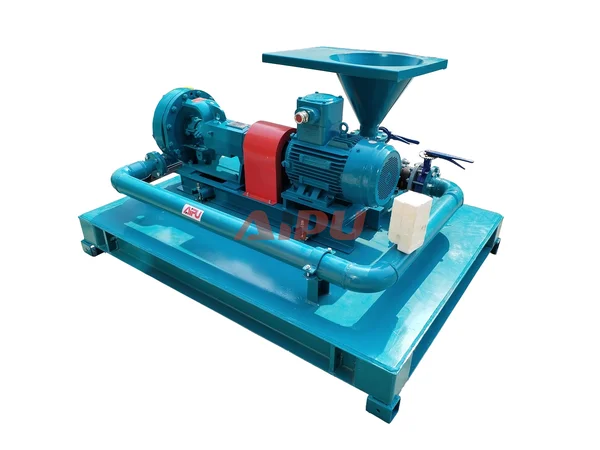
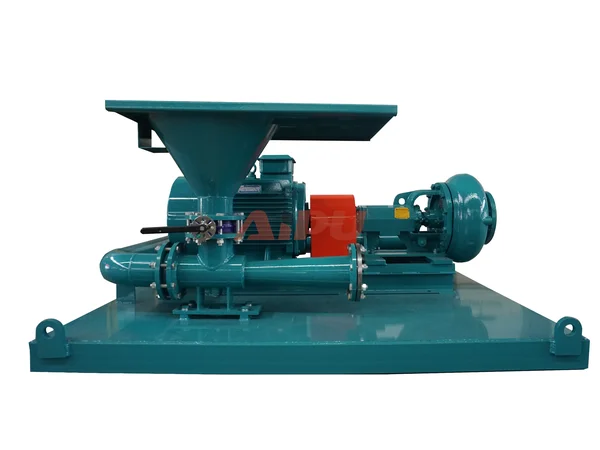
A jet mixing device is a simple but remarkably effective piece of equipment designed to rapidly mix dry powdered materials—such as bentonite, barite, or polymers—into a moving stream of drilling fluid. Operating on the venturi principle, it creates a vacuum that draws powder from a hopper into a high-velocity fluid stream, where it is wetted and dispersed before being discharged into the mud tank for further mixing and hydration.
The jet mixer serves several critical functions:
-
Prepare new drilling fluid: Convert dry bentonite and water into spud mud or base fluid
-
Weight up existing mud: Add barite to increase density
-
Add chemical treatments: Incorporate dry polymers, lignosulfonates, or other additives
-
Maintain mud properties: Make rapid adjustments to density or chemistry
2. The Venturi Principle: How Jet Mixers Work
The jet mixing device operates on one of the most elegant principles of fluid mechanics—the venturi effect.
The Physics:
When a fluid flows through a constriction in a pipe, its velocity increases and its pressure decreases. This pressure drop can be used to create suction, drawing in another fluid or material. In a jet mixer:
-
High-pressure fluid enters: Mud from a centrifugal pump (typically 0.22-0.4 MPa inlet pressure) enters the device and passes through a tapered nozzle.
-
Velocity increases, pressure drops: As the fluid accelerates through the nozzle's narrow throat, its pressure falls below atmospheric pressure.
3 Suction is created: This pressure drop creates a vacuum that draws air and powdered material from the hopper through a pickup tube.
-
Mixing occurs: The high-velocity fluid stream impacts and entrains the powder, beginning the wetting process.
-
Energy dissipation: The mixture expands in the diffuser section, where velocity decreases and pressure recovers, completing the initial mixing.
The Key Components:
-
Nozzle: The tapered constriction where pressure drops and velocity increases
-
Suction chamber: The area where the vacuum draws in powder
-
Throat: The narrowest point where maximum velocity occurs
-
Diffuser: The expanding section where velocity decreases and mixing completes
-
Hopper: The cone-shaped container holding dry material
-
Pickup tube: Connects hopper to suction chamber
-
Butterfly valve: Controls material flow from hopper
3. Technical Specifications
Based on industry-standard configurations like the APSLH series, jet mixing devices have specific operating parameters: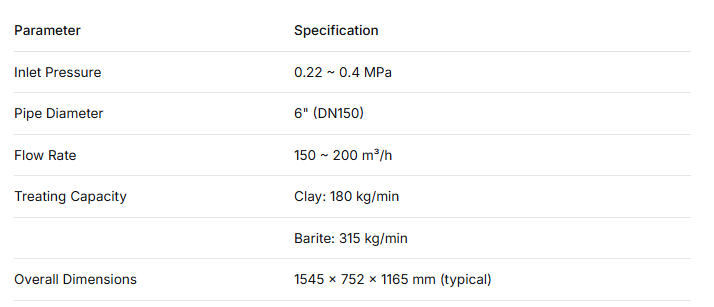
Performance Characteristics:
-
Rapid incorporation: Can mix bentonite at 180 kg per minute—over 10 tonnes per hour
-
Barite addition: Up to 315 kg per minute for rapid weight-up operations
-
Continuous operation: Designed for sustained use during large-volume mixing
-
Simple maintenance: Few moving parts means minimal maintenance requirements
4. Types of Jet Mixing Devices
Standard Jet Mud Mixer (APSLH Series):
The conventional configuration permanently installed on the mud tank. It consists of:
-
Venturi assembly mounted at tank level
-
Hopper positioned for easy bag dumping
-
Permanently piped to a centrifugal pump
-
Discharge directed into the tank for further mixing
Portable Hopper (APSLH Portable):
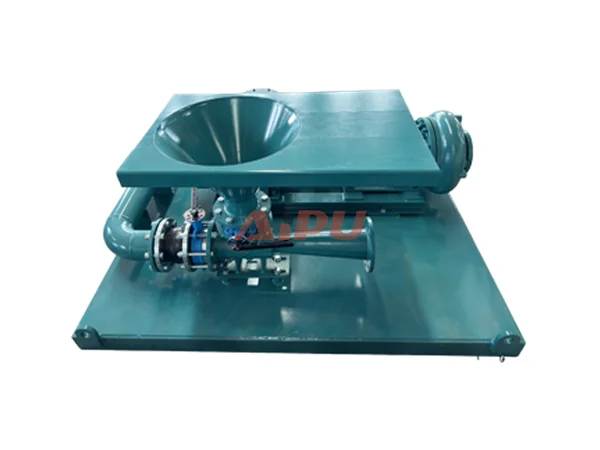
As described in the brochure: "Portable or moveable hopper is developed from Venturi hopper. It mainly consists of hopper body, butterfly valve, Venturi part and frame. It's very easy to handle and operate, high-efficient and reliable."
Portable units offer flexibility:
-
Can be moved between tanks or locations
-
Used with temporary pump setups
-
Ideal for remote operations or multiple tank systems
-
Quick setup and takedown
Custom Configurations:
-
Various hopper sizes for different material volumes
-
Different nozzle designs for specific materials
-
Wear-resistant options for abrasive materials like barite
-
Dust collection adaptations for environmental control
5. Applications in Drilling Operations
Spud Mud Preparation:
When starting a well, large volumes of bentonite mud must be prepared quickly. The jet mixer allows operators to:
-
Add bentonite at 180 kg/min to circulating water
-
Create gel chemical slurry in minutes rather than hours
-
Build initial mud volume rapidly
Weighting Operations:
Adding barite to increase mud density is one of the most common uses:
-
Barite additions at 315 kg/min
-
Rapid density increases without circulation delays
-
Uniform distribution when combined with tank agitation
Chemical Additions:
Many dry chemical treatments are added through the jet mixer:
-
Lignosulfonate thinners
-
Fluid loss control additives
-
Specialty polymers (though shearing pumps are preferred for high molecular weight polymers)
-
Lost circulation materials
Maintenance Treatments:
Throughout drilling, small adjustments to mud properties are made by adding:
-
Supplemental bentonite for filtration control
-
Barite for density maintenance
-
Chemical treatments for contamination events
6. System Components and Integration
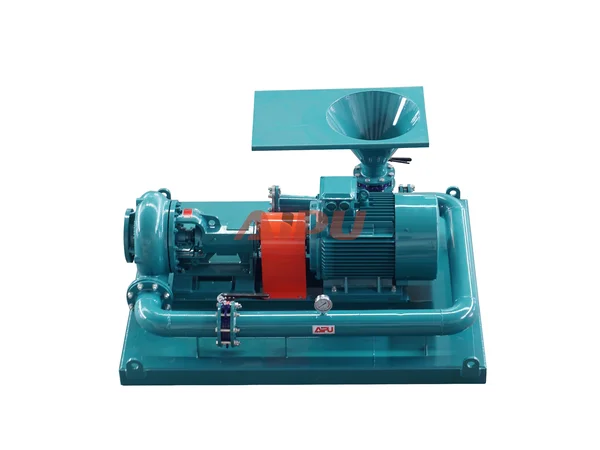
A complete jet mixing system includes more than just the hopper and venturi:
Centrifugal Pump:
The motive force for the jet mixer. Typically:
-
6×5 or 5×4 centrifugal pump (from APSB series)
-
30-45 kW motor depending on flow requirements
-
Dedicated to mixing service or shared with other systems
Piping:
-
Suction line from tank to pump
-
Discharge line from pump to jet mixer
-
Return line from mixer to tank
-
Valves for flow control
The jet mixer alone does not complete the mixing process. As noted in the agitator discussion, tank agitators are essential to:
Tank Agitation:
-
Complete hydration of bentonite
-
Maintain uniform density after barite addition
-
Prevent solids settling during mixing
Mud Guns:
Often used in conjunction with jet mixers to:
-
Assist in distribution of mixed materials
-
Clean tank bottoms
-
Prevent dead zones during weight-up
7. Operational Procedures
Normal Operation:
-
Ensure tank agitation is operating
-
Start centrifugal pump to establish flow through jet mixer
-
Open butterfly valve on hopper
-
Add dry material at controlled rate (avoid flooding the hopper)
-
Monitor mud properties and adjust addition rate
-
Close butterfly valve when target properties achieved
-
Continue circulation with agitation to complete hydration
For Barite Weighting:
-
Barite is heavy and abrasive; add at controlled rate to prevent plugging
-
Ensure adequate agitation to keep barite suspended
-
Monitor density continuously
-
Allow time for complete dispersion before final measurement
For Bentonite Mixing:
-
Bentonite requires hydration time; initial mixing is just the beginning
-
Pre-hydrating in fresh water (not saline) improves performance
-
Allow 4-6 hours minimum hydration before critical use
-
Shearing pumps dramatically accelerate this process
8. Advantages and Limitations
Advantages:
-
Simplicity: No moving parts in the mixing head, minimal maintenance
-
Speed: Can incorporate bulk materials rapidly (tonnes per hour)
-
Reliability: Venturi principle is foolproof and trouble-free
-
Low cost: Inexpensive compared to shearing pumps or other mixers
-
Versatility: Handles everything from bentonite to barite to chemicals
-
Continuous operation: Can run indefinitely for large-volume jobs
Limitations:
-
Limited shear: Provides only initial wetting, not high-energy dispersion
-
No hydration acceleration: Does not significantly speed polymer or clay hydration
-
Dust generation: Open hopper systems can create dust
-
Operator dependent: Quality depends on addition rate control
-
Plugging risk: Can clog if material added too quickly or if lumps present
-
Not for polymers: High molecular weight polymers require shearing pumps for proper hydration
9. Comparison with Shearing Pumps
Understanding the difference between jet mixers and shearing pumps is essential for proper system design:
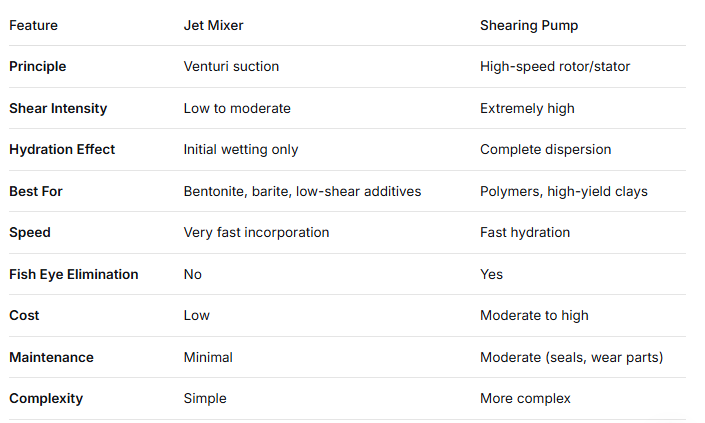
In a well-designed mud system, both devices have their place: jet mixers for bulk material incorporation and weighting, shearing pumps for polymer hydration and high-energy dispersion.
10. Portable and Specialized Configurations
Portable Hopper:
The portable version offers flexibility for:
-
Multiple tank systems sharing one mixer
-
Remote locations without permanent installations
-
Temporary operations or pilot tests
-
Emergency backup
Typical portable unit specifications:
-
Frame-mounted for forklift or crane handling
-
Quick-connect hose fittings
-
Compact footprint
-
Lightweight for easy transport
Custom Designs:
-
Dust-controlled hoppers: Enclosed systems with dust collection
-
High-capacity units: Larger throats for higher addition rates
-
Abrasion-resistant linings: For extended life with barite
-
Stainless steel construction: For corrosive environments or special materials
11. Safety Considerations
Dust Control:
-
Bentonite and barite dust can be respiratory hazards
-
Consider dust collection systems for frequent use
-
Operators should wear appropriate PPE (dust masks)
-
Wetting hopper contents before dumping reduces dust
Manual Handling:
-
Bags can be heavy (25-50 kg each)
-
Ergonomics of bag dumping stations important
-
Mechanical bag handling aids recommended for high-volume operations
Plugging Hazards:
-
Sudden clearing of plugged mixer can spray mud
-
Ensure valves can be quickly closed
-
Stand clear during startup and addition
Pressure Safety:
-
Jet mixers operate at significant pressure (0.22-0.4 MPa)
-
Ensure all connections secure before pressurizing
-
Use appropriate pressure-rated hoses and fittings
12. Integration with the Complete Mud System
The jet mixer does not work in isolation. It is one component of an integrated preparation system:
The Complete Preparation System:
-
Bulk storage: Silos for barite and bentonite (for large operations) or bagged material (for smaller rigs)
-
Transfer system: Pneumatic or mechanical transport to hopper
-
Jet mixer: Incorporates material into fluid stream
-
Mixing tank: Where initial mixing occurs
-
Agitators: Maintain suspension during and after addition
-
Shearing pump: For polymers and high-yield clays (optional but recommended)
-
Transfer pumps: Move prepared mud to active system
-
Quality control: Mud testing to verify properties
Conclusion
The jet mixing device—simple, reliable, and remarkably effective—remains the workhorse of drilling fluid preparation after decades of service. Operating on the elegant venturi principle, it transforms the mundane task of adding dry powders to liquid into a rapid, continuous process capable of incorporating tonnes of material per hour.
While it cannot match the shear intensity of a dedicated shearing pump for polymer hydration, the jet mixer excels at its primary functions: rapid incorporation of bentonite for spud mud, high-rate barite addition for weighting operations, and versatile chemical addition for routine maintenance. Its simplicity means minimal maintenance, its speed means minimal rig time for mud preparation, and its reliability means one less thing to worry about in the complex drilling operation.
In the comprehensive toolkit of drilling fluid management, the humble jet mixer proves that sometimes the oldest technology—the venturi, understood since the 18th century—remains the best solution for the job.
Related Products