How Does a Mud Agitator Work? A Comprehensive Guide to Drilling Fluid Homogenization
In the complex ecosystem of oil and gas drilling, the solids control system plays a vital role in ensuring efficiency, safety, and cost-effectiveness. Among the various components—shale shakers, desanders, desilters, and centrifuges—the mud agitator is often the unsung hero. While other equipment focuses on separation, the mud agitator focuses on prevention. This article delves deep into the working principle, applications, and technical benefits of mud agitators, explaining why they are indispensable for any modern drilling operation.
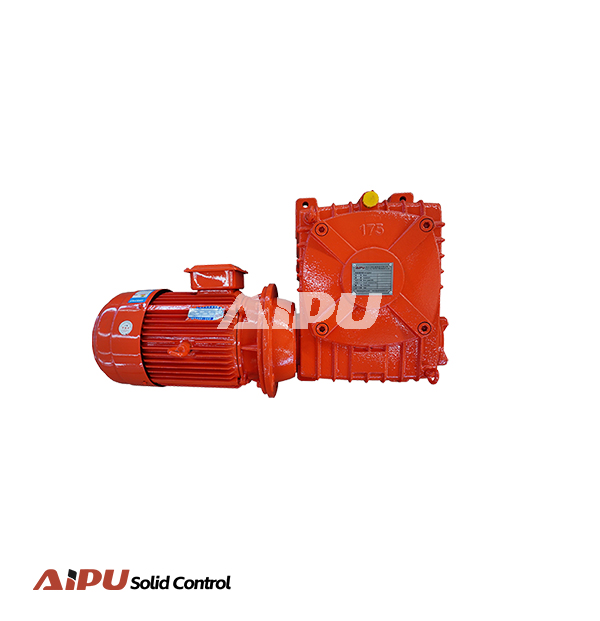
Why Is a Mud Agitator Necessary?
Drilling fluid (mud) is a complex mixture of base fluids, clays, chemicals, and weighting materials like barite. When this fluid sits idle in surface tanks, solid particles naturally settle due to gravity. If left unmixed, this settling leads to:
-
Solidification and stratification: Heavy solids sink to the bottom, forming a dense, hard-to-remove cake.
-
Inconsistent rheology: The mud’s viscosity and density become uneven, leading to poor hole cleaning and potential well control issues.
-
Increased costs: Replacing settled mud and cleaning tanks adds significant non-productive time (NPT).
This is where the mud agitator comes in. Its primary role is to maintain a homogeneous suspension, ensuring that solids remain evenly distributed from the suction tank to the discharge line.
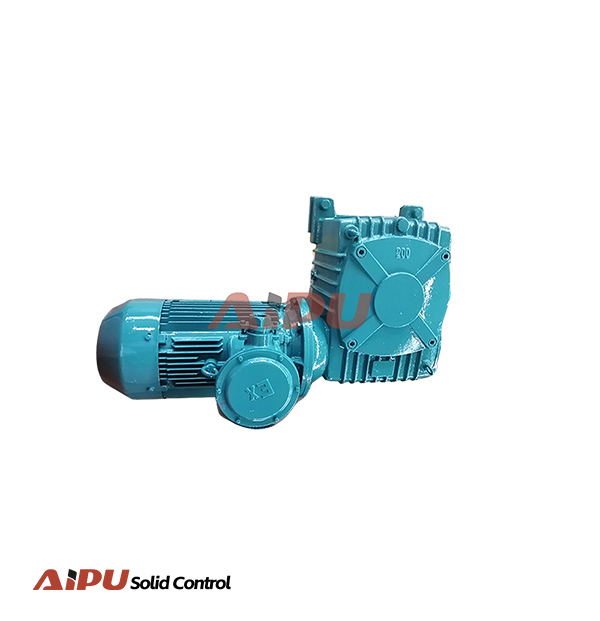
The Core Working Principle of a Mud Agitator
At its simplest, a mud agitator converts electrical energy into mechanical agitation. However, the engineering behind it is designed for heavy-duty, continuous operation.
1. Power Transmission and Speed Reduction
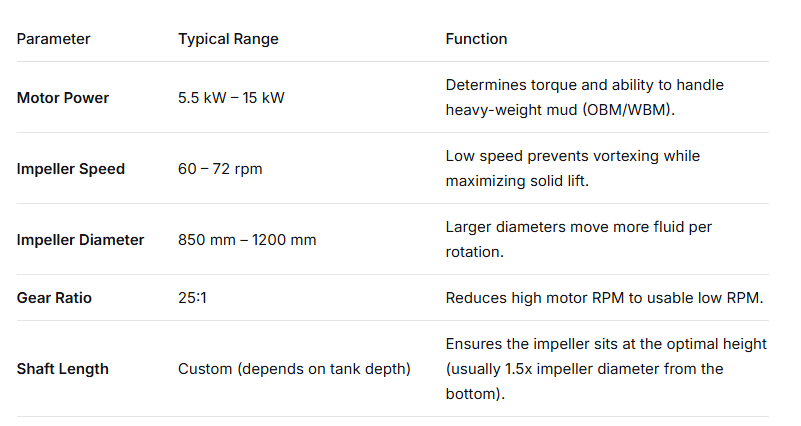
The agitator is driven by an explosion-proof electric motor (typically 5.5 kW to 15 kW or more, as seen in models like the APMA series). Because direct motor speeds (1450-1750 rpm) are too fast for effective mixing, the unit employs a gearbox (worm gear or bevel gear) to reduce the output speed significantly—usually to 60–72 rpm. This low-speed, high-torque output is critical for handling dense drilling fluids without stalling.
2. The Agitation Mechanism: Impeller Design
The low-speed rotation is transferred to a long vertical shaft connected to one or two impellers (propellers).
-
Flow Pattern: As the impeller rotates, it creates both axial and radial flow. The blades push the mud downward and outward toward the tank walls.
-
Bottom-Up Circulation: This hydraulic action creates a "sweeping" effect across the bottom of the tank, lifting settled barite and drill solids back into the main flow.
-
Single vs. Dual Impellers: For deeper tanks, a dual-impeller design (e.g., upper 950mm + lower 950mm) is used. The upper impeller creates a vortex to pull material down, while the lower impeller provides the shear force to keep the tank bottom clean.
3. Preventing "Dead Zones"
Effective agitation relies on strategic placement. The industry standard is one agitator every 3 meters (or one per compartment). This spacing ensures that the flow fields overlap, preventing "dead zones" where solids could accumulate. The shaft length is customized based on the tank depth, and a shaft stabilizer (an optional bearing support) is often added to prevent whip or vibration in tall tanks.
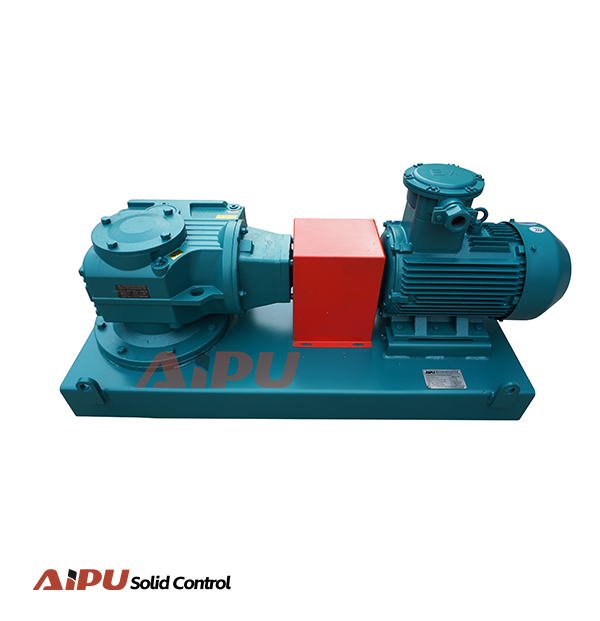
Key Technical Parameters (Based on AIPU APMA Series)
To truly understand how an agitator works, one must look at its specifications, which define its capability:
Operational Benefits: More Than Just Mixing
Understanding how it works reveals why it matters:
-
Reduces Starting Resistance: High-viscosity mud can create massive drag on startup. The low-speed, high-torque design (reduced by the 25:1 ratio) allows the motor to start smoothly without burning out.
-
Stabilizes Electrical Load: By preventing solids from caking, the agitator reduces the "breakaway torque" required, protecting the electrical system from power spikes.
-
Enhances Chemical Treatment: Homogeneous mixing ensures that polymers and additives (which are prone to creating "fish eyes" if not properly mixed) are uniformly distributed, improving hydration and reducing waste.
Customization and Industrial Standards
Modern drilling environments demand flexibility. As highlighted in technical documentation, high-quality agitators offer:
-
Material Options: Standard carbon steel vs. H₂S (Hydrogen Sulfide) resistant steel for sour gas applications.
-
Certifications: ATEX and IECEX for explosive atmospheres.
-
Configuration: Vertical (standard surface mount) or horizontal (for limited space).
-
Surface Coating: Heavy-duty anti-corrosion paint to withstand harsh outdoor and marine conditions.
Conclusion
The mud agitator does not "separate" or "clean" the mud; rather, it preserves its integrity. By continuously converting electrical power into low-speed, high-torque hydraulic energy, it fights gravity to keep solids in suspension. Without this critical action, downstream equipment like desilters and centrifuges would clog, mud pumps would wear prematurely, and the entire drilling operation would face costly delays.
When selecting an agitator, look beyond the horsepower. Focus on the gear ratio, impeller diameter, shaft length, and tank layout to ensure a system that truly circulates—from the bottom up.
Related Products