Purpose of Vacuum Degasser in Drilling: Why Gas Removal Is Critical for Rig Safety and Efficiency
In any drilling operation, maintaining consistent drilling fluid properties is essential. However, when formation gases invade the mud system, even small amounts of entrained gas can cause major problems. The equipment specifically designed to solve this issue is the vacuum degasser. But what exactly is its purpose? Why is it so important that most modern drilling rigs include one? This article provides a standalone, in‑depth explanation of the purpose of a vacuum degasser in drilling, the problems it solves, and why AIPU Solid Control vacuum degassers are the trusted choice for operators worldwide.
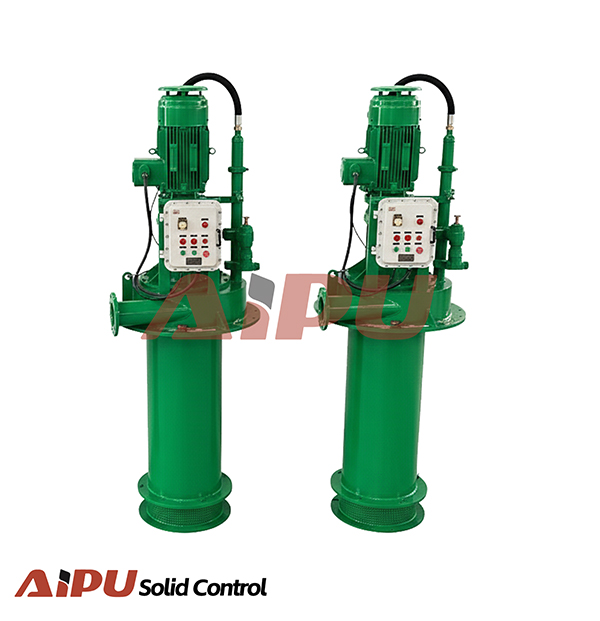
1. The Core Purpose: Removing Entrained Gas from Drilling Fluid
The primary purpose of a vacuum degasser is simple but vital: to remove entrained and dissolved gases from drilling mud. Entrained gases are small bubbles that become trapped in the mud during circulation. Dissolved gases are those that have actually mixed at the molecular level with the liquid. Both types lower mud density, damage equipment, and create safety hazards. A vacuum degasser restores the mud to a gas‑free condition so it can perform its intended functions.
Without a degasser, gas‑cut mud would continue to circulate, reducing hydrostatic pressure, causing pump cavitation, and potentially leading to a blowout.
2. Secondary Purposes: What a Vacuum Degasser Accomplishes
Beyond the basic gas‑removal function, a vacuum degasser serves several critical purposes that directly impact drilling performance and cost.
2.1 Restoring Mud Density (Hydrostatic Pressure)
The most immediate effect of entrained gas is a reduction in mud density. Even 2–3% gas by volume can lower density by 0.05–0.10 SG. This reduces the hydrostatic pressure exerted against the formation. If the pressure falls below formation pore pressure, formation fluids (oil, gas, water) can flow into the wellbore – a kick. A vacuum degasser removes the gas, restoring the original mud weight and the safety margin against kicks.
2.2 Preventing Mud Pump Cavitation and Damage
Mud pumps are positive‑displacement pumps that do not tolerate gas. When gas bubbles enter a mud pump cylinder, they collapse violently under compression. This cavitation erodes piston liners, damages valves, and can break pump parts. A vacuum degasser removes gas before the mud reaches the pump suction, eliminating cavitation and extending pump life. Field data shows that pump liner life can double when a degasser is used properly.
2.3 Improving Downstream Solids Control Efficiency
After the degasser, mud normally flows to desanders, desilters, and centrifuges. These hydrocyclone and centrifuge devices rely on the density difference between solids and liquid. Entrained gas lowers the effective liquid density, reducing separation efficiency. Degassed mud allows desanders and desilters to operate at their designed performance, removing more solids and reducing wear on downstream equipment.
2.4 Protecting Rig Personnel from Toxic Gases
Formation gases often include hydrogen sulfide (H₂S), a highly toxic and corrosive gas. Even low concentrations can be fatal. A vacuum degasser extracts H₂S from the mud and directs it through a vent line to a flare ignitor (such as AIPU’s APFI series), where it is safely burned. Without degassing, H₂S could escape from the mud at the shakers or in the mud pits, endangering the crew.
2.5 Enabling Accurate Flow Measurements
Gas bubbles interfere with Coriolis and ultrasonic flow meters, causing erratic readings. This makes it difficult to balance inflow vs. outflow – a key well control indicator. By removing gas, the degasser allows accurate flow monitoring, helping detect kicks early.
2.6 Reducing Environmental Impact
When mud is discharged (e.g., in offshore cuttings injection or land farming), entrained gas can cause foaming, handling problems, and increased volatile organic compound (VOC) emissions. Degassed mud is easier to handle and less harmful to the environment.
3. What a Vacuum Degasser Does NOT Do
To avoid confusion, it is equally important to understand what a vacuum degasser is not intended for:
-
It does not handle large‑volume gas kicks – that is the job of a mud gas separator (MGS).
-
It does not remove solids – that is the job of shakers, desanders, desilters, and centrifuges.
-
It does not mix or add chemicals – that is the job of jet hoppers and shearing pumps.
The vacuum degasser is a polishing device for continuous gas removal during normal circulation.
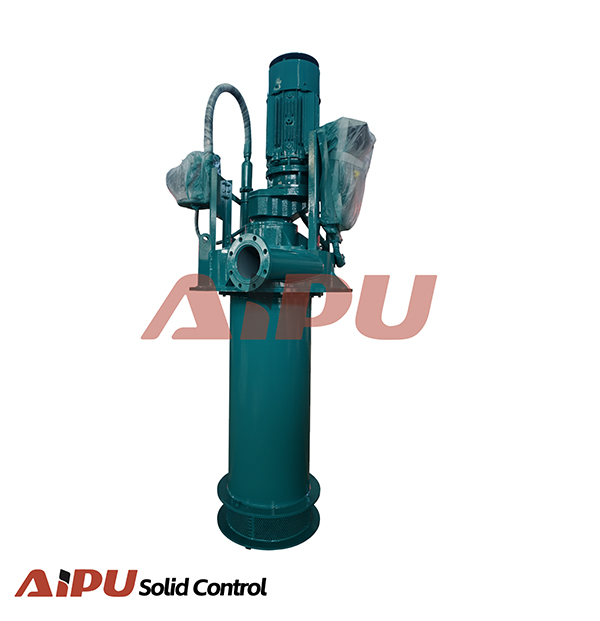
4. How a Vacuum Degasser Achieves These Purposes – Brief Mechanism
Understanding the mechanism helps appreciate the purpose. A vacuum degasser:
-
Creates a partial vacuum (-0.02 to -0.04 MPa) inside a sealed vessel.
-
Spreads incoming mud into a thin film (using a rotor or baffles).
-
Under vacuum, dissolved gas comes out of solution and entrained bubbles expand.
-
A vacuum pump sucks the released gas out through a vent line.
-
Degassed mud exits the vessel and returns to the mud tank.
This simple but powerful process achieves ≥95% gas removal efficiency.
5. Key Specifications – AIPU Vacuum Degassers Serving These Purposes
AIPU Solid Control manufactures vacuum degassers designed specifically to fulfill all the purposes described above. Here are two representative series.
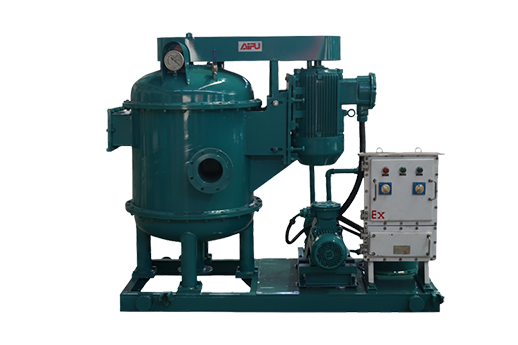
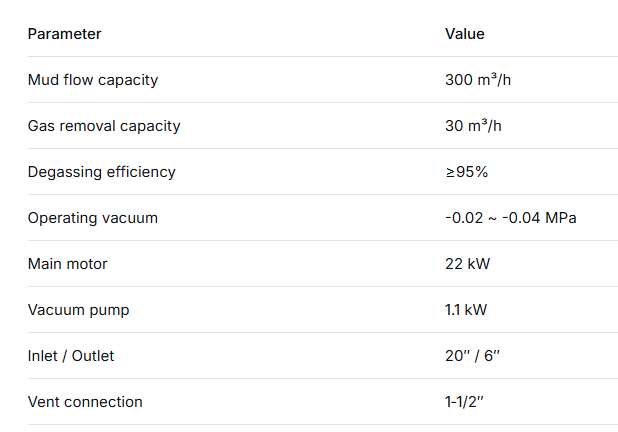
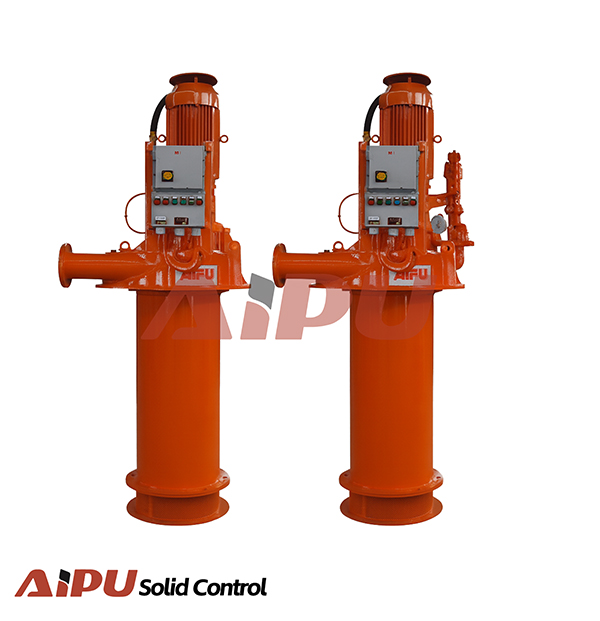
AIPU APLCQ300 – Vertical Centrifugal Degasser
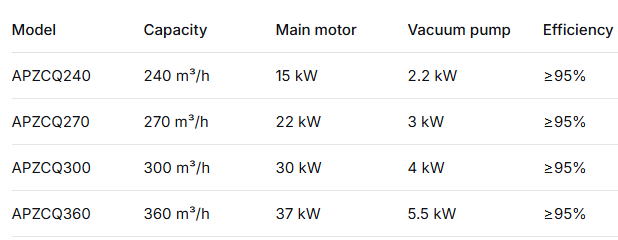
AIPU APZCQ Series – Tank‑Mounted Degassers
All AIPU degassers offer:
-
H₂S‑resistant steel (316L or 2205 duplex) for sour gas applications.
-
ATEX / IECEX certifications for hazardous areas.
-
Three‑layer marine anti‑corrosion coating.
-
Customizable electrical systems (380V/50Hz, 460V/60Hz, etc.).
6. Where a Vacuum Degasser Fits in the Solids Control System
To achieve its purposes, the degasser must be placed in the correct position:
Flowline → Shale shakers (stage 1) → Vacuum degasser (stage 2) → Desander (stage 3) → Desilter (stage 4) → Centrifuge (stage 5) → Suction pit → Mud pumps
Why this order?
-
After shakers: Large cuttings are removed first so they do not clog the degasser.
-
Before desander/desilter: Gas removal improves hydrocyclone efficiency.
-
Before mud pumps: Degassed mud prevents cavitation.
Placing the degasser elsewhere (e.g., after the desander) defeats its purpose – gas would remain in the mud through the fine‑separation stages, and pumps would still suffer.
7. Common Scenarios Where the Purpose Becomes Critical
Scenario 1 – Drilling Through a Gas Sand
Methane enters the mud at the bit. Without a degasser, mud weight drops from 1.30 SG to 1.18 SG. The driller sees a decreasing trend in pump pressure and flow out. With an AIPU vacuum degasser, the gas is removed immediately, mud weight stays stable, and the well remains under control.
Scenario 2 – Sour Gas Field (H₂S)
H₂S is lethal. The gas detector alarms at the shaker area. The degasser, built with H₂S‑resistant steel and connected to a flare ignitor, extracts the H₂S and burns it safely. The crew is protected.
Scenario 3 – Deepwater Offshore
Cavitation from gas‑cut mud destroys pump liners every 500 hours. After installing an AIPU degasser, liner life extends to 1,500 hours. The operator saves hundreds of thousands of dollars in maintenance and downtime.
8. Why AIPU Vacuum Degassers Are the Best Choice for These Purposes
AIPU Solid Control has over 20 years of experience in solids control and has delivered equipment to more than 30 countries, with cumulative shipments exceeding 300 system‑equivalent units. AIPU holds API, HSE, and multiple product certifications.
When you choose an AIPU vacuum degasser, you get:
-
Proven ≥95% gas removal efficiency – quickly restores mud density.
-
Robust, corrosion‑resistant construction – three‑layer marine coating, H₂S‑resistant steel optional.
-
Flexible configurations – vertical (APLCQ300), tank‑mounted (APZCQ series), or float‑controlled (APVD series).
-
Global support – full documentation, installation guidance, and after‑sales service.
9. Conclusion
The purpose of a vacuum degasser in drilling is clear: to continuously remove entrained and dissolved gases from drilling fluid, thereby restoring mud density, preventing pump cavitation, improving solids control efficiency, protecting personnel from toxic gases, and enabling accurate well monitoring. It is not an optional accessory – it is a critical safety and performance device for any rig drilling through gas‑bearing formations.
AIPU Solid Control offers vacuum degassers that fulfill this purpose reliably, even in the most challenging environments (sour gas, offshore, high flow rates). Whether you need a compact vertical degasser or a high‑capacity tank‑mounted unit, AIPU has the solution.
Do not let gas compromise your drilling operation. Choose AIPU vacuum degassers.
Related Products