Oilfield Shale Shaker Maintenance Tips to Extend Equipment Life
An oilfield shale shaker operates in one of the harshest environments—constant vibration, abrasive solids, corrosive drilling fluids, and extreme temperatures. Without proper maintenance, screen life drops, separation efficiency declines, and unplanned downtime costs thousands of dollars per hour. This guide provides practical maintenance tips to maximize the service life of your shale shaker, reduce operating costs, and keep your solids control system running at peak performance.
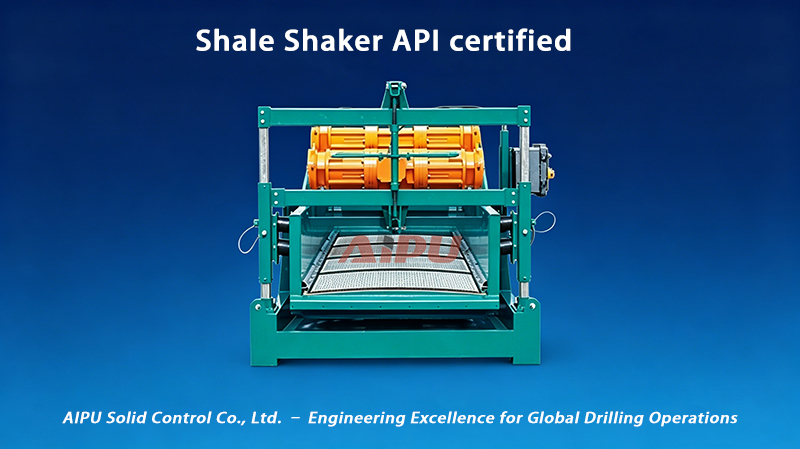
1. Daily Visual Inspection Before Startup
Every shift should begin with a quick but thorough visual inspection:
-
Screen panels: Look for tears, holes, or uneven tension. Even a small tear can allow oversized solids to contaminate downstream equipment (degassers, desanders, desilters, centrifuges).
-
Rubber seals and cushion strips: Check for wear or deformation. Worn seals cause solids bypass, reducing separation efficiency.
-
Spring assemblies: Ensure springs are not broken, sagging, or rusted. Uneven spring support leads to irregular vibration patterns.
-
Feed box and discharge chute: Remove any caked mud or debris that could restrict flow.
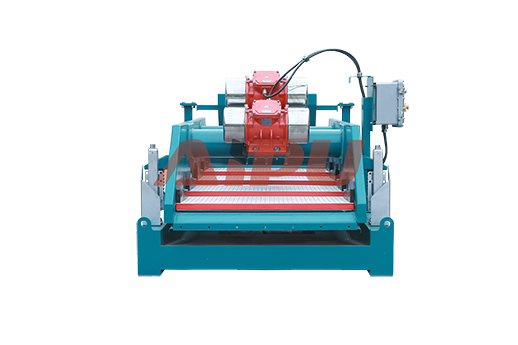
AIPU’s Hunter-MG series shakers are designed with fewer spare parts and easy operation, making daily checks quick and straightforward.
2. Proper Screen Tensioning and Replacement
Loose screens vibrate against the support frame, causing premature wear and poor separation. Always follow the manufacturer’s tensioning procedure:
-
Use a tensioning tool to apply even force across all tension bolts.
-
Check tension after the first hour of operation, as new screens can relax.
-
Replace screens in sets if the shaker has multiple panels to maintain balanced flow.
AIPU offers both steel-framed and composite-framed screen panels. Composite frames are lighter and easier to handle, reducing replacement time. For high-G force applications, steel-framed panels provide extra rigidity.
3. Monitor Vibration Parameters
Most modern shale shakers allow adjustment of G-force, amplitude, and deck angle. Operating outside recommended ranges accelerates wear:
-
G-force should typically be 6.0–7.0 G (as seen on AIPU’s Hunter-MGD dual-motion shaker). Higher G-force dries cuttings faster but reduces screen life.
-
Double amplitude of 5–6 mm is optimal for most formations.
-
Deck angle adjustments (-3° to +5° on Hunter-MGD, -1° to +5° on Hunter-MG series) let you balance retention time and throughput. Negative angles increase screen contact time but also increase wear.
Record vibration parameters daily. Sudden changes indicate loose bolts, worn bearings, or screen issues.
4. Motor and Bearing Maintenance
The vibrator motor is the heart of the shale shaker. AIPU provides flexible motor brand options (Ital, Vibras, Martin, Oli) with power ratings from 2×0.75 kW to 2×1.94 kW. To extend motor life:
-
Lubricate bearings according to the manufacturer’s schedule. Use the correct grease type and quantity—over-greasing is as harmful as under-greasing.
-
Check motor mounting bolts daily. Vibration loosens fasteners over time.
-
Listen for unusual noise during operation. Grinding or knocking sounds indicate bearing failure.
-
Monitor motor temperature. Excessive heat suggests overloading or electrical issues.
For dual-motion units like the Hunter-MGD, which uses two 1.86 kW motors, ensure that the switching mechanism between linear and elliptical motion operates smoothly. Any hesitation or irregularity should be inspected immediately.
5. Corrosion Protection and Coating Maintenance
Drilling fluids often contain chlorides, sulfides, and other corrosive agents. AIPU applies strict sand-blasting procedures followed by abrasion-resistant and corrosion-resistant coatings on all shakers. To protect this coating:
-
Wash down the shaker after each tour (shift) with fresh water or appropriate solvent, depending on mud base (water-based, oil-based, or synthetic).
-
Inspect coating for scratches or bare metal spots. Touch up immediately to prevent rust from spreading.
-
For H₂S service, AIPU offers special hydrogen sulfide-resistant steel. If your shaker has this option, never use acidic cleaning agents.
6. Keep the Shaker Clean
Mud buildup on frames, springs, and motors adds dead weight and traps heat. It also hides developing problems:
-
Use a pressure washer (avoid direct spray on electrical components and motor vents).
-
Pay special attention to the underside of the screen basket where dried mud can accumulate and reduce screening area.
-
Clean the discharge chute regularly; restricted flow forces mud over the screen edges instead of through it.
7. Maintain Proper Feed Distribution
Uneven feed distribution causes localized screen wear and reduces effective screening area. Ensure the feed box distributes mud evenly across the full screen width. Some AIPU shakers accept dual tandem or triple tandem configurations, which naturally improve feed distribution for high-flow operations.
If you notice a “river” effect (mud flowing only through a narrow path), check for:
-
Blockages in the feed box
-
Uneven screen tension
-
Worn feed gaskets
8. Follow a Scheduled Maintenance Plan
Create a maintenance log and track:
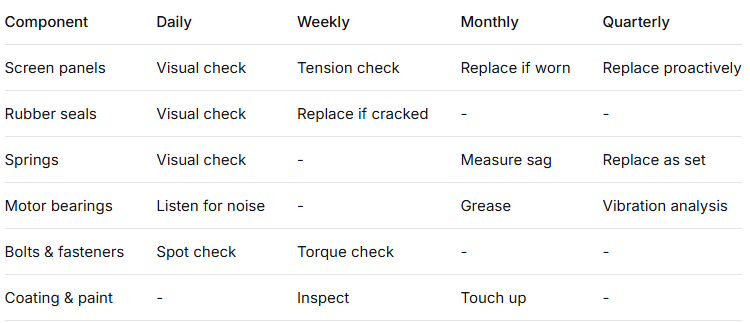
AIPU’s design philosophy emphasizes less spare parts, easy operation and less maintenance, which simplifies this schedule.
9. Train Your Crew
Even the best equipment fails without proper operation. Train rig crews on:
-
Correct startup sequence (start shaker before mud arrives)
-
Adjusting deck angle and vibration mode for different mud types
-
Recognizing signs of screen blinding or bypass
-
Safe screen replacement procedures
For advanced shakers like the Hunter-MGD dual-motion unit, operators must understand how to switch between linear and elliptical motion during operation to adapt to real-time drilling conditions without stopping the shaker.
10. Keep Spare Parts on Site
Stock critical spares to minimize downtime:
-
Spare screen panels (at least one full set)
-
Rubber seal strips
-
Motor bearing kits
-
Tensioning bolts and nuts
-
For electrical systems, spare fuses and contactors
AIPU provides customizable electrical systems (380V/50Hz, 460V/60Hz, ATEX, IECEX), so keep spares that match your specific configuration.
Why AIPU Shakers Are Built for Long Life
AIPU Solid Control Co., Ltd has over 20 years of industry experience and delivers to more than 30 countries. Their Hunter-MG series incorporates:
-
50,000 m² production base with advanced manufacturing equipment
-
Strict sand-blasting and multi-layer coating for corrosion resistance
-
Fewer spare parts design for simplified maintenance
-
Optional ATEX/IECEX certifications for hazardous areas
-
Customizable surface colors for site-specific requirements
Whether you need a compact Hunter-Mini (50 m³/h) or a high-capacity Hunter-MG4TC triple-deck shaker (420 m³/h), AIPU’s robust construction and maintenance-friendly design keep your rig drilling longer with fewer interruptions.
Conclusion
Extending the life of your oilfield shale shaker is not complicated—it requires consistent daily inspections, proper screen tensioning, vibration parameter monitoring, motor bearing care, corrosion protection, and crew training. By following these maintenance tips, you will reduce screen consumption, prevent unscheduled downtime, and lower your total solids control operating costs. For operators using AIPU’s Hunter-MG or Hunter-MGD series, the built-in design features for easy maintenance make this even simpler. Invest time in maintenance today, and your shaker will pay you back with years of reliable service.
Related Products