Oilfield Shale Shaker vs. Mud Cleaner: Key Differences Explained
In oil and gas drilling solids control systems, equipment is arranged in stages to progressively remove solids of decreasing particle sizes. Two commonly confused pieces of equipment are the shale shaker and the mud cleaner. While both separate solids from drilling fluid, they operate at different stages, target different particle sizes, and have different configurations. Understanding these differences helps drilling engineers and rig crews design a more efficient solids control system, reduce mud costs, and minimize waste disposal expenses.
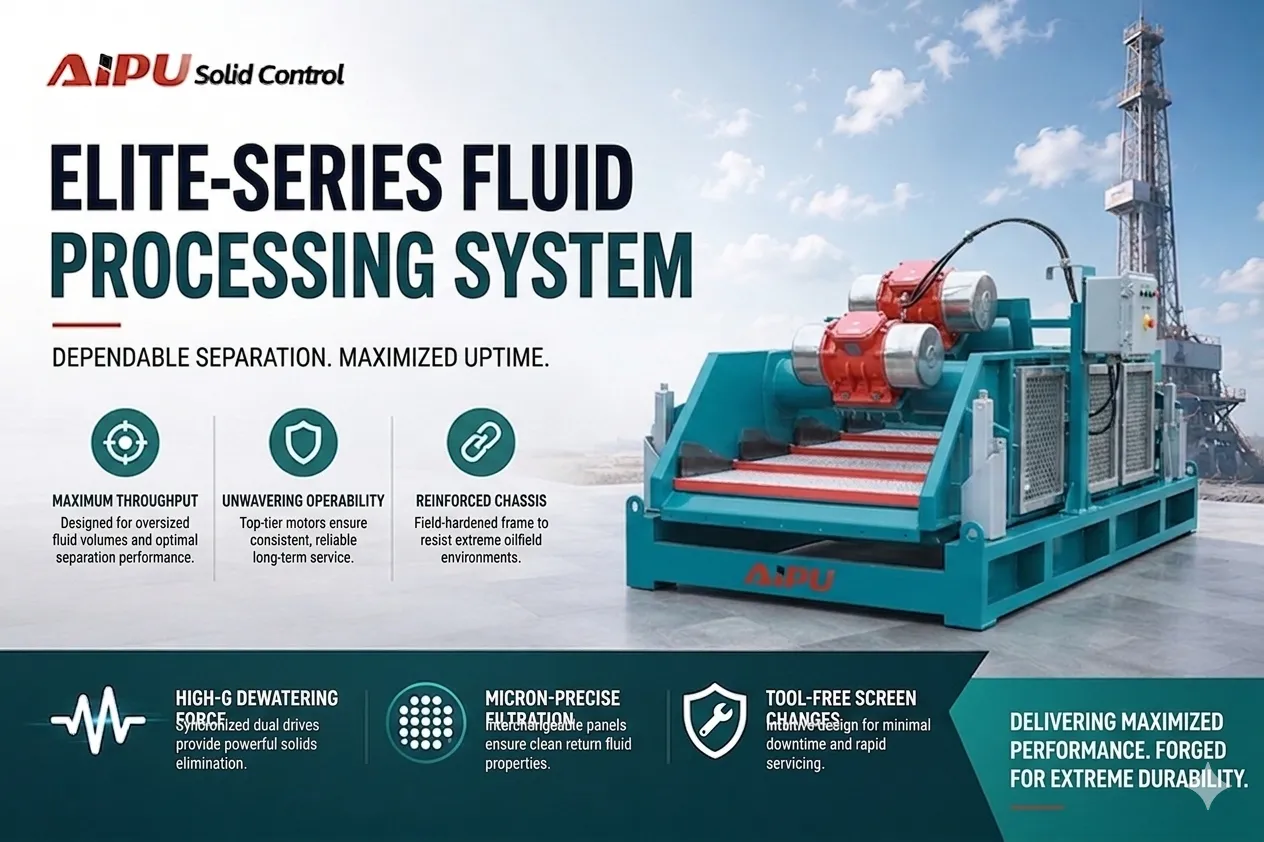
This article explains the key differences between an oilfield shale shaker and a mud cleaner, including their working principles, separation ranges, typical applications, and how to choose between them—or use them together. References to AIPU’s Hunter-MG series shakers and Hunter series mud cleaners are provided based on actual product specifications.
What Is a Shale Shaker?
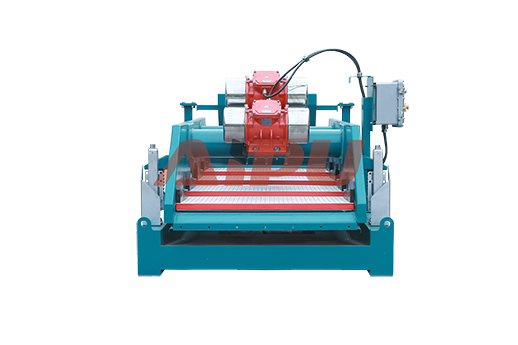
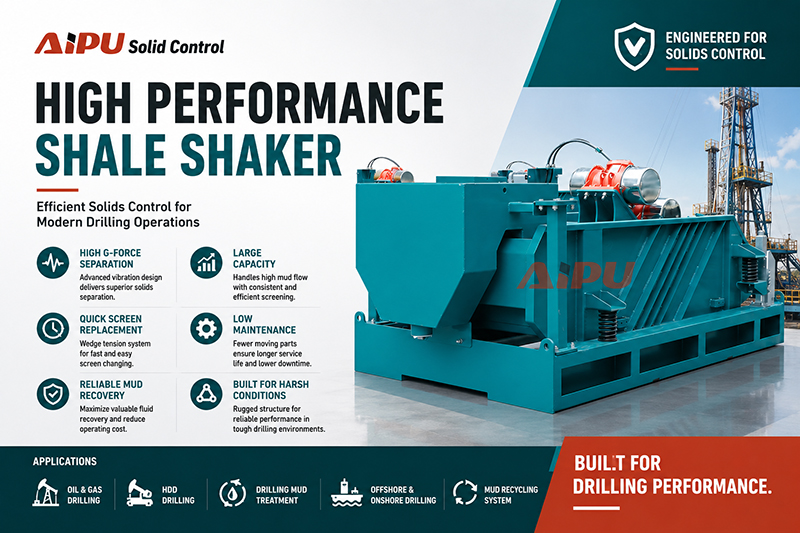
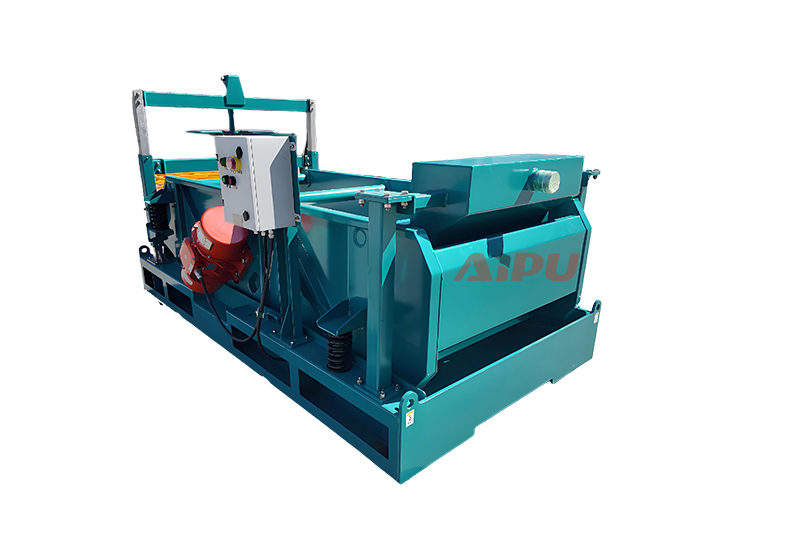
A shale shaker is the first-stage solids control equipment. It receives drilling fluid directly from the flowline returning from the wellbore. Its primary job is to remove large cuttings and coarse solids typically larger than 74–100 microns (depending on screen mesh).
How It Works
Drilling fluid flows onto a vibrating screen deck. The liquid and smaller particles pass through the screen openings, while larger solids are conveyed off the discharge end. The shaker uses linear, elliptical, or dual motion to optimize separation and cuttings transport.
Key Features of AIPU Shale Shakers
AIPU’s Hunter-MG series offers a complete range of single, dual, and triple-deck shakers:
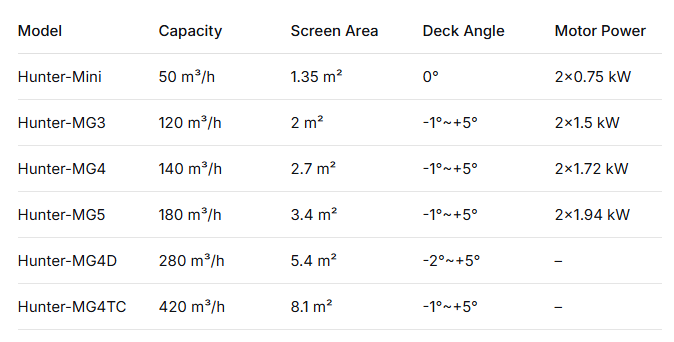
The Hunter-MGD dual-motion shaker adds flexibility by allowing operators to switch between balanced elliptical and linear motion during operation using only two motors—an internationally advanced design.
Typical Separation Range
-
Primary separation: 74–200+ microns
-
With fine screens: down to 44–74 microns (but throughput reduces)
Shale shakers are essential for all drilling operations, whether using water-based mud (WBM), oil-based mud (OBM), or synthetic-based mud (SBM).
What Is a Mud Cleaner?
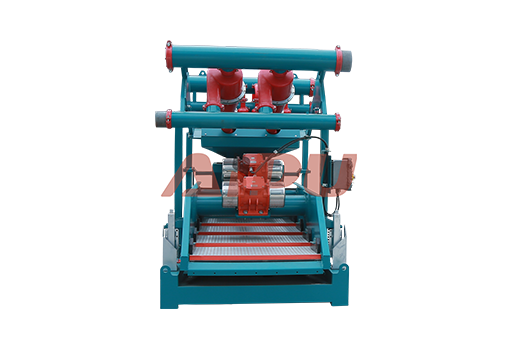
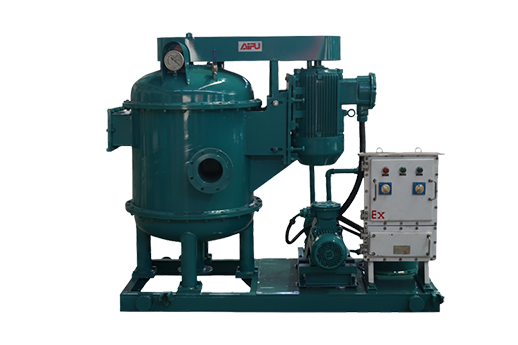
A mud cleaner is a combination unit that typically integrates desanders, desilters, and a bottom shale shaker into one assembly. It is considered second-stage and third-stage solids control equipment. Mud cleaners process the underflow (liquid with fine solids) from the primary shale shaker.
How It Works
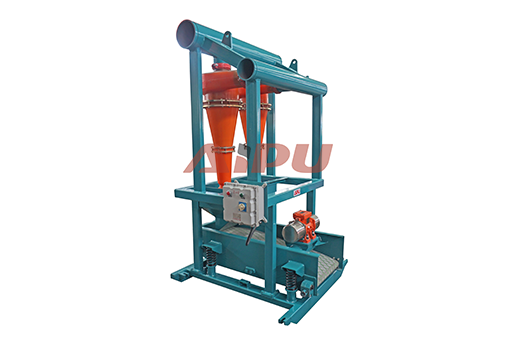
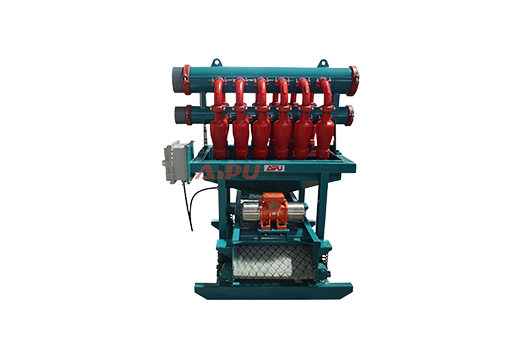
The mud cleaner receives drilling fluid that has already passed through the primary shale shaker. The fluid enters a manifold feeding multiple desander and desilter cyclones (cones). These cyclones use centrifugal force to separate finer solids. The underflow from these cones—which contains concentrated fine solids—then discharges onto a small bottom shaker for final dewatering and solids removal. The cleaned liquid (overflow from cyclones) returns to the mud system.
Key Features of AIPU Mud Cleaners
AIPU offers the Hunter series mud cleaners (e.g., Hunter120, Hunter240, Hunter320, Hunter M120) as well as APCS desanders and APCN desilters. The complete mud cleaner includes both desander cones, desilter cones, and a bottom shaker.
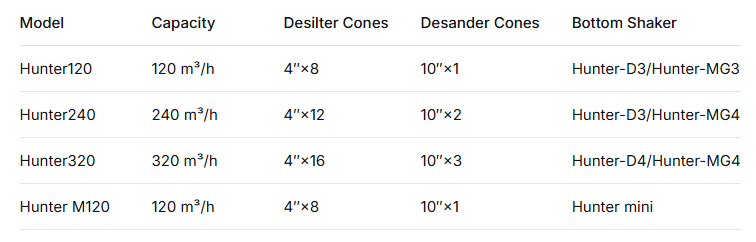
Separation point: 15–74 μm (desilter cones remove 15–44 μm; desander cones remove 44–74 μm)
Working pressure: 0.25–0.45 MPa
Typical Separation Range
-
Desander cones: 44–74 μm
-
Desilter cones: 15–44 μm
-
Bottom shaker: further dewaters the concentrated solids
Mud cleaners are widely used in oil and gas drilling, waste management, and other liquid-solid separation applications.
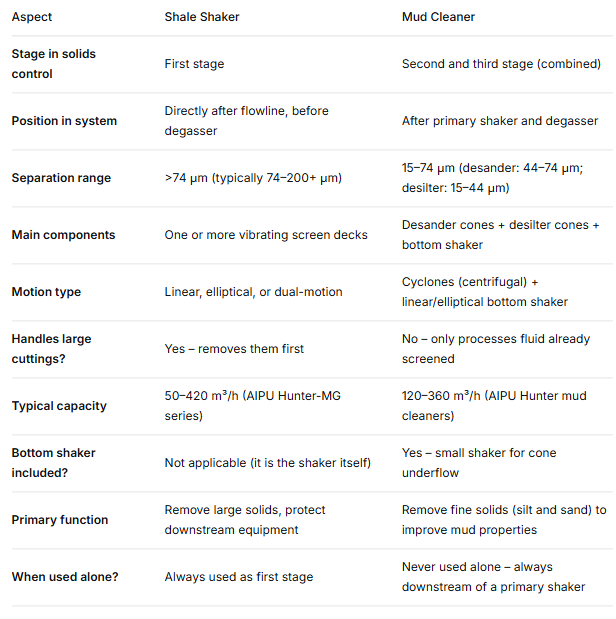
Key Differences Between Shale Shaker and Mud Cleaner
Which One Do You Need?
You Need a Shale Shaker If:
-
You are building a new solids control system from scratch.
-
You need first-stage separation to protect downstream equipment.
-
Your drilling fluid has large cuttings (most drilling operations).
-
You want a simple, reliable machine with low maintenance. AIPU Hunter-MG shakers are easy to operate, have fewer spare parts, and are available in various sizes.
You Need a Mud Cleaner If:
-
Your primary shale shaker is already in place, but you still have excessive fine solids (15–74 μm) in your mud.
-
You are drilling through formations that produce significant silt and sand.
-
You want to reduce wear on centrifuges and improve mud properties before the final stage.
-
You need to lower dilution rates and reduce waste disposal costs.
You Need Both (Typical Scenario):
Most modern drilling rigs use both a primary shale shaker and a mud cleaner. For example:
-
Hunter-MG4 shale shaker (first stage) removes large cuttings.
-
Hunter240 mud cleaner (second/third stage) removes finer particles down to 15 μm.
-
Decanter centrifuge (fourth stage) removes 2–7 μm particles and recovers barite.
AIPU provides complete systems including shakers, mud cleaners, degassers, desanders, desilters, and centrifuges. Their 20+ years of experience and 50,000 m² production base ensure integrated solutions.
When to Choose a Dual-Motion Shaker Instead of a Mud Cleaner
For some operations, upgrading to a dual-motion shaker like the AIPU Hunter-MGD (capacity 140 m³/h, G-force 6.0–7.0 G, deck angle -3°~+3°) can improve fine solids removal without adding a mud cleaner. The elliptical motion increases fluid throughput, while linear motion dries cuttings. However, for consistent removal of particles below 44 μm, a mud cleaner with desilter cones is still the most efficient method.
Why AIPU for Both Shakers and Mud Cleaners?
AIPU Solid Control Co., Ltd specializes in mud solids control and treatment for oil and gas drilling. Their products have been delivered to over 30 countries, with over 300 system-equivalent units. Key advantages include:
-
Full-range supply: horizontal and vertical products, from shakers to centrifuges.
-
Advanced manufacturing: 50,000 m² production base with state-of-the-art equipment.
-
Certifications: Multiple international system and product certifications, plus independent invention patents.
-
Customization: Electrical systems (380V/50Hz, 460V/60Hz, ATEX, IECEX), motor brands (Ital, Vibras, Martin, Oli), screen types (steel or composite frame), surface colors.
-
Application expertise: Oil & gas drilling, CBM, shale gas, municipal slurry separation, mining, oily sludge treatment, fracturing liquid drainage, mud cooling.
Conclusion
The key difference between a shale shaker and a mud cleaner is stage and function. A shale shaker is first-stage equipment that removes large cuttings (typically >74 μm). A mud cleaner is a second/third-stage combination unit (desanders + desilters + bottom shaker) that removes fine solids down to 15 μm. Most effective solids control systems use both, with the shaker protecting the mud cleaner and downstream equipment.
When selecting equipment, consider your flow rate, particle size distribution, mud type, and budget. AIPU’s Hunter-MG shale shakers and Hunter series mud cleaners offer reliable, customizable solutions backed by decades of experience. For help designing your solids control system, contact AIPU directly.
Related Products